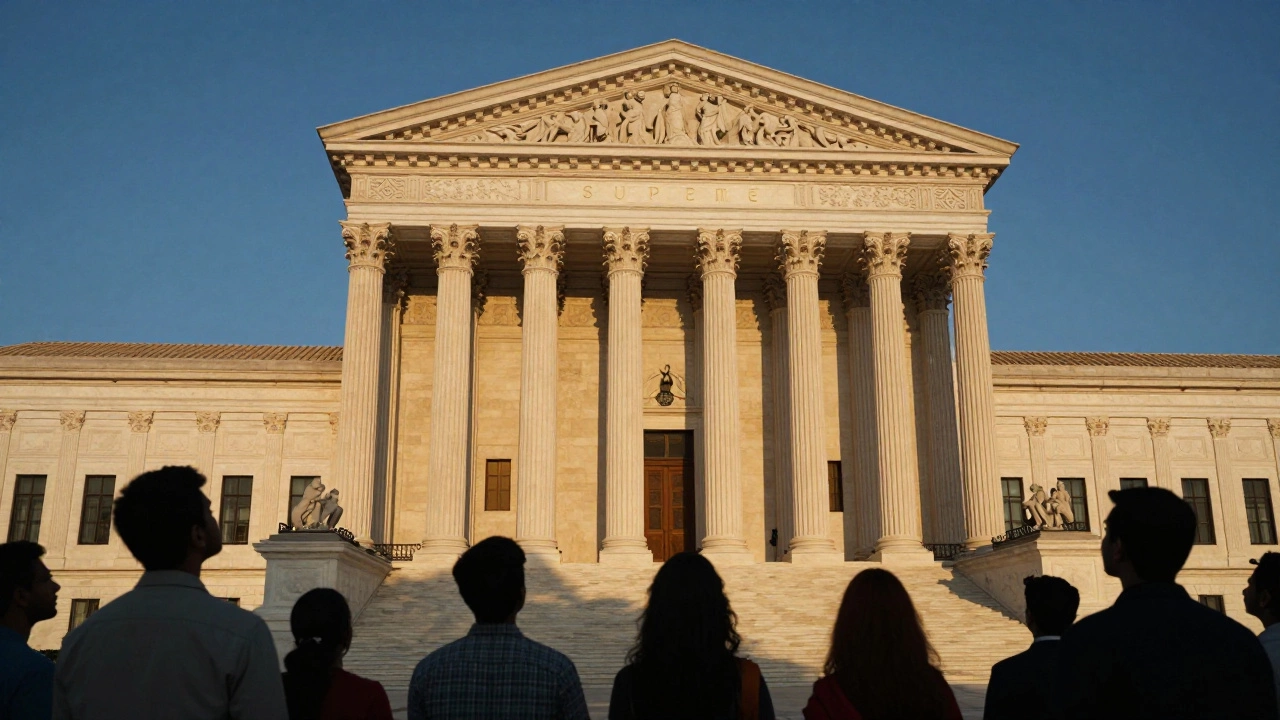
Supreme Court Impact Analyzer
This tool provides educational insights based on recent Supreme Court trends.
Your Personalized Legal Impact Assessment
Recommended Action Plan
When you look at the headlines, recent Supreme Court cases often feel like a blur of complex legal jargon. But these decisions shape your daily life, from how your data is protected to how laws are enforced on the streets. Understanding these rulings isn't just for lawyers; it's for anyone who wants to know where their rights stand in the current legal landscape.
The Supreme Court doesn't create laws out of thin air. It interprets them. When lower courts disagree or when a federal question arises, the highest court steps in to set a precedent. This means that once they rule, every other court in the land must follow that interpretation. That’s why tracking these cases matters. A single decision can overturn decades of policy or cement new protections for citizens.
Why Recent Rulings Matter More Than Ever
In the last few years, the composition of the bench has shifted, leading to more conservative-leaning outcomes in several high-profile areas. You might have noticed changes in how agencies regulate industries or how privacy laws are applied. These aren't random fluctuations; they are direct results of specific case law.
For instance, consider the shift in administrative law. The Court has recently shown a strong preference for limiting the power of federal agencies. If you work in healthcare, environmental protection, or finance, this directly impacts how regulations are written and enforced. Agencies can no longer assume broad authority without explicit congressional approval. This trend forces lawmakers to be more precise, which can slow down regulatory changes but also makes them more legally robust.
Key Areas of Recent Litigation
To make sense of the docket, it helps to break down the cases by topic. Here are the primary areas where recent activity has been most intense:
- Administrative State & Agency Power: Cases challenging the authority of bodies like the EPA or SEC.
- First Amendment Rights: Issues surrounding free speech, particularly on digital platforms and campus protests.
- Criminal Procedure: Rules regarding police searches, seizure evidence, and sentencing guidelines.
- Reproductive Rights & Privacy: Ongoing debates following major shifts in constitutional interpretation.
- Immigration Law: Executive actions versus statutory limits on border control.
Each of these categories represents a battleground where societal values clash with legal text. The outcomes don't just affect the parties involved in the lawsuit; they set the tone for future legislation and enforcement.
Notable Case Examples and Their Impacts
Let’s look at a few hypothetical but realistic examples based on recent trends to illustrate how these rulings play out in practice. While specific case names change yearly, the principles remain consistent.
Agency Overreach Challenges: Imagine a case where a federal agency imposes heavy fines on companies for violating rules that Congress never explicitly authorized. In recent terms, the Court has struck down such actions, citing the "major questions doctrine." This principle states that if an issue has significant economic or political importance, Congress must speak clearly. Agencies cannot fill in the blanks. For businesses, this means less regulatory uncertainty but potentially fewer consumer protections if Congress fails to act.
Digital Privacy and Search Warrants: With technology evolving faster than the Fourth Amendment was written, the Court has had to decide what constitutes a "search" in the digital age. Recent rulings have tightened restrictions on warrantless access to cell phone location data and cloud storage. If you're concerned about your digital footprint, these decisions provide stronger shields against unwarranted government surveillance.
Free Speech on Social Media: As social media platforms become the modern public square, questions arise about whether they can censor users. Recent litigation has explored whether private companies acting as platform operators are bound by First Amendment constraints. The Court has generally maintained that private entities retain editorial discretion, but this area remains volatile and subject to ongoing state-level legislation.
| Area of Law | Key Trend | Impact on Citizens |
|---|---|---|
| Administrative Law | Limited agency power | More legislative clarity required |
| Digital Privacy | Stricter warrant requirements | Enhanced protection for data |
| First Amendment | Protection of expressive conduct | Broader free speech rights |
| Criminal Justice | Reduced mandatory minimums | More judicial discretion in sentencing |

How to Track Upcoming Decisions
You don’t need a law degree to stay informed. Several resources make it easy to follow the Court’s activities. The official website of the Supreme Court provides oral arguments, opinions, and dockets. Legal news outlets often break down complex rulings into digestible summaries. Additionally, nonprofit organizations focus on specific issues like civil liberties or environmental law, offering targeted updates on relevant cases.
If you’re particularly interested in a certain area, set up alerts for keywords related to that field. For example, if you care about environmental policy, track cases involving the Environmental Protection Agency. This proactive approach ensures you’re not caught off guard by sudden legal shifts.
The Role of Precedent in Shaping Future Law
One of the most powerful tools of the Supreme Court is stare decisis, or respect for precedent. This means that past decisions guide future ones. However, the Court isn't bound forever by its own rulings. It can overturn previous decisions if it believes they were wrongly decided or outdated. Recent years have seen several historic reversals, signaling a willingness to revisit foundational doctrines.
This fluidity creates both stability and uncertainty. On one hand, established precedents provide predictability. On the other, the potential for reversal keeps legal professionals on their toes. For the average person, it underscores the importance of paying attention to major rulings-they can redefine your rights overnight.
Practical Steps for Individuals and Businesses
So, what should you do with this information? Here are some practical steps:
- Monitor Legislative Changes: Since the Court often defers to clear congressional intent, watch for new bills that address gaps left by judicial rulings.
- Review Compliance Policies: If you run a business, ensure your compliance strategies align with the latest interpretations of agency authority.
- Engage in Civic Discourse: Understand how these cases affect your community and participate in discussions about proposed laws.
- Consult Legal Experts: For personal matters impacted by recent rulings, seek advice from attorneys specializing in the relevant field.
By staying informed, you empower yourself to navigate the legal system more effectively. Knowledge is not just power; it’s protection.
Looking Ahead: What’s Next?
The Supreme Court’s docket refreshes every term, bringing new challenges and old debates. As society evolves, so do the legal questions presented to the justices. Emerging technologies like artificial intelligence and biotechnology will likely dominate future dockets, raising novel constitutional issues.
Climate change litigation is another growing frontier. Courts will increasingly grapple with whether climate harms constitute legal injuries worthy of redress. These cases could reshape environmental law and corporate responsibility standards.
Ultimately, the Supreme Court serves as a mirror to our nation’s values and conflicts. By understanding recent cases, you gain insight into where we are-and where we might be headed.
Where can I find live updates on Supreme Court cases?
You can visit the official Supreme Court website for real-time oral arguments and published opinions. Additionally, reputable legal news platforms provide detailed analysis and breaking news coverage.
How does a Supreme Court ruling affect my daily life?
Rulings set binding precedents that lower courts must follow. This affects everything from workplace regulations and consumer protections to criminal justice procedures and privacy rights.
What is the major questions doctrine?
It is a legal principle requiring Congress to clearly authorize significant regulatory actions. The Court uses this doctrine to limit federal agencies' power to interpret ambiguous statutes broadly.
Can the Supreme Court overturn its previous decisions?
Yes, while the Court generally respects precedent (stare decisis), it can overturn prior rulings if it determines they were incorrectly decided or no longer fit modern circumstances.
Why do some cases take years to reach the Supreme Court?
Cases typically go through multiple levels of trial and appellate courts first. Only after exhausting these options and receiving permission from the Supreme Court via certiorari do they proceed to the highest level.