India Minimum Wage Calculator
Calculate Your Wage Gap
Why This Matters
India's minimum wage is ₹202/day in rural areas but only ₹250/day in urban areas. Most workers earn significantly less and face barriers to reporting violations.
According to the article: "Employers often pay less anyway, especially in construction, retail, and domestic work. Workers rarely report violations because they fear losing their jobs."
The gap between minimum wage and actual earnings can be 40-60% or more for many workers, especially in informal sectors.
Your Results
This gap reflects real-world conditions where enforcement is weak, and 62% of workers who report violations face retaliation or nothing changes.
India has over 40 labor laws on the books. That sounds impressive-until you realize most of them were written between the 1940s and 1980s. The system was never meant to handle a workforce of 500 million people, 60% of whom work in the informal sector without contracts, benefits, or legal protection. So, does India have good labor laws? The short answer: it’s complicated. The laws exist, but enforcement, coverage, and modern relevance are where things fall apart.
What the Laws Actually Say
In 2020, India merged 29 central labor laws into four new codes: the Code on Wages, the Industrial Relations Code, the Occupational Safety, Health and Working Conditions Code, and the Code on Social Security. The goal was simple: cut the clutter. But the changes didn’t fix the core problems.
The Code on Wages sets a national minimum wage-currently around ₹202 per day for unskilled workers in rural areas. That’s less than $2.50 USD. In cities like Mumbai or Delhi, where rent eats up half your income, that’s not enough to survive. Employers often pay less anyway, especially in construction, retail, and domestic work. Workers rarely report violations because they fear losing their jobs.
The Industrial Relations Code says factories with over 300 workers need government permission to lay people off. Sounds protective? In practice, most factories stay under 300 to avoid the rule. They hire temporary workers through contractors instead. These workers have no job security, no paid leave, and no access to grievance systems. A 2023 study by the Centre for Labour Research found that 78% of workers in manufacturing sectors were hired through agencies, with no direct contract to the company they worked for.
Who’s Left Out?
More than 90% of India’s workforce is informal. That means street vendors, domestic helpers, gig workers, daily wage laborers, and small farmers. None of them are covered by most labor laws. A woman cleaning homes in Bangalore earns ₹200 a day. She has no health insurance, no maternity leave, no pension. If she gets injured, there’s no worker’s compensation. The Code on Social Security promised to cover gig workers-but implementation is still stuck in pilot mode in three states.
Even formal workers face gaps. A factory worker in Gujarat who gets sick can’t take paid sick leave unless she’s been there for 240 days. Many don’t last that long. Women are supposed to get 26 weeks of paid maternity leave-but only if they work for an employer with 10 or more employees. Most small shops and workshops have fewer than five. So the law doesn’t apply to them.
Enforcement Is the Real Problem
India has fewer than 1,500 labor inspectors for 500 million workers. That’s one inspector for every 330,000 workers. Compare that to the U.S., which has about one inspector per 15,000 workers. In India, inspectors often don’t show up unless someone files a complaint-and most workers don’t know how to file one.
Even when violations are found, penalties are tiny. A factory caught paying below minimum wage might get fined ₹5,000 ($60). That’s less than one week’s wages for a worker. For the employer, it’s a cost of doing business. There’s no real deterrent.
Corruption makes it worse. In some states, inspectors demand bribes before they’ll even enter a factory. In others, they ignore complaints from workers who don’t have connections. A 2024 survey by the Indian Trade Union Congress found that 62% of workers who reported labor violations said nothing changed-or they were retaliated against.
What’s Working?
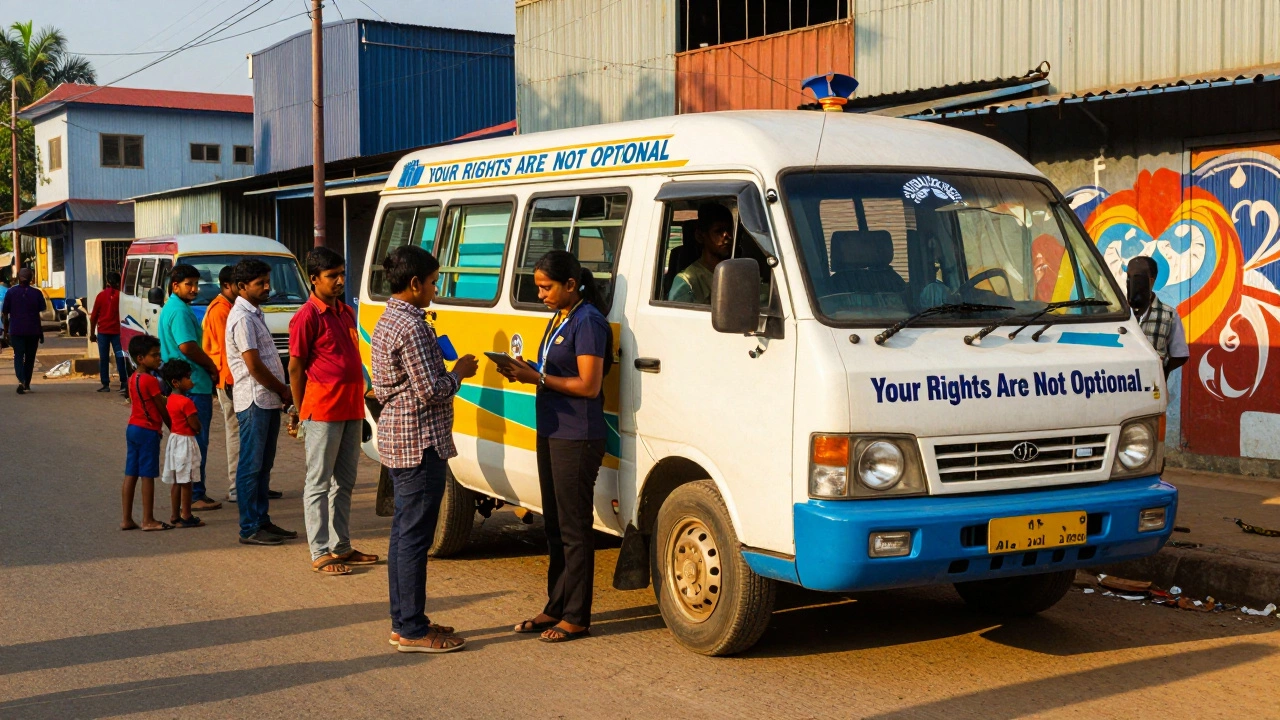
It’s not all bad. Some states have made progress. Kerala and Tamil Nadu have stronger enforcement teams and faster grievance redressal systems. In Kerala, workers can file complaints online and get a response within 15 days. In Tamil Nadu, the government runs mobile labor courts that travel to industrial zones.
Some companies are stepping up. Infosys, TCS, and Wipro follow international labor standards. They pay above minimum wage, offer health insurance, and have internal ombudspersons for worker complaints. But these are exceptions-not the norm.
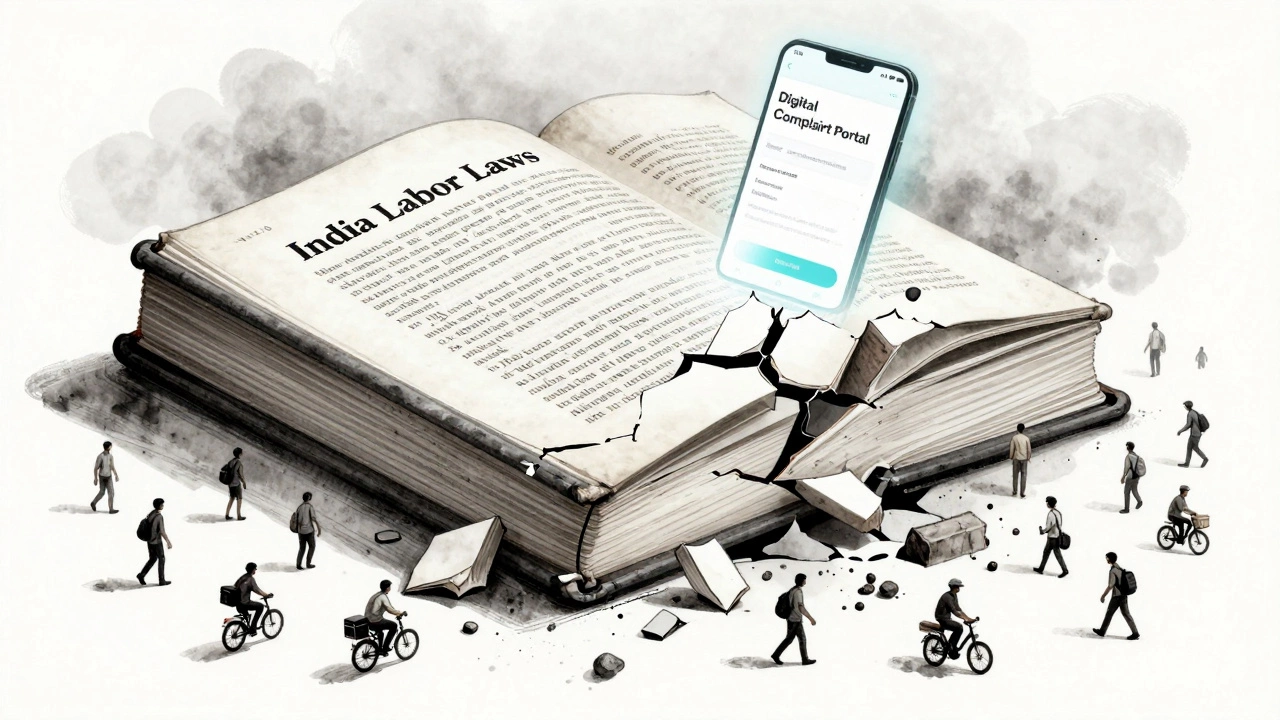
There’s also growing pressure from civil society. Organizations like the National Campaign for Labor Rights and the Indian Labor Initiative have pushed for better data collection and public reporting. In 2025, the government launched a digital portal where workers can anonymously report wage theft and unsafe conditions. Early data shows over 12,000 complaints in the first six months. That’s a start.
How It Feels on the Ground
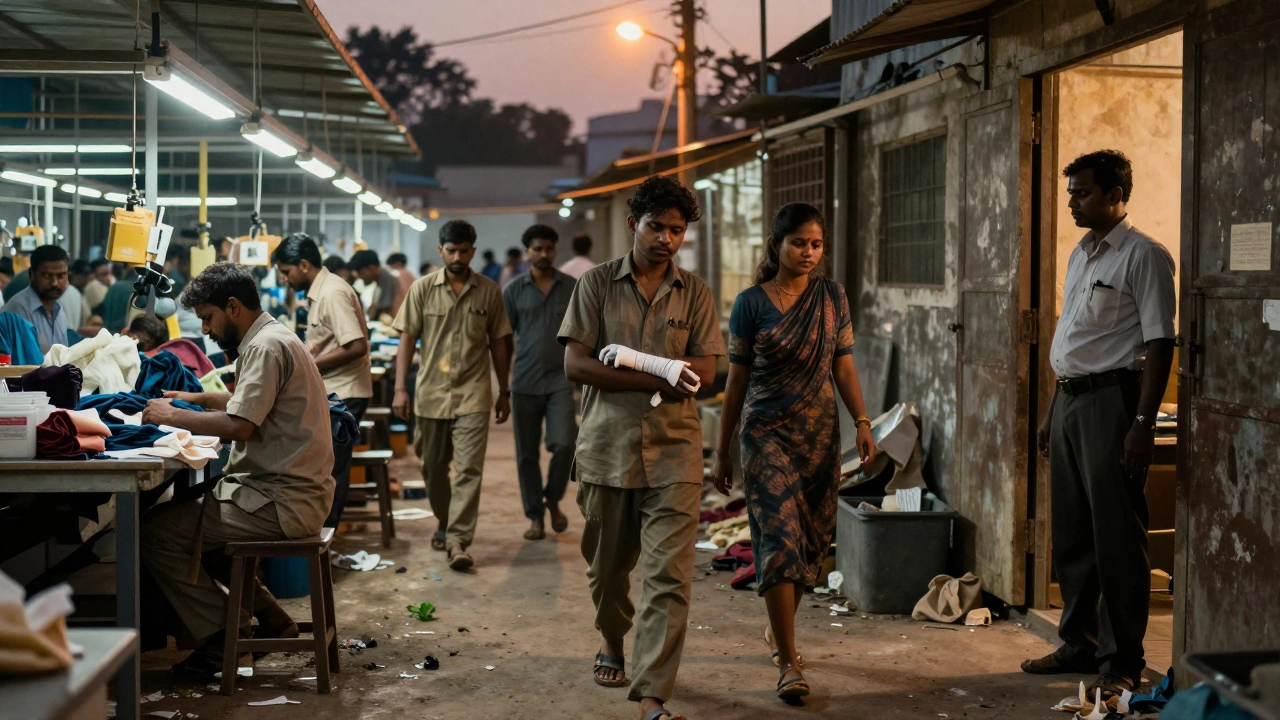
Meet Priya, 32, who works in a garment factory in Tiruppur, Tamil Nadu. She’s been there six years. She earns ₹180 a day. Her shift starts at 7 a.m. and ends at 9 p.m. Six days a week. She gets one paid holiday a year-Independence Day. Her employer doesn’t provide transport, so she walks 5 kilometers each way. She has no health insurance. Last year, she broke her wrist in an accident. She took two weeks off without pay. She didn’t report it because she was told, “If you complain, they’ll replace you.”
Now meet Raj, 28, a delivery rider for Swiggy in Hyderabad. He works 12-hour shifts, seven days a week. He gets paid per delivery. No minimum wage guarantee. No overtime. No sick pay. If he gets into an accident, he’s on his own. The app says he’s an “independent contractor.” Legally, that means he’s not an employee. He’s not covered by any labor law.
Priya and Raj aren’t outliers. They’re the majority.
The Gap Between Law and Reality
India’s labor laws are written like they’re for a 1970s economy: factories, unions, fixed shifts. Today’s economy is apps, contracts, gig work, and seasonal hiring. The laws haven’t caught up.
There’s also a cultural barrier. Many workers don’t see themselves as having rights. They’ve been told for generations that complaining gets you fired. In rural areas, labor is tied to caste and class. Dalit workers, for example, are often forced to work for less and can’t walk away.
Politically, labor rights aren’t a priority. When elections come, parties promise to protect workers-but they also promise to attract investment. So they soften labor rules to make it easier for factories to hire and fire. The result? Laws that look strong on paper, but crumble under pressure.
What Needs to Change
Three things need to happen:
- Expand coverage. All workers-formal and informal-must be covered by minimum wage, social security, and safety rules. No exceptions.
- Boost enforcement. Hire at least 10,000 new labor inspectors. Equip them with phones and apps to file reports. Make penalties meaningful-fines should be at least 30 days’ wages for violations.
- Empower workers. Train community leaders, NGOs, and unions to help workers understand their rights. Create anonymous, easy-to-use hotlines and apps for reporting abuse.
There’s no magic fix. But India has the tools: technology, youth energy, and a growing middle class that cares about fairness. The question isn’t whether the laws are good-it’s whether the system will ever make them matter.
Are India’s labor laws among the worst in the world?
Not technically. India’s laws are often more detailed than those in countries like Bangladesh or Vietnam. But enforcement is far weaker. In countries with fewer laws but better implementation-like Costa Rica or Uruguay-workers have better outcomes. It’s not about how many rules exist, but whether they’re followed.
Can workers in India sue their employers for labor violations?
Yes, but it’s hard. Workers can file cases in labor courts, but the backlog is massive-some cases take 5 to 10 years. Most workers can’t afford to wait that long. Many settle for a small payment just to get their job back. Legal aid is available, but it’s underfunded and hard to access outside major cities.
Do women have equal rights under India’s labor laws?
The law says yes. The Code on Wages bans gender-based pay discrimination. The Maternity Benefit Act guarantees 26 weeks of paid leave. But in practice, women are often pushed out of jobs after marriage or childbirth. Many employers refuse to hire women of childbearing age. And the 26-week leave only applies to companies with 10+ employees-most women work in smaller places where the law doesn’t reach.
Are gig workers protected under India’s labor laws?
Legally, they’re not. The Code on Social Security includes gig workers in theory, but the rules for contributions, benefits, and dispute resolution are still being drafted. Right now, riders and delivery workers have no right to minimum wage, no compensation for injuries, and no way to unionize. Courts are starting to challenge this-some judges have ruled that gig workers are employees in disguise-but no nationwide policy exists yet.
What’s the biggest change India needs to make to its labor laws?
Stop treating labor as a cost to control and start treating it as a right to protect. The focus should shift from making it easy for companies to hire and fire to ensuring every worker-no matter their job, gender, or contract type-has a living wage, safety, dignity, and a voice. That’s not just legal reform. It’s economic justice.
What Comes Next?
The next five years will decide whether India’s labor laws become a model for developing economies-or a cautionary tale. If the government acts now-investing in inspectors, expanding coverage, and listening to workers-the system can be fixed. If not, millions will keep working in the shadows, with no safety net and no hope of change.
Good labor laws aren’t about how many pages they have. They’re about whether they keep people alive, safe, and treated like human beings. Right now, India’s laws are failing that test.