Cyber Attack Monitoring Guide
Select the type of cyber attack and your organization type to see which entities monitor and respond to incidents.
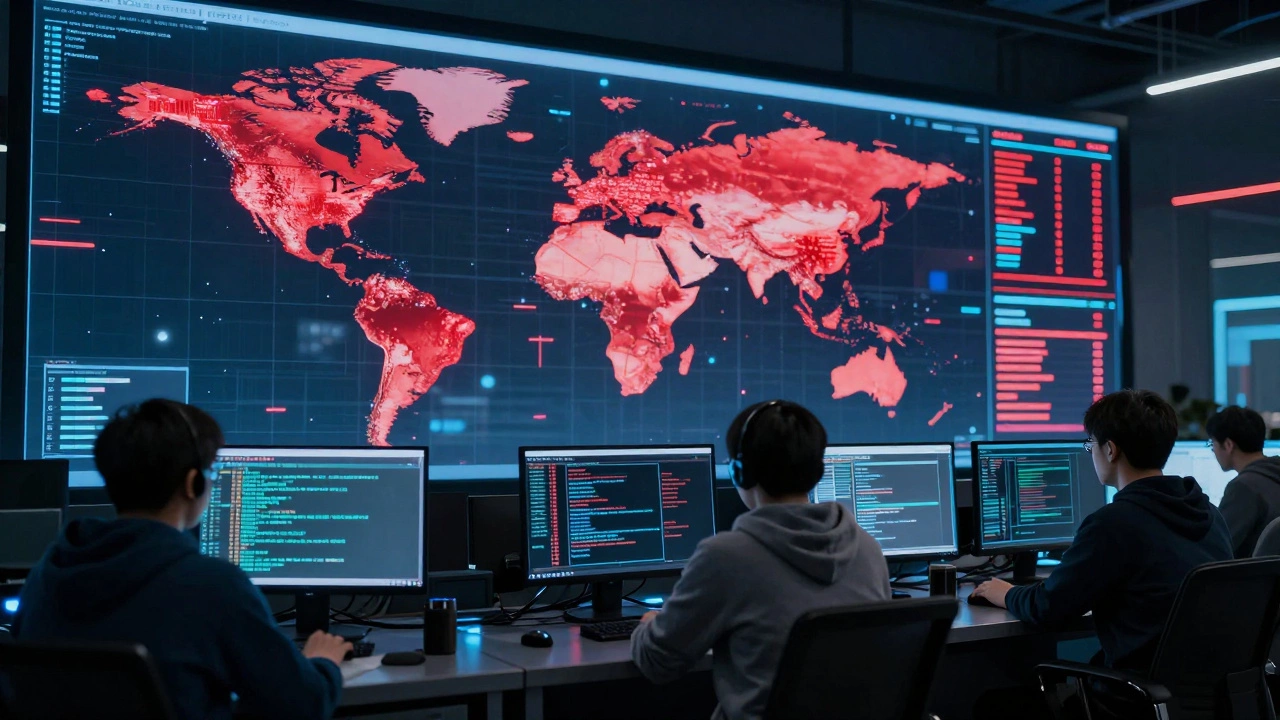
When a bank gets hacked, a hospital loses patient data, or a city’s traffic lights go dark because of a ransomware attack-someone has to find out who did it. But who’s actually watching for these attacks in real time? It’s not just IT teams in cubicles. It’s a layered system of government agencies, private firms, international coalitions, and even individual hackers turned defenders. And when the attack is serious enough, that’s where cyber crime lawyers step in.
Government Agencies Are the First Line of Defense
In the U.S., the Cybersecurity and Infrastructure Security Agency (CISA) runs 24/7 monitoring centers that track threats targeting critical infrastructure-power grids, water systems, emergency services. They don’t just wait for alerts; they actively hunt for signs of intrusion across federal networks. Meanwhile, the FBI’s Cyber Division investigates major breaches, especially those tied to foreign actors or organized crime. In 2024, the FBI reported over 1,200 ransomware cases linked to state-sponsored groups from Russia, China, and North Korea.
In the EU, ENISA (European Union Agency for Cybersecurity) coordinates responses across member states. The UK’s National Cyber Security Centre (NCSC) uses automated tools to scan millions of websites daily for vulnerabilities. These agencies don’t work in isolation. They share threat intelligence through secure channels like the NATO Cooperative Cyber Defence Centre of Excellence.
Private Sector Security Firms Do the Heavy Lifting
Most companies don’t have the staff or tools to monitor attacks themselves. That’s where firms like CrowdStrike, Mandiant, and Palo Alto Networks come in. They sell threat detection platforms that use AI to spot unusual behavior-like a server suddenly sending data to a known malicious IP address. These companies don’t just react; they predict. Mandiant’s threat intelligence team identified the SolarWinds breach months before it became public by tracking a single suspicious file upload.
These firms also respond to incidents. When a hospital is locked out of its records, a team from a company like ZeroFox or Kroll flies in to contain the damage, recover data, and trace the attacker’s path. Their reports often become evidence in court. In fact, over 70% of cyber crime prosecutions in the U.S. since 2020 relied on forensic data gathered by private security firms.
International Cooperation Is Non-Negotiable
Cyber attacks don’t respect borders. A hacker in Ukraine might target a company in Canada using malware written in China and sold on the dark web in Russia. That’s why Interpol runs the Global Cybercrime Programme, which connects cyber units from 195 countries. Europol’s European Cybercrime Centre (EC3) coordinates cross-border investigations into cryptojacking, phishing rings, and data theft.
There’s also the Budapest Convention on Cybercrime-the only binding international treaty on the subject. Signed by 70 countries including the U.S., Canada, Japan, and Germany, it lets law enforcement request digital evidence across borders faster. Without this, chasing a hacker who uses a VPN in Brazil to steal data from a German bank would take years-or never happen.

Who Tracks the Hackers Themselves?
Some of the most effective cyber defenders used to be attackers. Red teams, penetration testers, and ethical hackers are hired by governments and corporations to break into systems before criminals do. In 2025, the U.S. Department of Defense launched a program called “Hack the Pentagon 4.0,” where 12,000 civilian hackers tested military networks and found 1,800 vulnerabilities.
Dark web monitoring is another key area. Companies like Recorded Future and Flashpoint use bots to scan underground forums where stolen data is sold. They track usernames, payment methods, and chat logs to map out criminal networks. One such operation in 2023 led to the arrest of a Russian gang that stole 14 million credit cards by infiltrating small retail POS systems.
Cyber Crime Lawyers Step In When the Digital Meets the Legal
Monitoring stops at evidence. Prosecuting doesn’t. That’s where cyber crime lawyers come in. They work with forensic analysts to turn binary code into courtroom testimony. They handle subpoenas for server logs, negotiate with foreign governments for data access, and advise victims on whether to pay ransoms (spoiler: lawyers almost always say no).
In 2024, a cyber crime lawyer in New York helped a mid-sized manufacturer recover $2.3 million after a business email compromise scam. The lawyer worked with the FBI to freeze the fraudster’s bank accounts in Cyprus and traced the money through three shell companies. Without legal action, the money would’ve vanished.
Cyber crime lawyers also help companies comply with regulations. If a breach affects EU citizens, GDPR fines can hit up to 4% of global revenue. Lawyers ensure breach notifications are filed on time, data protection impact assessments are done, and contracts with vendors include proper security clauses.
It’s Not Just About Technology-It’s About People
Behind every monitored attack is a human making decisions. A security analyst who spots a glitch at 3 a.m. A lawyer who spends weeks deciphering encrypted chat logs. A prosecutor who must prove intent across three time zones. These are the real monitors-not just machines, but teams of experts who work in silence until something goes wrong.
And the stakes keep rising. In 2025, the average cost of a data breach hit $4.9 million, up from $3.86 million in 2020. The number of cyber attacks targeting healthcare rose 150% since 2022. Monitoring isn’t optional anymore. It’s survival.

What Happens After the Attack Is Found?
Finding the attacker is only half the battle. The next steps are messy. Do you notify customers? Do you involve the police? Do you try to recover the data yourself? Lawyers guide these choices. They know the legal deadlines: 72 hours under GDPR, 10 days under California’s CCPA. Miss one, and you’re fined.
They also handle insurance claims. Many companies now carry cyber insurance-but policies have fine print. Did you patch your systems? Did you train staff? Did you have a response plan? Lawyers help prove you did everything right-or fight the insurer if they try to deny the claim.
And if the attacker is never caught? That’s common. Less than 10% of cyber criminals are prosecuted globally. But the monitoring doesn’t stop. Every breach adds to a global database of tactics. The next time someone tries the same trick, the system recognizes it faster.
How to Know If You’re Being Monitored
If you’re a business owner, you’re already being watched. Your cloud provider checks for unusual logins. Your firewall logs suspicious outbound traffic. Your employees get phishing simulations. These aren’t random checks-they’re part of a defense network designed to catch threats before they spread.
Ask your IT team: Are you using EDR (Endpoint Detection and Response)? Are you sharing threat intel with ISACs (Information Sharing and Analysis Centers)? Are you compliant with NIST or ISO 27001? If not, you’re flying blind.
And if you’re a victim? Call a cyber crime lawyer before you do anything else. Don’t delete files. Don’t pay the ransom. Don’t post on social media. The first 48 hours are critical-and mistakes here can cost you millions.
Who is responsible for monitoring cyber attacks in the United States?
In the U.S., multiple agencies share responsibility. CISA monitors critical infrastructure, the FBI investigates major breaches, and the NSA handles national security threats. Private firms like CrowdStrike and Mandiant provide detection and response services for businesses. Local law enforcement also plays a role in smaller incidents, especially those involving identity theft or fraud.
Can individuals report cyber attacks to authorities?
Yes. Individuals can report cyber attacks to the FBI’s Internet Crime Complaint Center (IC3) or the FTC’s IdentityTheft.gov. Even small incidents like phishing emails or fake tech support calls should be reported. These reports help build patterns that lead to larger investigations. In 2024, over 800,000 consumer complaints were filed with IC3-many led to arrests.
Do cyber crime lawyers only work after an attack happens?
No. Many cyber crime lawyers work proactively. They help businesses design incident response plans, draft contracts with cybersecurity vendors, ensure compliance with data protection laws, and train staff on legal obligations. Prevention is often cheaper-and less stressful-than litigation.
What’s the difference between a cybersecurity expert and a cyber crime lawyer?
Cybersecurity experts find and fix technical vulnerabilities. They analyze malware, trace IP addresses, and restore systems. Cyber crime lawyers turn that technical data into legal action. They interpret laws, file court documents, negotiate with insurers, and represent victims or defendants in court. One handles the digital evidence; the other handles its legal consequences.
Are cyber attacks monitored globally, or just in certain countries?
Monitoring happens worldwide, but the capacity varies. Countries like the U.S., U.K., Germany, Japan, and Australia have advanced national cyber units. Many developing nations rely on international support through Interpol or UN programs. Even so, every country with internet access is a target-and most have some level of monitoring, even if limited.
What Comes Next?
The next wave of cyber threats won’t just target data-it will target AI systems, autonomous vehicles, and medical devices. Monitoring will need to evolve faster than the attacks. That means more collaboration between governments, more investment in forensic tools, and more lawyers who understand both code and contracts.
If you’re a business owner, don’t wait for an attack to ask who’s watching your systems. Start with an audit. Talk to a cyber crime lawyer. Know your legal obligations. Because in the digital world, being unaware isn’t an excuse-it’s a liability.