Civil Evidence Strength Estimator
Select all forms of evidence you possess for your case to see an estimated strength score.
Refining Factors
Estimated Case Strength
Breakdown:
- No evidence selected.
You walk into a civil court hearing, and the other side drops a document on the table. It’s not just any paper; it’s a signed contract with your name on it, dated before the dispute started. In that moment, the air changes. You realize you aren't arguing about who remembers what anymore. You are looking at a fact that is very hard to argue with. This brings us to a question many people ask when they find themselves in legal trouble: What is the strongest form of evidence against a defendant?
In civil court cases, there isn’t one single "magic bullet" that wins every time. However, some types of evidence carry significantly more weight than others. Judges and juries look for reliability, clarity, and independence from human memory errors. When we talk about the "strongest" evidence, we are usually talking about documentary evidence that is original, authenticated, and directly contradicts the defendant's claims.
The Hierarchy of Proof in Civil Matters
To understand why certain evidence is stronger, you first need to understand how civil courts measure truth. Unlike criminal cases, where the state must prove guilt "beyond a reasonable doubt," civil cases use a lower bar called the "balance of probabilities." This means the judge or jury just needs to be convinced that it is more likely than not (more than 50% chance) that your version of events is true.
Even with this lower bar, the quality of evidence matters immensely. Evidence falls into a rough hierarchy based on its susceptibility to bias or error:
- Hearsay and Rumor: The weakest form. "I heard she said he broke the window." This is easily dismissed because it relies on multiple layers of human transmission.
- Lay Witness Testimony: Stronger, but flawed. People lie, people forget, and people have biases. If Case A has only witnesses vs. Case B with documents, Case B usually wins.
- Expert Opinion: Very strong if the expert is credible. An engineer explaining why a bridge collapsed carries more weight than a neighbor guessing.
- Direct Documentary/Digital Evidence: Often the strongest. Emails, contracts, bank transfers, and video footage exist independently of anyone’s memory.
The reason documentary evidence sits at the top is simple: it doesn't get tired, it doesn't get nervous, and it doesn't change its story between the deposition and the trial.
Why Documentary Evidence Reigns Supreme
When lawyers talk about a "smoking gun," they are almost always referring to a document. In civil disputes-whether it’s a breach of contract, a property disagreement, or a personal injury claim-the written word is king. But not all documents are created equal.
The strongest documentary evidence has three specific attributes:
- Originality: Courts prefer the original document over copies. Under rules like the "Best Evidence Rule," if you want to prove the content of a writing, recording, or photograph, you generally need to produce the original unless it’s lost or destroyed.
- Authentication: You must prove the document is what you say it is. An email printed out from a deleted account is weak. An email pulled from a server log with metadata showing the sender, recipient, and timestamp is strong.
- Relevance: It must directly address a material fact in the case. A receipt for coffee bought on Tuesday proves nothing about a contract signed on Friday, unless the timeline is the issue.
Consider a scenario where two business partners disagree over who contributed capital to a startup. One partner says, "We agreed verbally I’d put in $10,000." The other produces a bank statement showing a transfer of $5,000 with a memo line reading "Investment - 50%." The verbal agreement is hearsay or self-serving testimony. The bank statement is objective, third-party verified data. The bank statement wins.
The Rise of Digital Footprints as Primary Evidence
In 2026, the definition of "document" has expanded far beyond paper. Digital footprints are often the most damning evidence against a defendant because they are generated automatically by systems outside the user's control.
Electronic Discovery (e-Discovery) involves identifying, collecting, and producing electronically stored information (ESI). This includes emails, text messages, social media posts, GPS location data, and cloud storage files. Why is this so powerful? Because it creates a contemporaneous record. You might tell the court you were home sick on the day of the accident, but your phone’s GPS data places you at a nightclub five miles away at that exact hour.
Key types of digital evidence include:
- Email Chains: These show intent. If you emailed your colleague saying, "I know this violates safety protocols, but let's do it anyway," that admission is nearly impossible to refute.
- Messaging Apps: WhatsApp, iMessage, and Slack logs are admissible. Screenshots can be challenged as faked, but exported chat logs with metadata are highly reliable.
- Metadata: The hidden data in a file. For example, a Word document might show it was edited three hours after the alleged meeting took place, proving the note wasn't written in real-time.
Defendants often make the mistake of thinking deleting an email removes the evidence. In most jurisdictions, destroying evidence after litigation has begun-or even reasonably anticipated-is a serious offense called spoliation. Judges can instruct juries to assume the deleted evidence was harmful to the defendant’s case.

Admissions and Confessions: The Defendant’s Own Words
If documents are the strongest external evidence, admissions are the strongest internal evidence. An admission is a statement made by a party to the case that acknowledges a fact unfavorable to their position.
These can happen in several ways:
- Formal Admissions: During the discovery phase, parties answer questions under oath. If a defendant answers "Yes" to "Did you fail to inspect the machinery?" they cannot later deny it at trial without seeking permission from the judge, which is rarely granted if it surprises the other side.
- Informal Admissions: Statements made outside of court, such as in a voicemail, a letter, or a conversation with a witness. For example, a driver saying, "I’m so sorry, I didn’t see the stop sign," recorded by a dashcam.
- Conduct as Admission: Sometimes actions speak louder than words. Fleeing the scene of an incident or hiding assets can be interpreted by a judge as an implicit admission of wrongdoing.
The power of an admission lies in its source. It comes from the opponent. While a defendant can try to explain away an admission ("I was joking," "I was confused"), the burden shifts entirely to them to prove why their own statement shouldn't be believed. This is a heavy lift.
Expert Testimony: Bridging the Gap
Sometimes, the facts are too technical for a layperson to understand. Did the surgeon cut the wrong nerve? Was the software code negligent? In these cases, Expert Testimony becomes the strongest form of evidence because it translates complex data into a verdict-ready conclusion.
However, expert testimony is only strong if the expert is truly independent and their methodology is sound. Courts use standards (like the Daubert standard in the US or similar tests in NZ/UK) to filter out junk science. An expert who is hired solely to create a favorable opinion for the paying client is often exposed during cross-examination.
The strongest expert evidence combines:
- Credentials recognized by the industry.
- A clear explanation of the methodology used.
- Data that aligns with physical or documentary evidence.
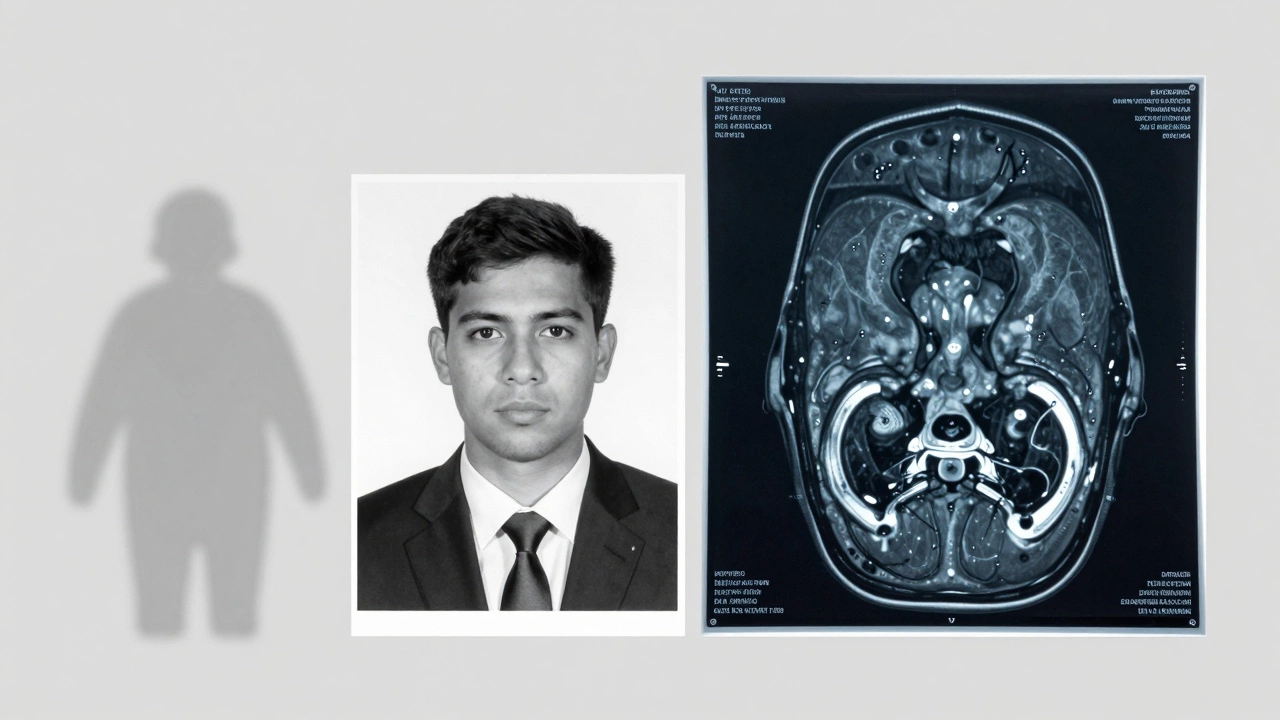
For instance, in a medical malpractice case, the plaintiff’s doctor’s opinion is good. But the MRI scans showing the damage, combined with an independent radiologist’s analysis of those same scans, is stronger. The expert validates the document.
Circumstantial Evidence: The Power of Inference
Not all strong evidence is direct. Circumstantial evidence requires the trier of fact to make an inference. It connects dots rather than showing the whole picture. While often portrayed in movies as weaker, circumstantial evidence can be overwhelming when the chain of logic is unbroken.
Example: You don’t have a video of someone stealing money from a safe. But you have:
- Security logs showing the defendant entered the room alone at midnight.
- CCTV showing the defendant leaving with a bulging bag ten minutes later.
- Bank records showing a large deposit into the defendant’s account the next morning.
Individually, these pieces could have innocent explanations. Together, they form a narrative that is difficult to dismantle. In civil law, if the circumstantial evidence points strongly to one conclusion and the defendant offers no plausible alternative, the judge will rule against them.
| Evidence Type | Reliability Factor | Common Pitfalls | Strength Rating |
|---|---|---|---|
| Original Contracts/Documents | High (Objective) | Lost originals, ambiguous wording | Very Strong |
| Digital Metadata/Logs | High (Automated) | Tampering, lack of authentication | Very Strong |
| Admissions by Party | Medium-High (Self-incriminating) | Claims of coercion or misunderstanding | Strong |
| Expert Testimony | Variable (Depends on Expert) | Bias, flawed methodology | Strong (if credible) |
| Eyewitness Testimony | Low-Medium (Subjective) | Poor memory, bias, lighting conditions | Moderate |
| Hearsay/Rumor | Low (Unverified) | Cannot be cross-examined | Weak |
Corroboration: The Multiplier Effect
The absolute strongest position for a plaintiff is when different types of evidence corroborate each other. This is known as convergence. If a witness says the defendant was speeding, and the police radar gun confirms it, and the defendant’s own phone GPS shows high velocity, the case is virtually airtight.
Corroboration protects against the weaknesses of individual evidence types. A document might be forged, but if it matches bank transfers and email discussions, the likelihood of a coordinated forgery across all platforms drops to near zero. Judges look for this consistency. When evidence streams from independent sources all point to the same conclusion, the "balance of probabilities" tips decisively.
Challenges to Evidence: Why Strong Evidence Can Fail
Even the strongest evidence can be excluded if it is obtained improperly or is irrelevant. Understanding these pitfalls is crucial for defendants and plaintiffs alike.
- Illegally Obtained Evidence: In some jurisdictions, evidence gathered through illegal surveillance or hacking may be excluded, though civil courts are sometimes more lenient than criminal courts regarding privacy violations.
- Privilege: Communications between a lawyer and client are protected. You cannot force a defendant to hand over emails to their attorney, even if those emails contain damaging admissions.
- Chain of Custody: If digital evidence is copied onto a USB drive and then passed through three hands without documentation, the defense can argue it was altered. Proper chain of custody protocols are essential for digital files.
Therefore, the "strength" of evidence is not just about its content, but also about its procedural integrity. A perfect document found in a trash bin without proper collection procedures might be thrown out.
Practical Steps for Preserving Strong Evidence
If you are involved in a potential civil dispute, how do you ensure you have the strongest evidence? Or if you are the defendant, how do you protect yourself from unfair claims?
- Preserve Everything: Do not delete emails, texts, or files once a dispute arises. Set up litigation holds if you are a business.
- Document Contemporaneously: Write down details immediately after events occur. Memory fades quickly. A diary entry made on the day of an incident is more credible than one made six months later.
- Authenticate Digital Files: Use tools that capture screenshots with timestamps and URLs. Keep original devices intact.
- Seek Independent Verification: Get third-party reports (mechanics, doctors, accountants) as soon as possible.
In civil law, the person with the best-prepared, most coherent, and most documented story usually wins. It is rarely about who shouts the loudest, but who can point to the clearest, most undeniable facts.
Is video evidence always considered the strongest form of proof?
Video evidence is very strong because it provides visual context, but it is not infallible. It can be edited, taken out of context, or suffer from poor audio quality. Video is strongest when it is raw, unedited footage from a neutral source (like a security camera) and is corroborated by other evidence like witness statements or physical data.
Can a defendant's silence be used as evidence against them in civil court?
In many civil jurisdictions, yes. Unlike criminal trials where you have the right to remain silent without penalty, in civil cases, if a defendant refuses to answer questions during discovery or refuses to testify, the judge may draw an adverse inference. This means the judge can assume the unanswered questions would have revealed facts unfavorable to the defendant.
What makes expert testimony unreliable in court?
Expert testimony becomes unreliable if the expert lacks proper qualifications, uses flawed methodologies, or appears biased (e.g., being paid contingency fees tied to the outcome). Opposing counsel will often attack the expert's credentials or previous inconsistent opinions to weaken their impact.
How does the "Best Evidence Rule" apply to digital communications?
The Best Evidence Rule traditionally required original documents. For digital communications, the "original" is the electronic file itself. Printing an email creates a copy. To satisfy the rule, you should provide the actual email file or a certified export from the server that includes metadata, rather than just a screenshot or printout, which can be disputed as altered.
Is circumstantial evidence enough to win a civil case?
Yes, absolutely. While direct evidence is preferred, a strong chain of circumstantial evidence can meet the "balance of probabilities" standard. If the circumstances logically lead to only one reasonable conclusion, and the defendant cannot offer a plausible alternative explanation, the plaintiff can win based solely on circumstantial evidence.