Court Hierarchy Explorer & Quiz
Click a level to see its role in the justice system.
Select a Level
Hover over or click one of the pyramid levels above to learn about their specific functions and powers.
Loading question...
You’ve probably seen those dramatic courtroom scenes in movies where a lawyer slams a table and shouts, "Objection!" But here’s the thing: that drama usually happens in a trial court. It’s not where the real power lies. If you’re wondering what is the most powerful level of court, the answer isn’t about who has the biggest building or the fanciest robes. It’s about who gets the final word.
In almost every legal system on Earth, there is a top dog. This is the court whose decisions cannot be appealed any further. In the United States, it’s the Supreme Court. In New Zealand, where I live, it’s the Supreme Court of New Zealand. In the UK, it’s the Supreme Court of the United Kingdom. While names vary, the function is identical: they are the ultimate arbiters of the law. They don’t just decide if someone is guilty or innocent; they decide what the law actually means for everyone else.
The Top of the Ladder: Understanding the Highest Court
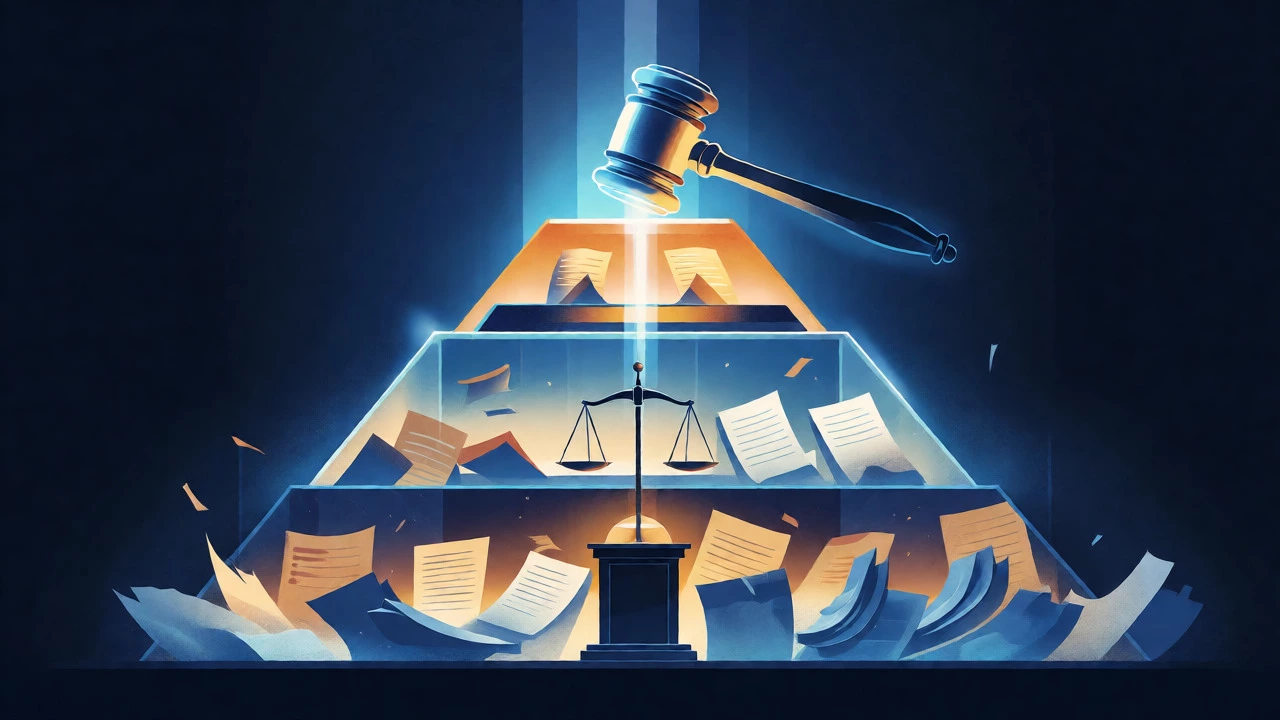
Think of the court system like a pyramid. At the bottom, you have local courts handling traffic tickets and small disputes. Above them are district or county courts for bigger criminal cases and serious civil claims. Then come the appellate courts, which check for mistakes made by the lower judges. But at the very peak sits the highest court. This body holds what lawyers call "final jurisdiction." Once this court rules, that’s it. There is no higher authority to complain to (unless we’re talking about international human rights tribunals, but that’s a whole different beast).
Supreme Court is the highest court in a jurisdiction that serves as the final court of appeal and interpreter of constitutional law. Its power comes from its ability to set precedents-rules that all lower courts must follow. When the US Supreme Court ruled in Brown v. Board of Education that segregation was unconstitutional, it didn’t just help the Oliver Brown family; it changed schools across the entire nation overnight.
Why does this matter to you? Because these courts shape society. They decide privacy rights, marriage equality, free speech limits, and corporate regulations. They aren’t just resolving disputes between two people; they are defining the rules of the game for millions.
How Courts Are Organized: The Three-Tier System
To understand why the top court is so powerful, you need to see how the whole machine works. Most countries use a three-tier structure. It’s designed to catch errors and ensure fairness, but also to filter out cases that don’t need the highest attention.
- Trial Courts: This is where facts are established. Witnesses testify, evidence is shown, and a judge or jury decides who did what. These courts handle 95% of all legal matters. Their job is fact-finding, not making new laws.
- Appellate Courts: If a party believes the trial judge made a legal error-like letting in bad evidence-they can appeal. Appellate courts don’t re-watch witness testimony. They look at the paperwork and arguments to see if the law was applied correctly. They can send a case back down or change the outcome.
- Highest Court: This court picks only a tiny fraction of cases. In the US, the Supreme Court receives about 7,000-8,000 petitions a year but hears oral arguments in only about 60-70 of them. Why? Because they focus on issues that affect the whole country or resolve conflicts between different regional appeals courts.
This filtering process is crucial. If the highest court had to review every parking ticket appeal, they’d never get anything done. By choosing their battles, they maintain their authority and impact.
Constitutional Power vs. Ordinary Appeal
Not all "top" courts are created equal. Some are purely appellate, meaning they only correct mistakes in lower court rulings. Others have constitutional power, which is a much heavier lift. Constitutional courts can strike down laws passed by parliament or congress if those laws violate the constitution. This is called judicial review.
For example, if a city passes a law banning certain types of protest, and the highest court says it violates freedom of speech, that law ceases to exist. That’s massive power. It puts the judiciary in tension with the legislature. In some countries, like France, this power is held by a separate Constitutional Council rather than the main Supreme Court. In others, like Canada and Australia, the Supreme Court handles both regular appeals and constitutional questions.
| Jurisdiction | Name of Highest Court | Primary Function | Can Strike Down Laws? |
|---|---|---|---|
| United States | Supreme Court of the United States | Final Appeal & Constitutional Interpretation | Yes (Judicial Review) |
| New Zealand | Supreme Court of New Zealand | Final Appeal on Matters of General Public Importance | No (Parliamentary Sovereignty) |
| United Kingdom | Supreme Court of the United Kingdom | Final Appeal for Civil & Criminal Cases | Limited (Human Rights Act) |
| Germany | Federal Constitutional Court | Guardian of the Basic Law | Yes (Strong Judicial Review) |
Notice the difference with New Zealand. We operate under parliamentary sovereignty. Our Supreme Court can interpret laws strictly, but it generally cannot declare an act of Parliament invalid because our constitution isn't codified in a single rigid document like the US Constitution. This shows that "power" depends heavily on the specific legal tradition of the country.
Who Gets to Choose the Judges?
The power of the highest court is also shaped by who sits on the bench. In the US, justices are nominated by the President and confirmed by the Senate. This makes the appointment process intensely political. A shift in one seat can swing the court’s ideology for decades. Since justices serve for life, their influence extends far beyond the administration that appointed them.
In contrast, many other democracies have mandatory retirement ages or fixed terms. In Canada, judges retire at 75. In the UK, the selection is handled by an independent commission to reduce political bias. This affects how "powerful" the court feels. A lifetime-appointed court might be more willing to make bold, controversial rulings because they don’t fear losing their jobs in four years.
When you ask "who is the most powerful," remember that the institution is powerful, but the individuals within it carry the weight. Their personal philosophies-whether they believe in strict textualism or living constitutionalism-directly impact outcomes.
Common Misconceptions About Court Power
People often confuse the International Court of Justice (ICJ) with domestic supreme courts. The ICJ settles disputes between nations, like border disagreements. It doesn’t overrule your national supreme court. If the US Supreme Court says something, the ICJ can’t fix it. Domestic courts hold the actual coercive power-they can put people in jail or seize assets. International courts rely mostly on moral pressure and diplomatic consequences.
Another myth is that the highest court always "gets it right." They are human institutions. Decisions are often split 5-4 or 6-3. Dissenting opinions-the votes against the majority-are incredibly important. They often become the law of the land decades later. For instance, Justice Harlan’s dissent in Plessy v. Ferguson (1896) laid the groundwork for the majority opinion in Brown (1954). So, even when they lose the vote, their voice echoes forward.
Practical Implications: When Should You Care?
Do you need to worry about the highest court? Probably not for your daily life. Unless you’re involved in a major constitutional challenge, your case will likely end at the appellate level. However, understanding this hierarchy helps you manage expectations. If you lose a case in a lower court, appealing to the highest court is expensive, slow, and rare. Statistically, less than 1% of civil appeals are granted leave to be heard by top courts in common law jurisdictions.
If you’re a business owner, though, pay attention. Regulatory changes driven by high court rulings can disrupt industries. Think about how data privacy laws evolved after recent digital rights cases. Or how labor laws shifted after union-related rulings. Keeping an eye on pending cases at the highest level gives you a preview of future legal landscapes.
Key Takeaways
- Finality is Key: The most powerful court is the one with final appellate jurisdiction. Its decisions bind all lower courts.
- Precedent Setting: These courts don’t just resolve disputes; they create binding rules for future cases.
- Selective Hearing: They hear very few cases, focusing on broad legal principles rather than individual facts.
- Constitutional Role: In many systems, they can invalidate laws that conflict with the constitution.
- Political Context: Judge appointments and tenure lengths influence how boldly the court exercises its power.
Is the Supreme Court always the highest court?
In most countries, yes, the name "Supreme Court" indicates the highest court. However, some nations use different names. For example, the highest court in Scotland is the Court of Session, and in some civil law countries, it might be called the Court of Cassation. Always check the specific judicial hierarchy of the country in question.
Can the highest court overturn its own previous decisions?
Yes, they can. While they value stability and consistency (stare decisis), they are not bound by their past rulings. If a previous decision is deemed outdated or wrongly reasoned, the court can overrule itself. This happened famously in the US with Brown v. Board of Education, which overturned Plessy v. Ferguson.
What is the difference between the Supreme Court and the House of Lords in the UK?
Historically, the House of Lords served as the highest court in the UK. However, since 2009, the Supreme Court of the United Kingdom has taken over this role to separate the judiciary from the legislature. The House of Lords is now primarily a legislative body.
Does the highest court decide facts or just law?
Primarily law. Trial courts decide facts (what happened). Appellate and highest courts review legal errors (was the law applied correctly?). The highest court rarely re-evaluates witness credibility or physical evidence unless there was a gross miscarriage of justice.
How long does it take to reach the highest court?
It varies widely. In the US, it can take several years from filing a petition to receiving a decision. In other jurisdictions, it might be faster, but generally, the process involves multiple layers of appeal, making it a lengthy journey. Most cases settle before reaching this stage due to cost and time.