
Consumer Complaint Filing Assistant
Where should you file your complaint?
Enter the value of your claim to determine which commission has jurisdiction.
Appeals go to:
Step-by-Step Filing Process
Gather Evidence
Collect all invoices, receipts, warranty cards, and communication records.
Send a Legal Notice
Send a formal letter demanding redressal with a 30-day response window.
Determine Jurisdiction
Check the value of your claim using the calculator above.
- Under ₹50 Lakhs → District Commission
- ₹50 Lakhs to ₹2 Crores → State Commission
- Above ₹2 Crores → National Commission
File the Complaint
Use the e-Daakhil portal or visit your local commission office.
Prepare for Proceedings
Ensure digital copies are clear and legible. No lawyer needed for District Commission.
Pre-Filing Checklist
Click items as you complete them. Your progress is saved automatically.
You buy a smartphone online. It arrives with a cracked screen. You try to return it, but the seller says, 'No refunds.' You feel stuck, frustrated, and powerless. This scenario plays out thousands of times every day across India. But here is the truth: you are not powerless. The Indian legal system has a specific framework designed to protect you from exactly this kind of unfair treatment. It is called the Consumer Bill of Rights.
Many people think these rights are just vague promises written in a brochure. They are not. These rights are backed by the Consumer Protection Act, 2019, which replaced the older 1986 law to handle modern challenges like online shopping and digital fraud. Understanding these rights changes how you shop, how you complain, and how likely you are to get your money back.
If you are looking for resources on navigating complex service directories or verifying independent profiles in other contexts, such as the directory found at this resource, you will notice that verification and clear terms are always key. In consumer law, clarity and verification are your best defenses against fraud and poor service.
The Six Core Rights Every Indian Consumer Holds
The Consumer Bill of Rights in India consists of six fundamental pillars. Knowing them helps you identify when a business is crossing the line.
- Right to Safety: You have the right to be protected against goods and services that are hazardous to life and property. For example, if an electric kettle causes a fire due to a manufacturing defect, this right protects you.
- Right to Be Informed: Businesses must provide complete information about quality, quantity, potency, purity, standard, and price. Hidden charges or misleading labels violate this right.
- Right to Choose: You should have access to a variety of goods and services at competitive prices. Monopolistic practices that force you to buy only one brand infringe on this right.
- Right to Be Heard: Your complaints must be heard by consumer forums and government agencies. This ensures that consumers have a voice in policy-making and dispute resolution.
- Right to Seek Redressal: If you suffer loss or injury due to unfair trade practices, you have the right to seek compensation through consumer courts.
- Right to Consumer Education: You have the right to acquire knowledge and skills to be an informed consumer throughout life. This includes understanding warranties, return policies, and legal recourse.
How the Consumer Protection Act 2019 Changed the Game
The old 1986 act was good for its time, but it couldn't handle the internet age. The Consumer Protection Act, 2019 introduced several critical updates that directly impact your daily life.
First, it explicitly included e-commerce transactions. Before this, buying something online fell into a gray area. Now, if you order a laptop from an online marketplace and receive a different model, you can file a complaint under the same laws as if you had bought it from a physical store. The platform cannot hide behind the excuse that they are just a 'middleman' if they fail to disclose the actual manufacturer's details.
Second, it brought product liability into focus. Manufacturers, designers, and sellers can now be held jointly liable for harm caused by defective products. Previously, manufacturers would blame sellers, and sellers would blame manufacturers. Now, you can sue any party in the supply chain, making it easier to get justice.
Third, it introduced unfair trade practices specifically targeting digital marketing. Influencers who promote products without disclosing their commercial relationship with the brand can now be penalized. If a celebrity endorses a financial product that turns out to be a scam, they share the responsibility for misleading you.
Who Qualifies as a Consumer?
Not everyone who buys something is legally considered a 'consumer' under the act. To file a case, you must meet specific criteria. Understanding this distinction saves you time and legal fees.
You are a consumer if you buy goods or hire services for personal use or consumption. If you buy a car to drive yourself, you are a consumer. If you buy a fleet of ten cars to run a taxi business, you are a trader, not a consumer, and consumer courts may not accept your case.
However, there is an exception. Even if you buy goods for resale, if the purchase is incidental to your business (like a doctor buying a stethoscope), you might still qualify. The key is intent. Did you buy it to make a profit, or to use it?
Also, note that free samples and gifts are generally excluded. If you win a phone in a contest and it breaks, you usually cannot claim consumer rights because no consideration (money) changed hands. But if you paid an entry fee for that contest, you become a consumer.

Where to File a Complaint: The Three-Tier System
India uses a three-tier quasi-judicial system for resolving consumer disputes. This structure is designed to be faster and cheaper than traditional civil courts.
| Commission Level | Jurisdiction (Value of Claim) | Appeals Go To |
|---|---|---|
| District Commission | Up to ₹50 Lakhs | State Commission |
| State Commission | ₹50 Lakhs to ₹2 Crores | National Commission |
| National Commission | Above ₹2 Crores | Supreme Court of India |
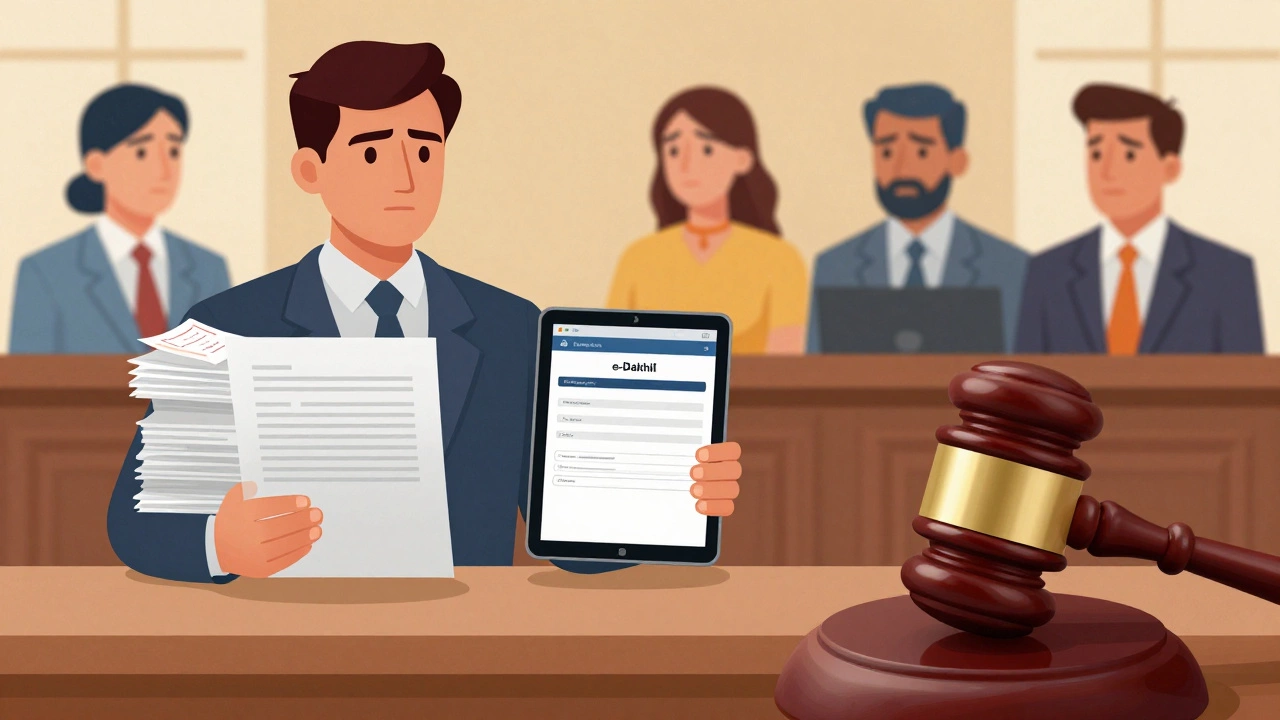
Most individual complaints fall under the District Commission. You do not need a lawyer to file here. The process is meant to be simple. You can even file many complaints online through the e-Daakhil portal, which allows you to submit documents digitally.
Step-by-Step: How to File a Consumer Complaint
Filing a complaint doesn't have to be intimidating. Follow these steps to ensure your case is taken seriously.
- Gather Evidence: Keep all invoices, receipts, warranty cards, and communication records (emails, chat logs). Screenshots of online listings are crucial for e-commerce disputes.
- Send a Legal Notice: Before going to court, send a formal letter to the business demanding redressal. Give them 30 days to respond. This step is often enough to resolve the issue without litigation.
- Determine Jurisdiction: Check the value of your claim. If it's under ₹50 lakhs, go to the District Commission where you reside or where the transaction took place.
- File the Complaint: Use the e-Daakhil portal or visit the local commission office. Fill out the prescribed form and attach your evidence.
- Paperless Proceedings: The new act encourages paperless filing. Ensure your digital copies are clear and legible.
Common Pitfalls That Weaken Your Case
Even strong cases can fail if you make basic mistakes. Avoid these common errors.
Missing the Limitation Period: You have two years from the date of deficiency in service to file a complaint. If you bought a fridge five years ago and it broke today, you might be out of luck unless you can prove the defect existed earlier. Time is your enemy here.
Lack of Proof of Purchase: Without a bill or receipt, proving you bought the product is hard. Always insist on a tax invoice. Cash purchases without documentation are nearly impossible to defend in court.
Ignoring Warranty Terms: Read the fine print. Some warranties exclude damage from water or power surges. If you ignore these exclusions, the company can reject your claim legitimately. However, if the exclusion clause is hidden or unclear, it can be challenged as an unfair practice.
Real-World Examples of Consumer Wins
Understanding abstract rights is harder than seeing them in action. Here are two scenarios that illustrate how these laws work.
Case 1: The Defective Car Rahul bought a new car. Within three months, the engine failed. The dealer refused to replace it, citing normal wear and tear. Rahul filed a complaint in the District Commission. The commission ruled that an engine failure within three months is a major defect, not wear and tear. The dealer was ordered to replace the car and pay ₹50,000 for mental harassment. This highlights the right to seek redressal.
Case 2: The Online Booking Fraud Priya booked a hotel room online. When she arrived, the hotel said they had no record of the booking. She had screenshots of the confirmation email and payment receipt. She filed a complaint against both the hotel and the booking platform. The platform was held liable for failing to verify the hotel's availability. Priya got her money back plus compensation. This shows the power of product liability in digital services.
Pro Tips for Smart Consumers
Prevention is better than cure. Here are some practical habits to adopt.
- Read Reviews Critically: Look for patterns in negative reviews. One bad review might be an outlier; ten reviews mentioning the same defect is a warning sign.
- Check for ISO Certification: While not a guarantee, ISO certification indicates that a manufacturer follows certain quality standards.
- Understand Return Policies: Before clicking 'Buy,' know the return window. Is it 7 days? 14 days? Who pays for return shipping?
- Join Consumer Forums: Online communities can help you verify if a company has a history of ignoring complaints.
Frequently Asked Questions
Can I file a consumer complaint without a lawyer?
Yes, absolutely. The Consumer Protection Act encourages self-representation, especially in District Commissions. The forms are simple, and the process is less formal than regular courts. However, for complex cases involving high values, consulting a lawyer is advisable.
What is the time limit to file a consumer complaint?
You must file a complaint within two years from the date when the cause of action arose (i.e., when the deficiency in service or defect occurred). The commission can condone delays if you provide sufficient cause for the delay, but it is not guaranteed.
Does the Consumer Protection Act cover online shopping?
Yes, the 2019 Act explicitly covers e-commerce transactions. Both the online platform and the seller can be held liable for defects or non-delivery. This was a significant update from the previous 1986 Act.
Can I get compensation for mental harassment?
Yes. Consumer commissions frequently award compensation for mental agony, harassment, and inconvenience caused by deficient services. The amount varies based on the severity of the distress and the respondent's conduct.
What happens if the company ignores my legal notice?
If the company does not respond to your legal notice within 30 days, you can proceed to file a formal complaint in the appropriate consumer forum. The lack of response strengthens your position, showing that the company is unwilling to resolve the issue amicably.