Consumer Court India: How to File a Complaint and Get Justice
When you buy a faulty phone, get cheated by a service provider, or are overcharged for a product, Consumer Court India, a specialized legal forum for resolving disputes between buyers and sellers. Also known as consumer forum, it gives you real power to demand refunds, replacements, or compensation without hiring a lawyer. This isn’t some distant bureaucracy—it’s a system built for regular people, and it works if you know how to use it.
At the heart of this system is the Consumer Protection Act India, the law that gives you the right to fair treatment as a buyer. Also known as COPRA, it covers everything from online orders to car repairs, and it’s updated every few years to keep up with how we shop today. You don’t need to be rich or educated to use it. All you need is proof—like a receipt, a warranty card, or even a chat log with customer service. The law doesn’t care about your title; it cares about what happened.
Most people don’t know that consumer courts are divided into three levels: district, state, and national. If you’re claiming less than ₹10 lakh, you go to the district level—that’s where most cases start. If you’re claiming between ₹10 lakh and ₹1 crore, you move to the state commission. Above that? The national commission handles it. Each level has the same goal: to fix the problem fast. Unlike regular courts, there’s no endless waiting. Most cases are settled in under six months if you file correctly.
What can you actually get? A full refund. A free replacement. Compensation for mental stress or medical bills caused by a faulty product. Even punitive damages if the company was clearly lying. Section 60 of the Consumer Protection Act lets you claim compensation for loss or injury. Section 55 tells you how to redirect your complaint if the wrong office gets it. And no, Section 49 doesn’t exist—it’s a myth that trips up too many people. The real power is in Sections 2, 12, 21, and 60. You don’t need to memorize them. Just know: if you were wronged, you can file.
People think consumer courts are for big claims. They’re not. You can file for a ₹500 defective toaster. You can file against Amazon, Flipkart, or your local mechanic. The process is simple: fill out Form I, attach your proof, pay a small fee (often under ₹100), and send it to the nearest district consumer commission. Many states let you file online now. No lawyer needed. You can represent yourself. The court doesn’t punish you for not knowing the law—it helps you learn it.
And it’s not just about money. It’s about fairness. When you file, you’re not just fighting for yourself. You’re pushing companies to stop lying, to fix their products, to treat customers like humans. Thousands of cases are filed every month in India—and most are won by regular people who just showed up with their receipts.
Below, you’ll find clear guides on how to file your own complaint, what to say in your petition, which sections of the law actually matter, and how to avoid the traps that make people give up. Whether you bought a broken AC, got scammed by a fitness center, or were charged twice for a flight, you’re not alone. And you don’t need a law degree to win.
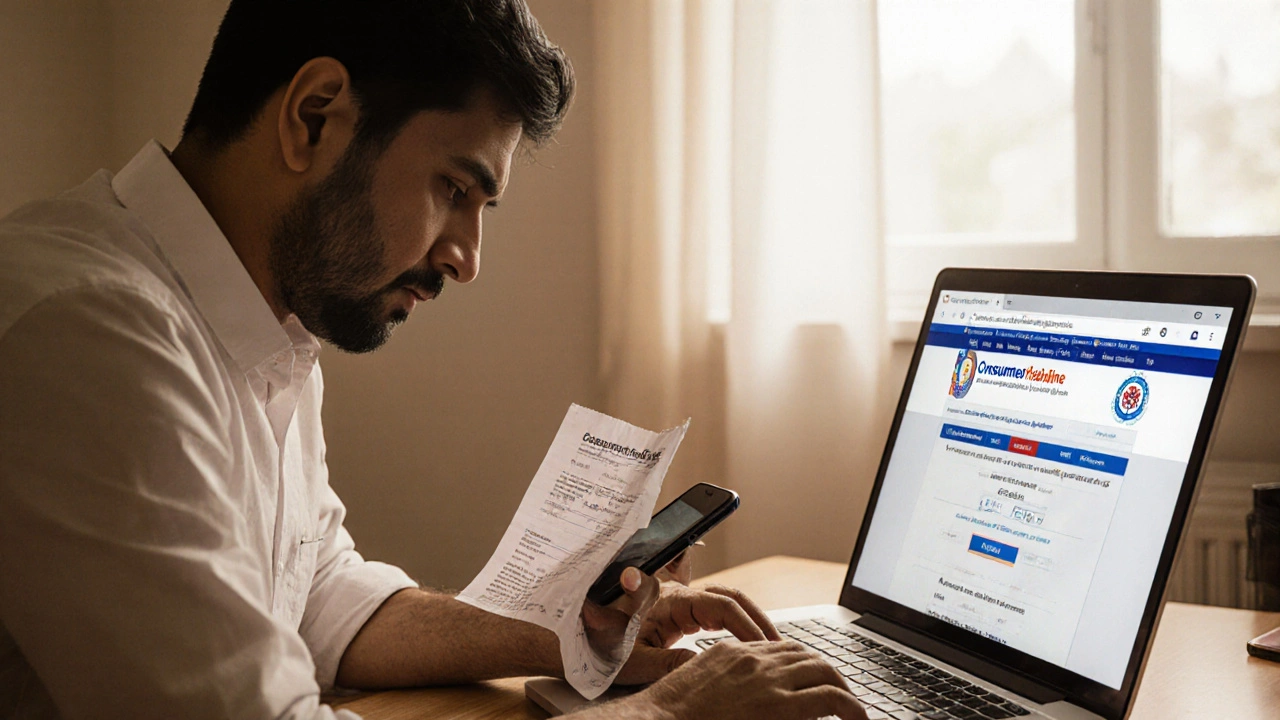
How Consumer Complaints Work in India: A Step-by-Step Guide for 2025
Learn how to file a consumer complaint in India in 2025-step by step, without a lawyer. Know your rights under the Consumer Protection Act, where to file, what compensation you can get, and how to avoid common mistakes.