
Employee Final Settlement Estimator
Input Your Details
Estimated Breakdown
Pending CalculationRecovery Steps Guide
Imagine this: You’ve had enough. The stress is too much, the hours are brutal, and you decide it’s time to leave. You hand in your resignation, pack up your desk, and walk away. Then comes the shock-your paycheck never arrives. Or worse, you realize they withheld your final settlement because you didn’t complete the full notice period. This happens more often than you think in India, a country with a complex web of labor laws designed to protect workers but often difficult to navigate without legal help. If you quit your job and your employer hasn't paid you, you are not powerless. You have specific legal rights under Indian employment law that allow you to reclaim what is owed.
It is easy to feel trapped or afraid of retaliation when dealing with an uncooperative former boss. Many employees believe that once they resign, especially without serving the notice period, they forfeit their right to unpaid dues. This is a dangerous myth. Whether you served your notice or left abruptly due to harassment or non-payment, the law generally requires employers to pay for work actually performed. Understanding these rights is the first step toward getting your money back without ruining your professional reputation.
Understanding What You Are Owed
Before taking legal action, you need to know exactly what constitutes "wages" under Indian law. It isn’t just your basic monthly salary. According to the Code on Wages, 2019a comprehensive legislation that consolidates four earlier wage-related laws to ensure timely payment and minimum wage protection across all sectors, wages include basic pay, dearness allowance, and retaining allowance. However, other components like house rent allowance (HRA) or special allowances may be treated differently depending on your company’s policy and local state laws.
If you quit mid-month, you are entitled to pro-rated wages for the days you worked. For example, if you worked 15 days out of 30, you should receive half of your monthly fixed compensation. Additionally, if you have accrued but unused leave balances, many companies are required to encash these leaves upon termination or resignation, unless their specific service rules state otherwise. Gratuity is another major component. Under the Payment of Gratuity Act, 1972an act that mandates employers to pay a lump sum gratuity to employees who have completed five years of continuous service, you are eligible for gratuity if you have worked for the same employer for at least five years. Even if you resign, you do not lose this right, provided you meet the tenure requirement.
- Basic Salary: Pro-rated for days worked in the final month.
- Leave Encashment: Payment for unused earned leaves (check company policy).
- Gratuity: Applicable if you have served 5+ years continuously.
- Provident Fund (PF): Both your contribution and the employer’s share must be transferred to your new PF account or withdrawn if eligible.
One common tactic used by dishonest employers is to deduct amounts from your final settlement claiming you breached the notice period. While companies can claim damages for actual loss caused by short-notice resignation, they cannot arbitrarily withhold entire salaries. Any deduction must be justified and proportional to the actual inconvenience suffered, not punitive.
The Notice Period Trap
The most frequent reason employers withhold pay is the notice period clause. Most employment contracts require 30 to 90 days’ notice. If you leave early, the employer might argue they need to hire a replacement urgently, causing them financial harm. They then withhold your salary as "liquidated damages."
Here is the reality: An employer cannot withhold your wages for work already done simply because you didn’t give enough notice. These are two separate legal issues. They can sue you for breach of contract for the notice period violation, but they cannot use your unpaid salary as collateral. In practice, many companies offer a "buyout" option where you pay a fee equivalent to one month’s salary to waive the notice period. If you agreed to this buyout, ensure you have written proof. If you did not agree to a buyout and they still withhold pay, they are likely violating the Code on Wages.
If you resigned due to constructive dismissal-meaning the working conditions were so hostile or unsafe that staying was impossible-the rules shift further in your favor. Constructive dismissal includes scenarios like severe harassment, sudden drastic pay cuts, or forced relocation without consent. In such cases, you may not even need to serve a notice period, and withholding pay becomes a clear illegal act.
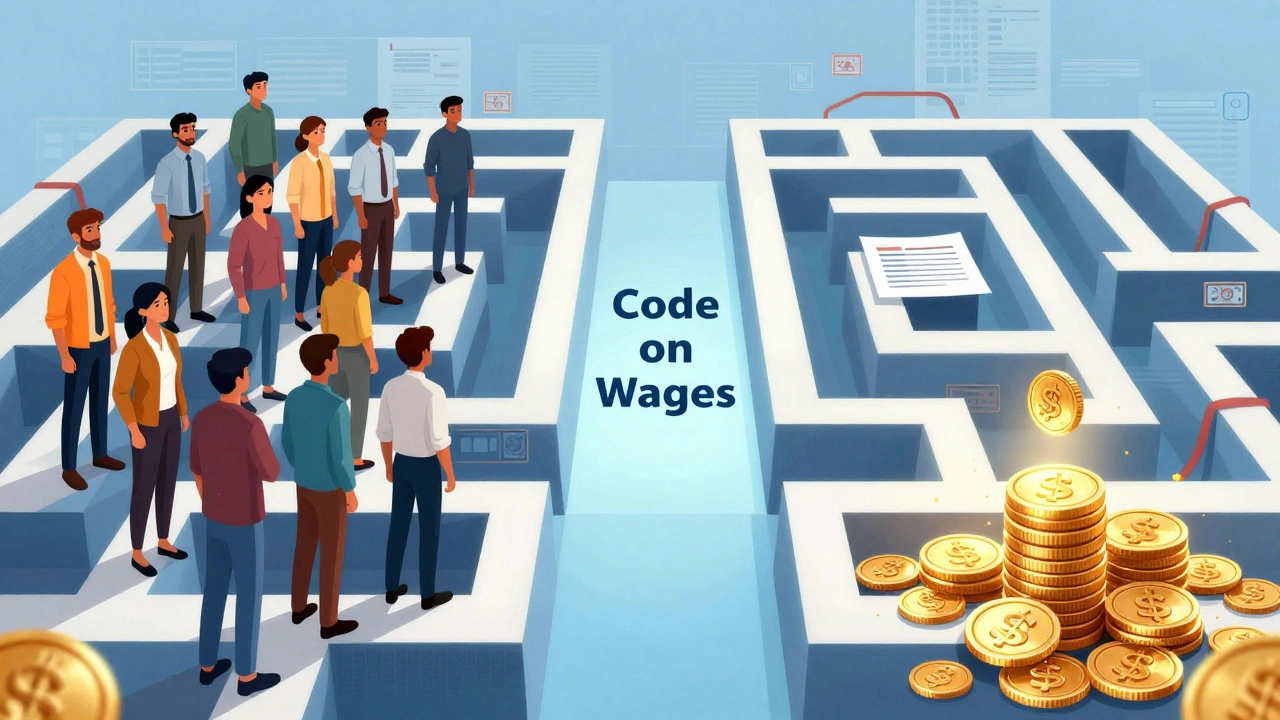
Step-by-Step Guide to Recovering Unpaid Wages
Recovering unpaid wages doesn’t always mean going to court immediately. Start with the least confrontational methods and escalate only if necessary. Here is a practical roadmap:
- Gather Evidence: Collect your employment contract, resignation letter (with acknowledgment), payslips, bank statements showing previous deposits, and any emails discussing your exit or outstanding dues. Screenshots of chat conversations with HR or managers admitting debt are also valuable.
- Send a Formal Demand Letter: Write a polite but firm email to HR and your reporting manager. List the exact amounts owed (salary, leave encashment, etc.) and set a deadline for payment (usually 7-14 days). Keep a copy for your records.
- Escalate Within the Company: If HR ignores you, go higher. Contact the CEO, CFO, or the legal department of the company. Large corporations often have compliance teams that want to avoid legal trouble.
- File a Complaint with the Labor Commissioner: If internal efforts fail, approach the local Labor Commissioner’s office. Under the Code on Wages, the Commissioner has the power to direct the employer to pay due wages. This process is faster and cheaper than civil court.
- Approach the Labor Court: For larger amounts or disputed claims, you can file a case in the appropriate Industrial Tribunal or Labor Court. Legal aid is available for those who cannot afford private lawyers.
While navigating these steps, it is important to stay organized. Employers often delay responses hoping you will give up. Persistence is key. Also, be aware that while you pursue this, you might want to explore other opportunities. Sometimes, taking a break or exploring different industries can provide fresh perspective. For instance, some professionals looking for flexible arrangements or international connections find useful directories online, such as this resource, which lists various services and contacts, though unrelated to employment, it illustrates how niche directories operate globally. Focus instead on platforms like LinkedIn or Naukri.com for your next role.

Role of the Labor Commissioner
The Labor Commissioner is your most powerful ally in wage disputes. Unlike civil courts, which can take years, the Labor Commissioner’s office operates under specific labor statutes designed for quick resolution. When you file a complaint, the Commissioner will summon both parties for a hearing. If the evidence is clear-which it usually is if you have payslips and a contract-the Commissioner can issue an order for immediate payment.
This authority applies regardless of whether you are in the organized sector (like IT or manufacturing) or the unorganized sector (like construction or domestic work), although the documentation requirements differ. In the unorganized sector, witness testimony and social media posts proving employment can sometimes suffice if formal contracts are missing.
Keep in mind that there is no cost to file a complaint with the Labor Commissioner. This makes it accessible to almost every worker. However, you must act within the limitation period. Generally, you should file complaints within three years of the date the wages became due. Delaying too long can weaken your case.
Common Pitfalls to Avoid
Many employees make mistakes that hurt their chances of recovery. First, avoid signing a "Full and Final Settlement" form if the amount listed is incorrect. Once signed, it is very hard to challenge later unless you can prove coercion or fraud. Always verify the calculation before signing.
Second, do not engage in public shaming on social media without legal advice. Defamation lawsuits can distract from your primary goal of getting paid and potentially create liability for you. Stick to formal channels.
Third, ignore verbal promises. If an HR manager says, "We will pay next month," get it in writing. Verbal assurances hold little weight in court. Email trails are king.
Can my employer withhold my salary if I didn't serve the notice period?
No, they cannot withhold wages for work already performed. They can claim damages for breach of contract separately, but they must pay your earned salary. Withholding salary as a penalty is illegal under the Code on Wages, 2019.
How long does it take to recover unpaid wages through the Labor Commissioner?
The process typically takes 3 to 6 months, depending on the complexity of the case and the workload of the local office. It is significantly faster than civil litigation, which can take years.
What documents do I need to file a complaint?
You need your employment contract, resignation letter, payslips, bank statements, and any communication regarding unpaid dues. If you lack a contract, witness statements or attendance records can help establish the employment relationship.
Is gratuity payable if I resign voluntarily?
Yes, if you have completed five years of continuous service, you are entitled to gratuity upon voluntary resignation. It is only forfeited if you are terminated for riotous or violent behavior or for acts against national interest.
Can I withdraw my Provident Fund (PF) if I quit?
If you have less than 5 years of total PF service, you can withdraw after 2 months of unemployment. If you have more than 5 years, you can transfer the PF to your new employer's account or withdraw it under specific conditions like retirement or medical emergencies.