
Marriage Registration Document Checklist
Select your marriage type and check off the documents you have prepared. This tool helps ensure you don't get sent home from the registrar's office.
- Name Mismatches: Ensure names match exactly across Aadhaar, Passport, and Birth Certificate. Carry an affidavit if they differ slightly.
- Witnesses: You need 2-3 witnesses present physically with their own ID proofs. Do not send them away early.
- Jurisdiction: Register where the marriage took place OR where one spouse resides. Cross-jurisdiction may require extra affidavits.
- Digital Copies: Keep scanned PDFs of all documents ready for online pre-screening portals available in states like Delhi, Karnataka, and Tamil Nadu.
You’ve found your person. The wedding was beautiful, the photos are on Instagram, and you’re ready to start your life together. But then a friend asks, "Did you get the certificate?" and you freeze. In India, getting married is one thing; making it legally official is another. And if you don’t have the right paperwork, that simple question can turn into a bureaucratic nightmare.
Here’s the reality: Marriage Registration in India isn't just a formality-it's your primary legal shield. Without it, things like visa applications for your spouse, joint bank accounts, insurance claims, and even inheritance rights can hit dead ends. The good news? It’s not rocket science. You just need to know exactly which papers to bring before you walk into that Sub-Divisional Magistrate (SDM) office or Registrar of Marriages.
| Document Type | Hindu Marriage Act | Special Marriage Act |
|---|---|---|
| Affidavit | Not always mandatory (varies by state) | Mandatory (declares marital status) |
| Proof of Age | Birth Certificate / Passport | Birth Certificate / Passport |
| Residence Proof | Utility Bill / Aadhaar | Utility Bill / Aadhaar |
| Witnesses | 2-3 Witnesses required | 3 Witnesses required |
| Notice Period | None (post-ceremony) | 30 Days public notice |
The Core Documents: What Everyone Needs
Regardless of whether you follow the Hindu Marriage Act, the Special Marriage Act, or other personal laws, there is a non-negotiable baseline of documents. Think of these as your entry ticket. If you miss one, you’ll be sent home to fetch it, losing precious time.
First up, identity and age proof. This is where most people get tripped up because they assume their driver’s license is enough. It usually isn’t. For both the bride and groom, you need:
- Passport-sized Photographs: Usually four copies each. Make sure they are recent, with a white background. Some registrars are picky about size-stick to standard passport dimensions unless told otherwise.
- Proof of Date of Birth: A birth certificate issued by the municipal corporation is the gold standard. If you don’t have one, a school leaving certificate showing your DOB works. An Indian passport is also accepted universally. Avoid relying solely on an affidavit for age unless absolutely necessary, as some strict SDM offices reject them.
- Proof of Residence: This proves you live within the jurisdiction of the registrar you’re visiting. Acceptable proofs include an Aadhaar card, voter ID, driving license, or utility bills (electricity, water, gas) not older than three months. Note: The address on this document must match the location where you are registering the marriage.
Why does residence matter so much? Because marriage registration is local. You generally register where the marriage took place or where one of you resides. If you live in Delhi but got married in Goa, you might need to navigate specific rules about cross-jurisdiction registration, which often requires extra affidavits.
Specifics for the Special Marriage Act
If you are marrying someone from a different religion, caste, or nationality, you likely registered under the Special Marriage Act, 1954. This act is secular and doesn’t require religious rituals, but it demands more paperwork and patience.
The biggest hurdle here is the 30-day notice period. Before you can finalize the registration, you must file a notice of intended marriage with the Marriage Officer. This notice is displayed publicly for 30 days to allow anyone to object to the union. During this phase, you need additional documents beyond the basics:
- Notice of Intended Marriage: Form A, signed by both parties.
- Affidavit of Unmarried Status: Both partners must swear they are unmarried, divorced, or widowed. If you were previously married, you must attach the divorce decree or death certificate of the former spouse.
- Proof of Nationality: If one partner is a foreign national, you need a valid passport and visa. Additionally, a 'No Objection Certificate' (NOC) from their embassy or consulate confirming they are free to marry is often required.
Pro tip: Start this process at least two months before you plan to use the certificate for visas or jobs. The 30-day wait plus processing time adds up quickly.
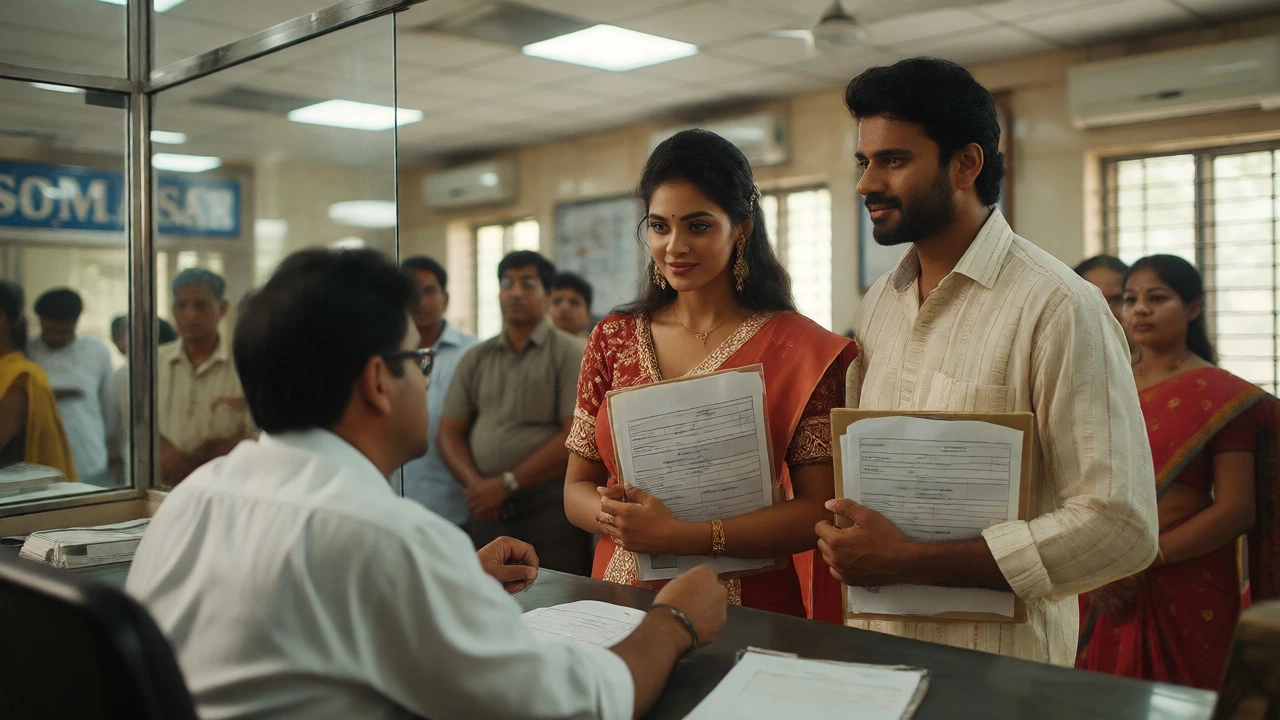
Requirements Under Personal Laws
For those marrying under the Hindu Marriage Act, 1955, Muslim Personal Law, or Christian Marriage Act, the process is slightly different. These registrations are typically post-ceremony. Since the religious ceremony itself holds legal weight in many contexts, the registration serves as official record-keeping rather than the creation of the marriage bond itself.
However, documentation requirements vary wildly by state. In Maharashtra, for instance, you might need a certificate from the priest or officiant confirming the solemnization of the marriage. In other states, a simple application with witnesses suffices.
Common additions for personal law marriages include:
- Certificate of Solemnization: Issued by the temple, mosque, church, or gurdwara where the wedding occurred. Ensure it includes the date, place, and names of the couple.
- Divorce Decree (if applicable): Certified copy of the final divorce order. Not a pending petition-final.
- Death Certificate: If remarrying after the death of a spouse, the original or certified copy of the death certificate is mandatory.
Don’t underestimate the power of witnesses. While the core acts specify numbers, local practice often demands more. Always carry two to three witnesses who can provide their own ID proofs and photographs. They must be present during the signing. If your witness forgets their Aadhaar card, you’re stuck.
Handling Foreign Nationals and NRIs
If you’re an NRI or marrying a foreign citizen, the document trail gets thicker. The Foreigners Act, 1969 and related regulations come into play.
For foreign nationals, the following are critical:
- Valid Passport & Visa: Must be current. If the visa expires before registration, you’re in trouble.
- NOC from Embassy: This letter confirms the individual is single/divorced/widowed according to their home country’s laws. It must be apostilled or legalized by the Indian Embassy in their home country if issued abroad.
- Translation: If any document is not in English or Hindi, a certified translation is required.
NRIs face a similar burden. While you don’t need an NOC from an embassy, you do need to prove your stay in India during the notice period (for SMA) or presence at the ceremony. Keep boarding passes and travel history handy if questioned.
Common Pitfalls and How to Avoid Them
Even with all documents ready, rejections happen. Here’s why:
- Name Mismatches: Your name on the Aadhaar card says "Rahul Kumar," but your passport says "Rahul K. Singh." Registrars hate discrepancies. Fix this *before* applying. Carry supporting affidavits explaining the difference if you can’t change the documents instantly.
- Expired IDs: Check expiry dates on passports and licenses weeks in advance.
- Missing Witness Details: Witnesses must sign in front of the officer. If they leave early, the process halts.
- Wrong Jurisdiction: Trying to register in Mumbai when neither of you lives there and didn’t marry there will result in rejection.
One smart move? Apply online first. Many states like Delhi, Karnataka, and Tamil Nadu offer online portals where you upload scanned documents. This pre-screening catches errors before you stand in line. Once approved online, you visit the office only for verification and signature.
After Submission: What Happens Next?
Once you submit your application and documents, the timeline varies. For Hindu marriages, you might get the certificate in 7-15 days. For Special Marriage Act cases, add the 30-day notice period to the processing time, pushing it to 45-60 days.
You will receive a receipt with a tracking number. Use it! Follow up regularly. Sometimes files get lost in the stack. If you don’t hear back within the stipulated time, visit the office politely but firmly. Bring your receipt and ID.
Finally, keep digital and physical copies safe. Get multiple originals if possible. You’ll need them for passport updates, banking, and tax filings. Losing a marriage certificate is annoying; replacing it takes longer than getting the first one.
Is marriage registration mandatory in India?
It depends on the state and the act under which you married. Under the Special Marriage Act, it is mandatory. For Hindu marriages, it was historically optional but is now compulsory in several states like Maharashtra, Karnataka, and Delhi for legal recognition. Even where optional, it is highly recommended for practical benefits like visas and property rights.
How long does it take to get a marriage certificate in India?
Under the Hindu Marriage Act, it typically takes 7 to 15 days after submission. Under the Special Marriage Act, the process includes a mandatory 30-day public notice period, so the total time is usually 45 to 60 days.
Can I register my marriage without witnesses?
Generally, no. Most registrars require at least two to three witnesses to be present during the application or signing process. They must provide their own identification documents and photographs.
What if my spouse is a foreign national?
You will need their valid passport, visa, and a No Objection Certificate (NOC) from their embassy stating they are eligible to marry. Documents issued abroad may need to be apostilled or legalized.
Do I need to translate my documents?
Yes, if your documents are not in English or Hindi. You must provide a certified translation from a recognized translator or agency.