
Many people in India believe you must live apart for years before you can get a divorce. That’s not true. The law doesn’t force you to sleep in different rooms or move out of the house just to file for divorce. What matters is whether your marriage has broken down beyond repair - not where you sleep at night.
What the law actually says
The Hindu Marriage Act, 1955, and other personal laws in India don’t require couples to live separately before filing for divorce. You can file on the same day you decide you’ve had enough. Courts look at the state of the relationship, not the physical distance between spouses.
For example, if your spouse is emotionally abusive, refuses to communicate, or has abandoned the family without reason, you don’t need to wait six months or two years to file. You can start the process right away. The law recognizes that marriage breakdowns happen fast - sometimes in a single argument, sometimes after years of silent suffering.
There’s one exception: mutual consent divorce. If both of you agree to end the marriage, you must show that you’ve been living apart for at least one year before filing. But even then, "living apart" doesn’t mean you have to rent separate apartments. It just means you’re not living as husband and wife - no shared meals, no intimacy, no joint decisions. You could still live under the same roof, but treat each other like strangers.
Living together doesn’t block divorce
Some couples stay in the same house for financial reasons - maybe they can’t afford two homes, or they’re waiting for a child to finish school. Others stay because of family pressure or fear of stigma. The courts understand this. In 2021, the Delhi High Court ruled that couples living under the same roof could still qualify for mutual consent divorce if they proved they had no marital relationship.
One real case involved a couple who lived in a three-bedroom apartment. The husband slept in one room, the wife in another. They cooked separately, paid bills individually, and didn’t speak for months. When they filed for divorce, the husband argued they weren’t "living separately." The court dismissed that claim. The judge said: "Physical proximity does not equate to marital cohabitation."
So if you’re still under the same roof, but you’ve stopped sharing your life - that counts.
What counts as "living apart"?
The term "living apart" in Indian divorce law is not about geography. It’s about behavior. Courts look at these signs:
- No sexual relationship for over a year
- No shared meals or household responsibilities
- No joint financial decisions
- No social outings as a couple
- No communication beyond necessary logistics
You don’t need a lease agreement or a separate address. You need proof that your marriage has ended - even if you’re still sharing walls.
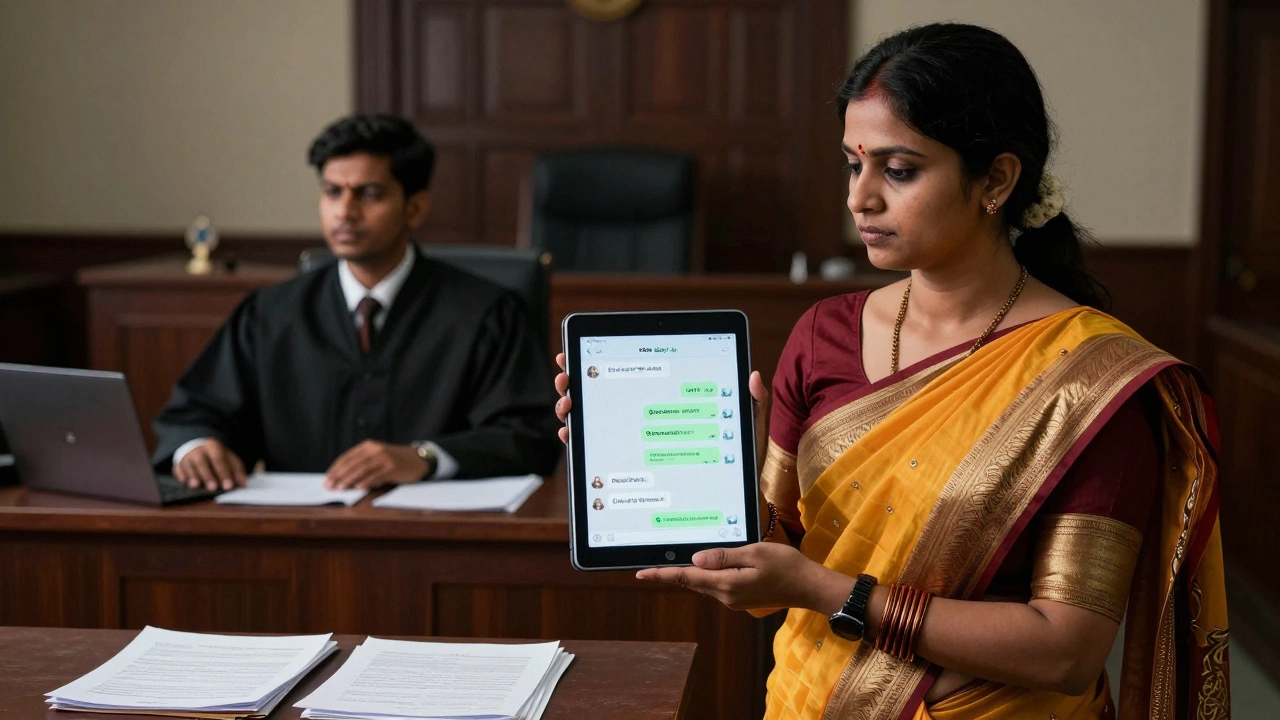
Letters, text messages, bank statements showing separate expenses, witness statements from friends or family, or even a notarized affidavit can help prove this. In one 2023 case in Mumbai, a wife submitted her WhatsApp chat history showing she had told her husband six months earlier: "I’m done. I’m not coming back." The court accepted that as evidence of separation.

Can you file for divorce without living apart at all?
Yes - if you’re filing on grounds other than mutual consent.
For example, if your spouse has committed adultery, cruelty, desertion, or mental disorder, you don’t need to wait for any separation period. You can file immediately. In fact, the longer you wait after abuse or betrayal, the harder it becomes to prove your case. Courts expect you to act promptly.
One woman in Pune filed for divorce just two weeks after her husband physically assaulted her. She had photos, medical reports, and a police complaint. The court granted her divorce within eight months. She never left the house during the process.
On the other hand, if you’re filing for divorce because you’ve grown apart - no abuse, no cheating, just emotional distance - then mutual consent is your best path. And yes, that requires one year of separation. But again, that doesn’t mean moving out.
Common myths about divorce and living apart
Here are the biggest misunderstandings people have:
- Myth: "You have to move out to get a divorce."
Truth: You can file from the same house. The court cares about your relationship, not your address. - Myth: "If we live together, the court will think we’re still married."
Truth: The court looks at your actions, not your sleeping arrangements. - Myth: "You need to be separated for two years."
Truth: Only mutual consent requires one year. Other grounds have no waiting period. - Myth: "If I leave, I’ll lose custody of my kids."
Truth: Leaving doesn’t hurt your case. Staying in an abusive environment might.
These myths come from social pressure, not law. They’re used to keep people trapped in unhappy marriages. Don’t let them hold you back.
What you should do next
If you’re considering divorce, here’s what actually works:
- Document everything - messages, emails, medical records, financial records.
- Don’t move out unless it’s safer for you. Staying doesn’t hurt your case.
- Speak to a divorce lawyer who knows Indian family law - not just any lawyer.
- Ask if mutual consent is possible. If yes, start gathering proof of separation.
- If there’s abuse, file for divorce immediately. Don’t wait for "the right time."
You don’t need permission from your spouse to start. You don’t need to prove you’ve been sleeping in different rooms. You just need to prove your marriage is over.
What if my spouse refuses to agree?
If your spouse says "no" to divorce, you can still file for a contested divorce. Grounds like cruelty, adultery, or desertion don’t require their approval. The court will decide based on evidence.
Contested divorces take longer - often two to four years - but they’re still possible. In 2024, the Supreme Court of India streamlined procedures for contested divorces in cases involving domestic violence. Judges are now more likely to grant immediate interim relief, like restraining orders or temporary custody, even while the case is pending.
You don’t need to wait for your spouse to change their mind. You just need to prove your case.
Final thought
Divorce in India isn’t about where you live. It’s about whether you’re still married in heart and practice. Living apart is one way to show that - but not the only way. Your marriage ends when you stop being partners, not when you pack your bags.
If you’re ready to move forward, don’t wait for the perfect moment. The law doesn’t ask for perfection. It asks for truth. And truth doesn’t need a separate address.
Do I have to leave my home to file for divorce in India?
No. You can file for divorce while still living in the same house. The law looks at whether your marriage has broken down - not whether you share a roof. Many people stay in the same home for financial, cultural, or safety reasons and still get divorced.
How long do I need to live separately for mutual consent divorce?
You must show you’ve been living apart for at least one year before filing for mutual consent divorce. But "living apart" doesn’t mean separate homes. It means no marital relationship - no intimacy, no shared decisions, no emotional connection. You can still live under the same roof if you’ve stopped being a couple.
Can I get a divorce if my spouse doesn’t agree?
Yes. You can file for a contested divorce on grounds like cruelty, adultery, desertion, or mental illness. Your spouse’s consent isn’t required. The court will decide based on evidence. These cases take longer but are legally valid.
What proof do I need to show I’ve been living apart?
You don’t need rent receipts or utility bills. Courts accept evidence like separate bank accounts, text messages showing emotional distance, witness statements from family, medical records, or even a notarized affidavit. The key is proving you stopped living as husband and wife.
Is it better to move out before filing for divorce?
Only if it’s safer or healthier for you. Moving out doesn’t strengthen your case. In fact, leaving might hurt you if you’re trying to claim custody or if your spouse claims you abandoned the marriage. Stay if you can - but document everything. The law protects your rights whether you’re in the house or not.