
Criminal Justice Career ROI Calculator
* Active students often bypass entry-level bottlenecks faster.
That question keeps popping up in student forums and family dinner conversations: Is criminal justice a pointless degree? It’s a harsh take, but it comes from a real place of frustration. You see friends with engineering or computer science degrees landing high-paying jobs straight out of university, while you’re wondering if your major in crime and punishment will just lead to minimum-wage security guard shifts.
The short answer is no. The degree isn’t pointless. But the long answer requires some honesty about what the degree actually gets you-and what it doesn’t. A criminal justice degree is not a golden ticket to becoming a lawyer. It is, however, a solid foundation for a wide range of careers in public safety, corrections, and legal support. If you go into it expecting to argue cases in court immediately after graduation, you’ll be disappointed. If you view it as a launchpad for specialized training or entry-level government roles, it holds significant value.
What Does a Criminal Justice Degree Actually Teach You?
To understand the value, we have to look at the curriculum. A standard bachelor’s program in criminal justice covers three main pillars: sociology, psychology, and law enforcement operations. You aren’t just learning how to shoot a gun or fill out arrest reports. You are studying the root causes of crime, the ethics of policing, and the mechanics of the judicial system.
In places like New Zealand, where I live in Wellington, this theoretical knowledge is crucial. Our legal system relies heavily on restorative justice principles alongside traditional punitive measures. Understanding these nuances separates a professional from an amateur. Courses typically include:
- Criminology: The study of why people commit crimes and how society responds.
- Forensic Science Basics: Understanding evidence collection and chain of custody.
- Legal Systems: How statutes, case law, and constitutional rights interact.
- Corrections Management: The logistics and rehabilitation strategies within prison systems.
This broad overview gives you context. When you walk into a police station or a courthouse, you understand the ecosystem. That contextual awareness is valuable, even if it doesn't pay the bills directly on day one.
The Lawyer Misconception: Why This Degree Won't Make You an Attorney
Here is the biggest trap students fall into. Many believe that a criminal justice degree is the direct path to becoming a criminal lawyer. It is not. In most jurisdictions, including New Zealand and the United States, becoming a lawyer requires a separate law degree (like an LLB or JD) and passing the bar exam.
A criminal justice undergraduate degree is often seen as "pre-law" by some, but it lacks the rigorous legal reasoning training of a dedicated law program. If your goal is to practice law, you can absolutely get a criminal justice degree first-it shows interest in the field-but you must plan for graduate school. Without that extra step, you cannot represent clients in court.
So, if you want to be a lawyer, is the degree pointless? No. It provides a strong foundational understanding of the criminal process, which makes law school easier. But it is only step one of a much longer, more expensive journey. If you don't intend to go to law school, you need to pivot your expectations toward other roles.
Career Paths That Actually Value the Degree
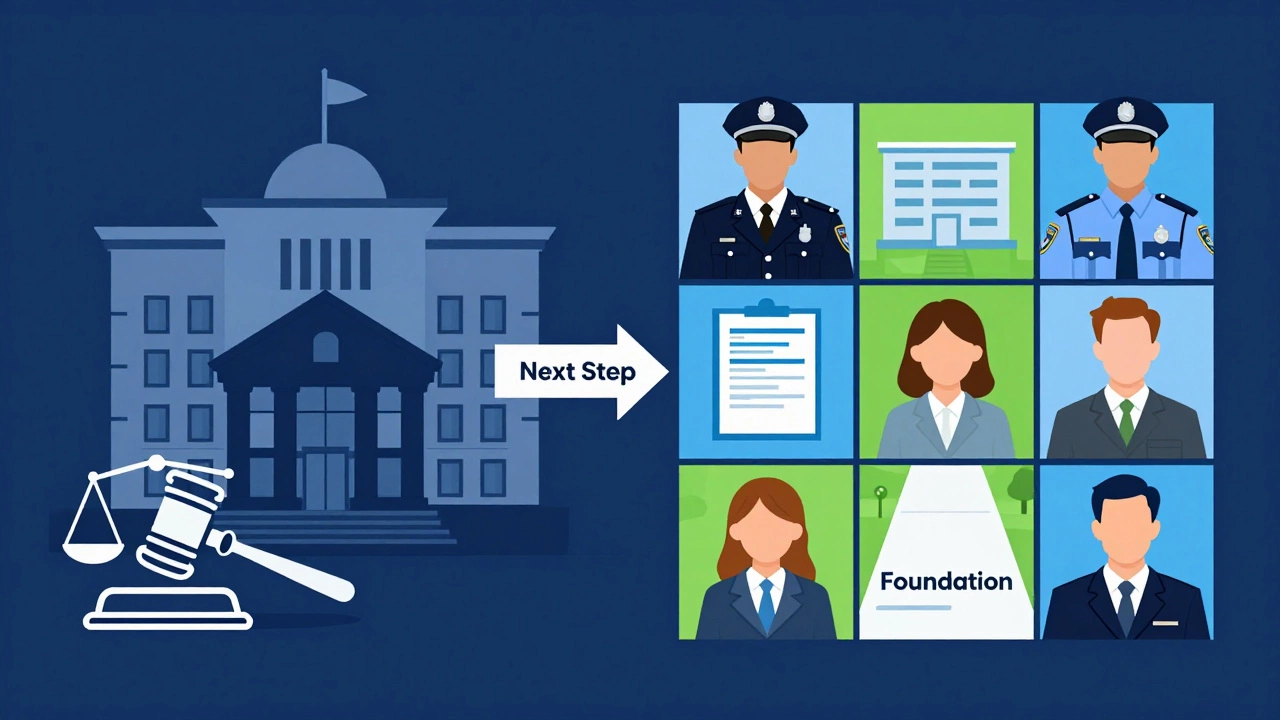
If you aren't going to law school, where does the degree take you? The job market for criminal justice graduates is diverse, though salaries vary wildly. Here are the most common and viable paths:
| Job Title | Typical Requirements | Entry-Level Salary Range (NZD) | Growth Potential |
|---|---|---|---|
| Police Officer | Police Academy Training + Degree preferred | $50,000 - $65,000 | High (Sergeant, Detective, Commander) |
| Paralegal / Legal Assistant | Degree + Certificate often helpful | $45,000 - $60,000 | Moderate (Senior Paralegal, Office Manager) |
| Correctional Officer | Degree + Physical Fitness Test | $48,000 - $62,000 | Moderate (Warden, Program Coordinator) |
| Probation/Parole Officer | Degree + Background Check | $55,000 - $70,000 | Moderate (Supervisor, Policy Analyst) |
| Private Investigator | Licence + Experience | $40,000 - $80,000 (Variable) | High (Self-Employed) |
Note that these salaries are approximate and depend heavily on location and experience. In Wellington, living costs are high, so entry-level wages can feel tight. However, government roles like police and probation offer stability, pensions, and clear promotion ladders that private sector jobs sometimes lack.
Why Some People Call It "Pointless" (And Why They're Half-Right)
The criticism usually stems from ROI (Return on Investment). University tuition is expensive. Student loans accumulate interest. If you graduate with a criminal justice degree and end up working a retail job because you couldn't find a role in the field, the math looks bad. Compared to a software engineer making $100k+ starting out, the contrast is stark.
Also, many entry-level jobs in this field-like security guards or bailiffs-do not strictly require a degree. Employers might hire someone with a high school diploma for the same pay. So, where is the premium for your education? The premium isn't in the starting salary; it's in the ceiling. A degree helps you bypass the "no management experience" barrier when applying for supervisory roles. It signals competence and commitment to hiring managers in competitive government sectors.
Furthermore, the degree teaches soft skills: critical thinking, report writing, and ethical decision-making under pressure. These are transferable. A criminal justice grad can move into human resources, compliance, or risk management in corporate settings. The key is not limiting yourself to "crime" jobs.

How to Maximize the Value of Your Degree
If you decide to pursue this path, don't just show up to lectures and leave. To make the degree count, you need to build practical experience alongside your studies. Here is how top performers do it:
- Internships are non-negotiable. Try to secure a placement with a local law firm, the police department, or a community advocacy group. Real-world exposure trumps GPA in many hiring decisions.
- Get certified. Consider adding a certificate in mediation, forensic accounting, or cybersecurity. These niche skills make you stand out in a crowded applicant pool.
- Network locally. Attend events hosted by the New Zealand Police Association or local bar associations. Knowing someone who hires is often more valuable than knowing the textbook definition of due process.
- Learn data analysis. Modern policing and corrections rely heavily on data. Being able to use Excel, SQL, or basic Python to analyze crime trends makes you incredibly valuable to policy-makers and investigators.
Alternatives to Consider
If you are still unsure, look at adjacent fields. Maybe you love the investigative aspect but hate the bureaucracy. In that case, consider a degree in Digital Forensics or Cybersecurity. These fields are booming, pay significantly better, and have less physical danger. Alternatively, if you are interested in the human side, Social Work or Psychology might offer more fulfilling outcomes in victim support and rehabilitation.
There is no single right answer. The "pointlessness" of the degree depends entirely on your effort to bridge the gap between academia and employment. Passive students struggle; active students thrive.
Can I become a lawyer with just a criminal justice degree?
No. A criminal justice bachelor's degree alone does not qualify you to practice law. You must complete a specific law degree (such as an LLB in New Zealand or a JD in the US) and pass the relevant bar or licensing exams. However, your criminal justice background will give you a head start in understanding courtroom procedures and criminal statutes during law school.
What is the average salary for a criminal justice graduate in New Zealand?
Salaries vary widely based on the role. Entry-level positions like police officers or correctional officers typically start between $50,000 and $65,000 NZD per year. Paralegals may earn slightly less initially but can grow their income with experience. Senior roles in government administration or specialized investigation can exceed $90,000 NZD.
Is a criminal justice degree worth it if I want to work in private security?
For basic security guard roles, the degree is overkill and won't significantly increase your starting pay. However, if you aim for executive protection, loss prevention management, or private investigation, the degree demonstrates professionalism and analytical skill, helping you command higher rates and access senior positions faster than those without formal education.
How does a criminal justice degree help in finding a criminal lawyer near me?
While the degree doesn't make you a lawyer, it helps you navigate the legal system more effectively. You will understand legal terminology, know what questions to ask potential attorneys, and be better prepared to assist them with case facts. This makes you a more informed client, ensuring you select competent representation rather than being misled by marketing hype.
What skills do employers look for in criminal justice graduates?
Employers prioritize written communication (for reports), critical thinking, ethical judgment, and emotional resilience. Increasingly, technical skills like data analysis and familiarity with legal software are highly valued. Internship experience is often the deciding factor between two equally qualified candidates.