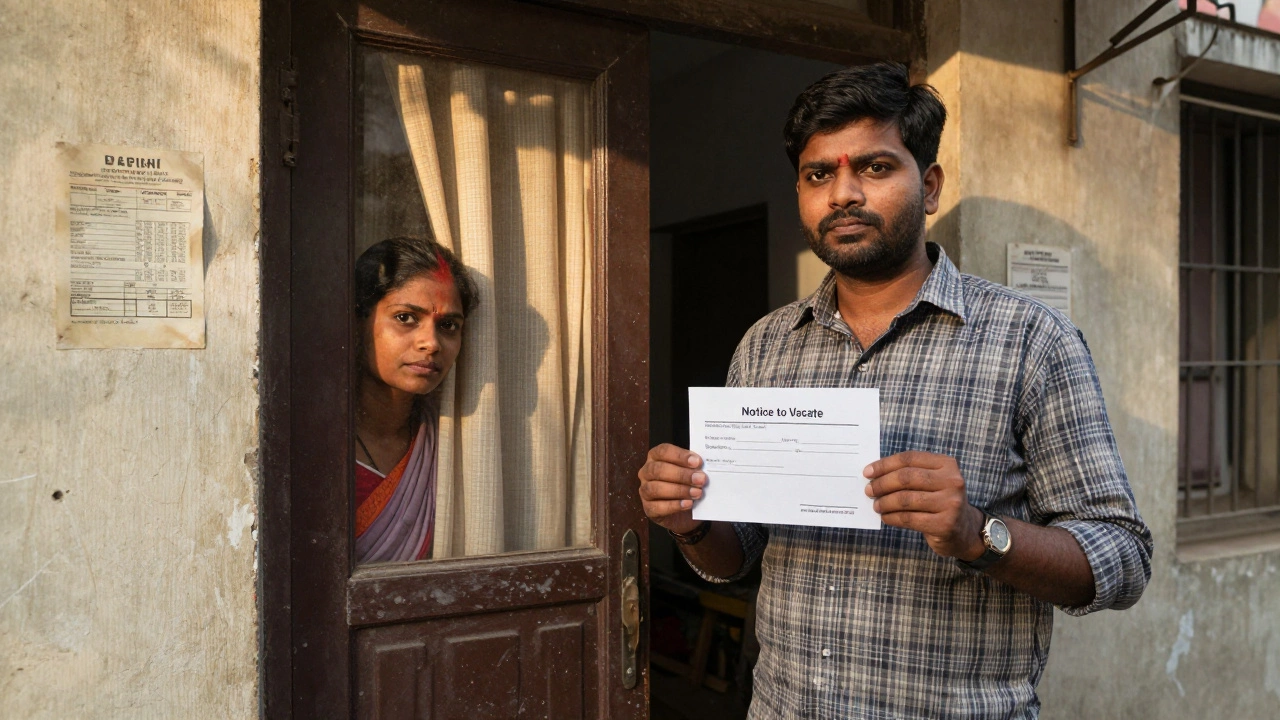
When a landlord wants a tenant to leave a rented property in India, they can’t just ask them to go. There are clear legal rules about how much notice they must give-and those rules depend on why the tenant is being asked to leave. Many tenants don’t know their rights, and many landlords don’t follow the law. That’s why understanding the exact notice period is critical for both sides.
What’s the standard notice period in India?
In most cases, a landlord must give a tenant at least 15 days’ notice to vacate the property. This is based on the Model Tenancy Act, 2021, which is now adopted by most Indian states. But this 15-day rule isn’t universal. It applies mainly when the tenant has broken the lease terms-like not paying rent, damaging the property, or using the space illegally.
If the lease agreement itself says something different, that usually takes priority. For example, if your rental contract says you must be given 30 days’ notice before eviction, then the landlord must follow that. Courts in India generally uphold written agreements unless they violate public policy or the law.
What if there’s no written lease?
A lot of rentals in India happen without a formal contract. Maybe you just paid rent monthly and got a receipt. Even then, the law still protects you. Under the Transfer of Property Act, 1882, a tenant in a month-to-month arrangement must be given a notice equal to the length of the rental period. So if you pay rent every month, the landlord must give you one full month’s notice before asking you to leave.
This means if you pay rent on the 5th of every month, the landlord must serve notice before the 5th of the month before the one you’re expected to leave. For example, if they want you gone by April 5, they must give notice before March 5.
Can a landlord evict you without notice?
No. Even if you haven’t paid rent for three months, the landlord still needs to follow legal procedure. They can’t change the locks, cut off electricity, or threaten you. That’s illegal under Section 14 of the Protection of Tenants from Eviction Act (in states where it applies) and also violates the Indian Penal Code for criminal intimidation or trespass.
Real eviction in India requires a court order. The landlord must file a suit in the civil court, prove the breach (like non-payment), and wait for the judge’s decision. This process can take months. The tenant gets a chance to respond, explain, and even pay dues before the court rules.
What counts as valid notice?
Notice isn’t just a verbal request. It must be in writing and delivered properly. Valid notice includes:
- A signed letter sent by registered post
- An email with read receipt (if agreed in the lease)
- A notice delivered in person with a witness and signed acknowledgment
Text messages or WhatsApp messages alone are not enough unless both parties agreed to accept them as legal notice. Courts often reject informal notices because they lack proof of delivery and intent.

What if the landlord wants to sell the property?
Selling the property doesn’t automatically end your tenancy. Under the Model Tenancy Act, the new owner must honor your existing lease. If your lease is still active, the landlord can’t force you out just because they sold the house.
But if you’re on a month-to-month agreement, the landlord can give you notice to vacate-still with the proper period (15 or 30 days depending on circumstances). They can’t evict you mid-lease unless you’ve broken the rules.
What if you’re being evicted for non-payment of rent?
This is the most common reason landlords try to evict tenants. But even here, the law gives you a chance to fix it. If you owe rent, the landlord must:
- Send a written notice demanding payment
- Wait at least 15 days after the notice
- File a court case if you still haven’t paid
During this time, you can pay the overdue rent and any late fees to stop the eviction. Many courts in India have dismissed eviction cases when tenants paid up before the hearing.
Are there exceptions to the notice period?
Yes. Some states have their own rent control laws that override the Model Tenancy Act. For example:
- In Mumbai (Maharashtra), the Mumbai Rent Control Act gives tenants lifelong tenancy rights unless they’ve committed serious violations.
- In Delhi, the Delhi Rent Control Act requires 30 days’ notice even for non-payment.
- In Tamil Nadu, the Tamil Nadu Buildings (Lease and Rent Control) Act requires 90 days’ notice for eviction without cause.
Always check your state’s specific law. You can find them on your state’s revenue department website or by asking the local rent control officer.

What can you do if you get an illegal eviction notice?
If your landlord tries to force you out without following the law, here’s what you can do:
- Record all communication-keep copies of notices, texts, emails
- File a complaint with the local rent control authority
- Apply for an injunction in civil court to stop eviction
- Report illegal lockouts or utility cuts to the police under IPC Section 441 (criminal trespass)
Many tenants don’t realize they can get free legal aid. Legal aid clinics in every district offer free advice and even representation in court. You don’t need money to defend your right to stay.
How to protect yourself as a tenant
Prevention is better than fighting in court. Always:
- Sign a written lease with clear terms
- Keep rent receipts and bank transfer records
- Document the condition of the property with photos before moving in
- Know your state’s rent control laws
- Never agree to verbal promises-get everything in writing
If you’re on a month-to-month lease, pay rent on time and keep records. Even a single late payment can be used against you-but if you’ve paid everything else on time, courts often side with the tenant.
What about notice from the tenant?
It’s not just landlords who need to give notice. Tenants must also give notice before moving out. Most leases require 15-30 days’ notice. If you leave without notice, the landlord can deduct the equivalent rent from your security deposit. But they can’t keep the whole deposit unless they prove actual losses.
Always give written notice to your landlord-even if you’re leaving because they broke the lease. That protects you from claims of abandonment.
Final reminder
Landlords don’t have the right to evict you on a whim. The law is on your side-if you know it. Whether you’re paying rent in cash or online, whether you have a contract or not, you still have rights. The notice period isn’t a suggestion. It’s a legal requirement. And if you’re being pushed out illegally, you have tools to fight back.
Can a landlord evict me without going to court in India?
No. A landlord cannot legally evict a tenant without a court order. Even if the tenant hasn’t paid rent or broken the lease, the landlord must file a lawsuit and get a judge’s approval. Any attempt to force a tenant out by changing locks, cutting utilities, or threatening them is illegal and can lead to criminal charges.
What if I don’t have a written rental agreement?
Even without a written lease, you’re still protected under the Transfer of Property Act, 1882. If you pay rent monthly, the landlord must give you at least one full month’s notice before asking you to leave. Verbal agreements are legally recognized, and rent receipts or bank records serve as proof of tenancy.
How long does the eviction process take in India?
The eviction process can take anywhere from 3 to 12 months, depending on the court’s backlog and the complexity of the case. If the tenant pays the overdue rent before the court hearing, the case is often dropped. Many landlords delay filing because they know the process is slow and costly.
Can I be evicted if I pay rent late once?
One late payment doesn’t automatically lead to eviction. The landlord must first send a written notice demanding payment and give you time to pay. If you pay the full amount owed-including any late fees-before the court hearing, most judges will dismiss the eviction case. Courts in India generally favor tenants who are willing to pay but have faced temporary hardship.
Do I need a lawyer to fight an eviction notice?
You don’t need a lawyer, but it helps. You can represent yourself in civil court. Many district courts have legal aid cells that provide free advice and help you file the right documents. If you’re low-income, you can apply for free legal services under the Legal Services Authorities Act, 1987. Don’t assume you can’t afford help-there are options.