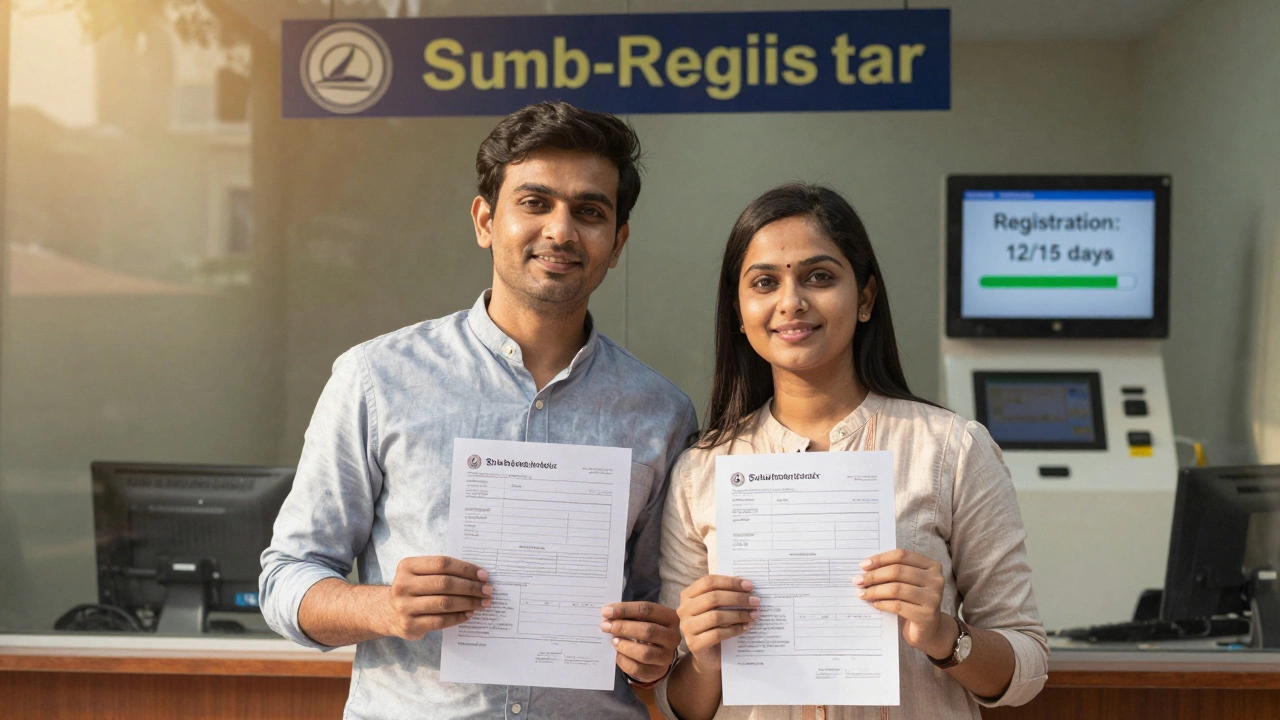
Marriage Registration Timeline Calculator
Estimated Registration Time
Select options above to see timeline
Getting married in India isn’t just about the ceremony-it’s about the legal paperwork that comes after. Many couples assume that once the rings are on and the photos are taken, they’re officially married. But in India, that’s not enough. Without registration, your marriage isn’t legally recognized by the government. So, how long does it actually take to register a marriage in India? The answer isn’t one-size-fits-all. It depends on where you live, which law applies to you, and how quickly you move through each step.
Why Marriage Registration Matters in India
Registration isn’t optional in most cases. Even if you had a religious ceremony, a marriage certificate is the only document that gives you legal rights-like inheritance, spousal benefits, immigration, or even claiming insurance. Without it, you could be denied access to your partner’s assets, face trouble when applying for a visa, or struggle to prove your marital status in court.
The Hindu Marriage Act, 1955 is the law that governs marriages for Hindus, Buddhists, Jains, and Sikhs. For interfaith or civil marriages, the Special Marriage Act, 1954 applies. Both require registration, but the timelines and procedures differ slightly.
The Two Main Paths: Hindu Marriage Act vs Special Marriage Act
If you’re following a traditional religious ceremony, you’re likely covered under the Hindu Marriage Act. Registration here is simpler and faster. You can apply at the Sub-Registrar’s office in the district where either spouse lives or where the marriage took place. You’ll need:
- Marriage invitation card or photos from the ceremony
- Proof of age (birth certificate, passport, or school leaving certificate)
- Proof of address (utility bill, Aadhaar card)
- Two witnesses with ID
- A completed application form
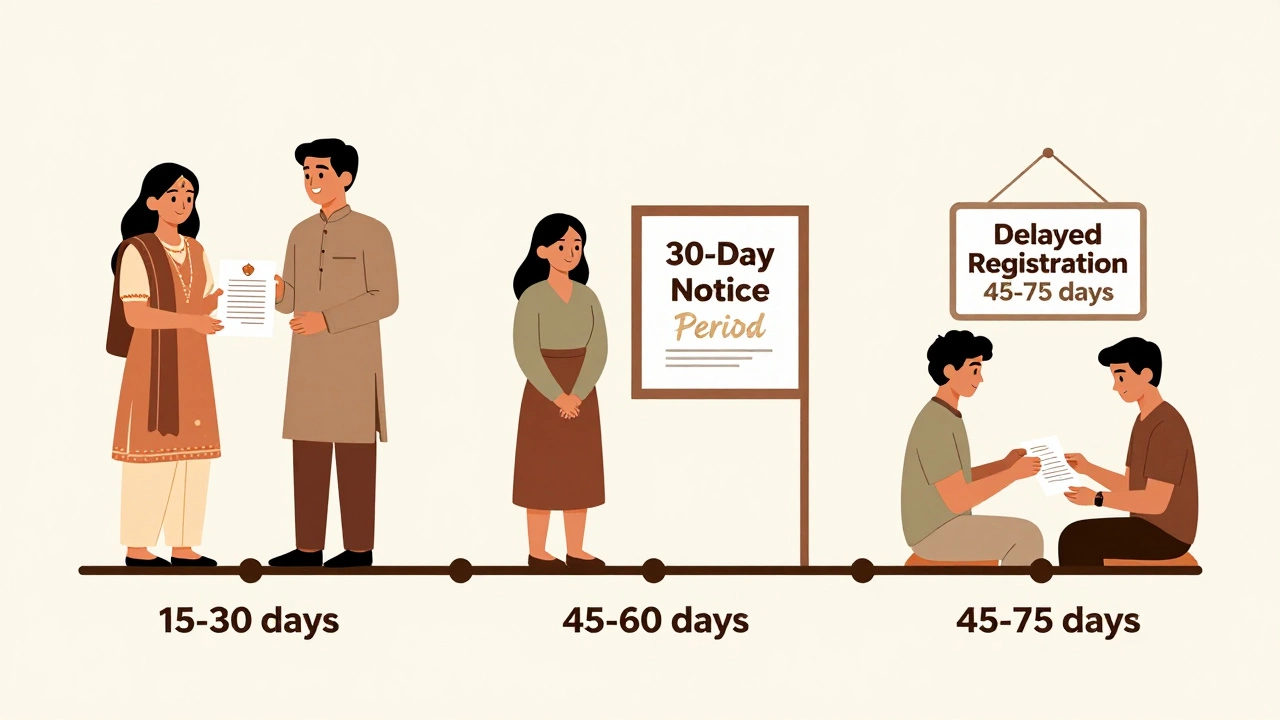
Once submitted, the registrar usually processes the application within 15 to 30 days. In many states like Maharashtra, Karnataka, and Tamil Nadu, the certificate is issued within two weeks if documents are complete.
Now, if you’re using the Special Marriage Act-common for interfaith couples, atheists, or those wanting a civil marriage-the process takes longer. This law requires a 30-day public notice period. After you file the notice, the registrar publishes it in the office for 30 days. During this time, anyone can raise an objection. If none come up, the marriage is solemnized and registered.
That means the total time under the Special Marriage Act is at least 45 to 60 days. The 30-day notice plus 15 days for verification and certificate issuance. Some districts take longer if paperwork is incomplete or if the registrar is backlogged.
State-by-State Differences Matter
India doesn’t have one national system. Each state runs its own marriage registration office. Some are efficient; others are slow. For example:
- In Delhi, online registration cuts the process to 10-15 days if all documents are in order.
- In Bihar or Uttar Pradesh, it can take 45-60 days due to manual processes and high volume.
- Kerala and Goa have digitized systems-registrations often finish in under 10 days.
- West Bengal requires an additional affidavit from a notary, adding 5-7 days.
Online portals like Shadi.com (in some states) or state-specific sites like Maharashtra Marriage Registration Portal can speed things up. But even then, you still need to visit the office for biometric verification or witness signing.
What Can Delay Your Registration?
Many couples hit delays not because of the law-but because of paperwork mistakes. Common mistakes include:
- Using outdated or blurry documents
- Missing witness signatures
- Not matching names on Aadhaar, passport, and marriage invitation
- Trying to register in the wrong district
- Not paying the correct fee (ranges from ₹100 to ₹500 depending on the state)
One couple in Hyderabad waited 8 weeks because they submitted a school certificate instead of a birth certificate for age proof. The registrar rejected it. They had to get a new one from their school board-another 12-day wait.
Another issue? Missing the 30-day window to apply after the wedding. Most states require you to register within 30 to 90 days. After that, you need a late fee and a sworn affidavit explaining the delay. That adds more time and cost.
Can You Register a Marriage After the Fact?
Yes. Even if you got married a year ago, you can still register. But you’ll need:
- A sworn affidavit explaining the delay
- Additional proof of cohabitation (joint bank statements, rent receipts, utility bills)
- Permission from the district magistrate in some states
This isn’t a loophole-it’s a legal requirement. The government still wants to record marriages, even if they’re late. But expect the process to take 45-75 days, not the usual 15-30.
How to Speed Things Up
If you want your marriage registered quickly, here’s what works:
- Apply online as soon as possible after the wedding.
- Double-check every document against the state’s checklist-don’t assume.
- Visit the office in person to hand over documents. Emailing or mailing often leads to delays.
- Ask for a receipt with a reference number. Follow up every 5 days if you don’t hear back.
- Use WhatsApp or SMS services offered by some district offices for updates.
In cities like Pune, Bengaluru, and Chandigarh, many registrars now send SMS alerts when your certificate is ready. That’s a game-changer.
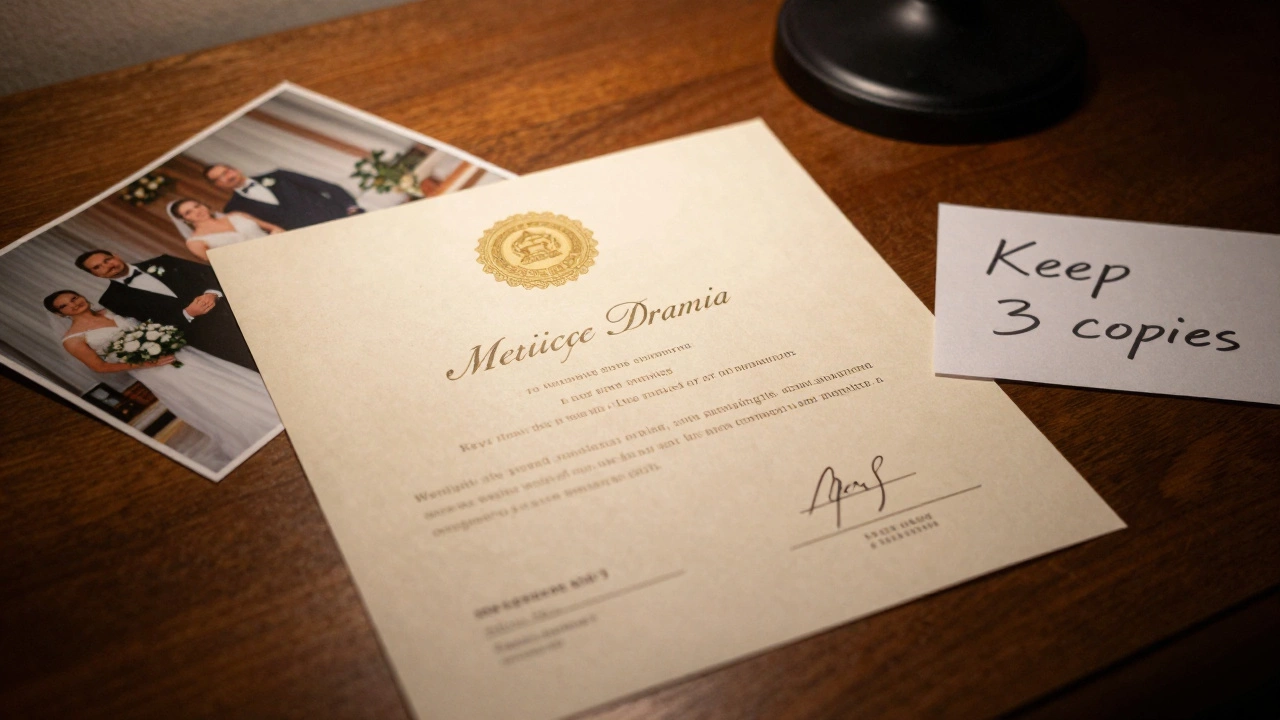
What You Get: The Marriage Certificate
Once approved, you’ll get a printed marriage certificate with:
- Full names of both spouses
- Date and place of marriage
- Registration number
- Signature of the registrar
- Official seal
This document is valid nationwide. You can use it to change your surname on bank accounts, apply for a spouse visa, or claim pension benefits. Keep at least three copies-one for each spouse and one for your records.
What If You Don’t Register?
Technically, you’re still married if you had a religious ceremony. But legally? You’re in a gray zone. Without a certificate:
- You can’t get a spousal visa or residency permit abroad.
- You can’t claim your partner’s insurance or death benefits.
- If your partner passes away without a will, you might not inherit anything.
- In court, you’ll need to prove your marriage with affidavits and witnesses-expensive and uncertain.
It’s not illegal to not register-but it’s risky. And in today’s world, where everything from loans to travel requires proof of marital status, skipping this step is like leaving your front door unlocked.
Final Timeline Summary
Here’s what you can realistically expect:
| Path | Typical Timeline | Best For |
|---|---|---|
| Hindu Marriage Act | 15-30 days | Couples with religious ceremonies |
| Special Marriage Act | 45-60 days | Interfaith, civil, or non-religious couples |
| Late Registration (after 90 days) | 45-75 days | Couples who missed the deadline |
Plan ahead. Don’t wait until you need the certificate for a visa or loan. Start the process within a week of your wedding. Keep copies of everything. And if you’re unsure, visit your local Sub-Registrar’s office and ask for their checklist. Most have them posted online or at the counter.
Is marriage registration mandatory in India?
Yes, in practice. While the Supreme Court ruled in 2006 that marriage registration should be mandatory, enforcement varies by state. But without a certificate, you lose legal rights. So even if not strictly enforced everywhere, it’s essential.
Can I register my marriage in a different state than where I got married?
Yes. You can register in the district where either spouse currently lives, where the marriage was solemnized, or where either spouse’s permanent address is listed. You don’t have to return to the wedding location.
Do I need a priest or priestess to register my marriage?
No. The priest or officiant doesn’t handle registration. That’s done by the Sub-Registrar’s office. The priest’s signature may be needed as a witness, but the legal registration is separate.
Can I register my marriage online?
In many states, yes. Delhi, Maharashtra, Tamil Nadu, and Kerala offer full or partial online registration. You can apply, upload documents, and pay fees online. But you’ll still need to visit once for biometrics or witness signing.
What if my partner is a foreign national?
You must register under the Special Marriage Act. Your partner will need a valid visa, passport, and a No Objection Certificate (NOC) from their embassy. The 30-day notice period still applies. Processing can take 60-75 days.