Civil Case Outcome Estimator
Picture this: you’ve been in a dispute for months. Maybe it’s a neighbor blocking your driveway, a contractor who vanished halfway through a renovation, or an employer who didn’t pay overtime. You’ve hired a lawyer, filed paperwork, and waited. Now you’re wondering, “Will I actually see a judge?”
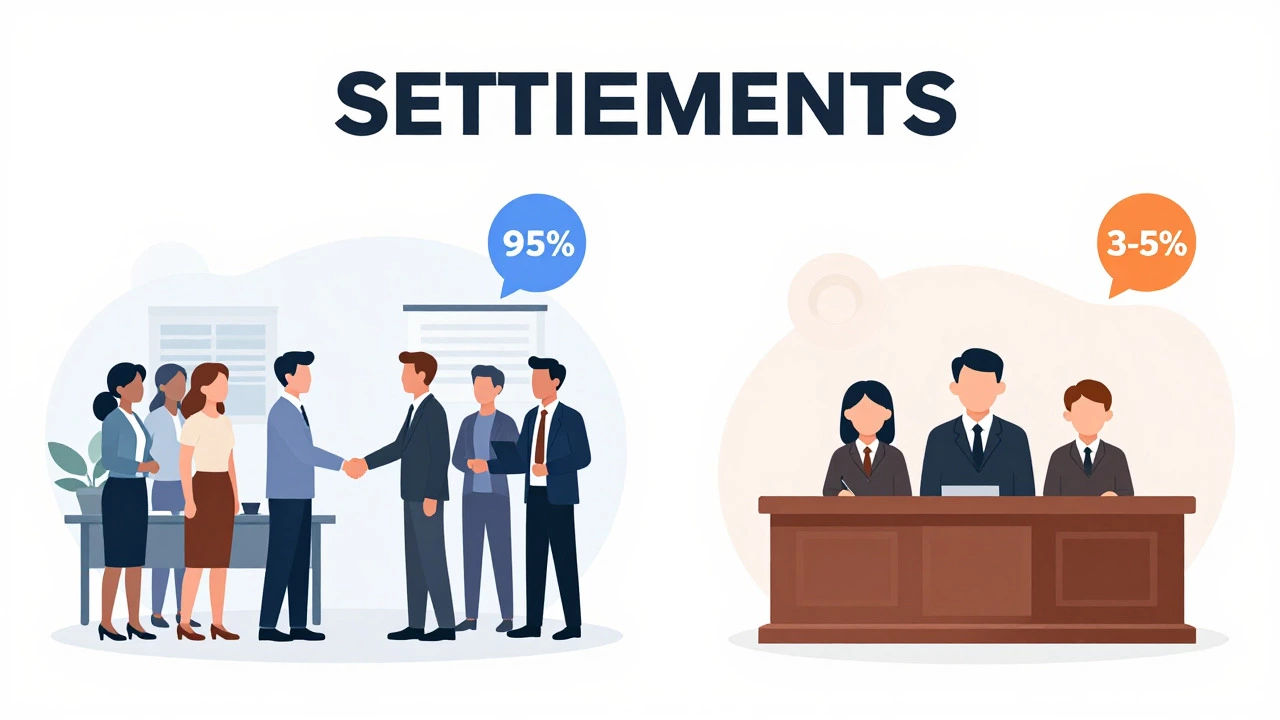
The short answer is no. If you are involved in a civil case, which is a legal dispute between individuals or organizations where one party seeks compensation or specific performance rather than criminal punishment, the odds of standing before a jury are slim to none. In fact, roughly 95% to 97% of all civil lawsuits never reach a trial verdict. They end elsewhere.
Understanding how these cases actually conclude can save you time, money, and a lot of stress. It changes how you approach negotiations and helps you set realistic expectations when you first walk into a law firm.
The Dominance of Settlements
When people ask how civil cases end, they usually imagine a dramatic courtroom scene. Reality is much quieter. The vast majority of cases end through settlement, which is a voluntary agreement between parties to resolve their dispute without a final judgment from a judge or jury.
A settlement is essentially a business deal. Both sides weigh the risks. The plaintiff (the person suing) asks, “What is the best offer I can get now versus the risk of getting nothing if I lose at trial?” The defendant (the person being sued) asks, “Is it cheaper to pay this amount now or risk a massive penalty later?”
This happens for several practical reasons:
- Cost: Trials are expensive. Expert witnesses, deposition transcripts, and attorney hours add up quickly. A $10,000 claim might cost $15,000 to litigate fully.
- Uncertainty: Juries are unpredictable. Even strong cases can fail on a technicality or a bad day. Defendants hate uncertainty; plaintiffs fear empty verdicts.
- Time: Court dockets are backlogged. A trial might be scheduled two years out. Nobody wants to wait that long for justice.
Settlements can happen at any stage. Sometimes they occur before a lawsuit is even filed. Other times, they happen during discovery, the pre-trial phase where both sides exchange evidence and take sworn testimony from witnesses. Occasionally, a deal is struck right after the jury is seated but before opening statements begin.
Alternative Dispute Resolution (ADR)
If settlement talks stall, many courts force parties into Alternative Dispute Resolution. This isn’t a trial, but it’s more structured than informal negotiation. There are two main types you’ll encounter:
- Mediation: A neutral third party, the mediator, helps facilitate conversation. The mediator has no power to force a decision. Their job is to lower temperatures and help parties find common ground. Mediation is non-binding unless an agreement is signed.
- Arbitration: This looks more like a mini-trial. An arbitrator hears evidence and arguments, then makes a ruling. In many contracts (like employment agreements or consumer warranties), arbitration is mandatory. Unlike mediation, arbitration awards are often binding and very hard to appeal.
Many jurisdictions require mediation before a case can proceed to trial. For example, in California superior courts, complex civil cases must go through mediation. This process filters out thousands of cases annually that would otherwise clog the system.
Dismissals and Voluntary Withdrawals
Not every case ends with money changing hands. A significant number of civil cases end because the plaintiff decides to stop fighting. This is called a voluntary dismissal.
Why would someone drop a case?
- New Evidence: During discovery, the plaintiff finds out their key witness is unreliable or their documents contradict their story.
- Cash Flow Issues: Litigation drains bank accounts. Small businesses and individuals sometimes run out of funds to continue paying legal fees.
- Strategic Shift: A company might realize that continuing a public lawsuit generates negative PR, so they settle quietly or drop the case to move on.
There are also involuntary dismissals. If a plaintiff fails to file required documents by court deadlines, the judge may dismiss the case “with prejudice,” meaning it can never be refiled. This is a harsh penalty for missing procedural rules.
Motions to Dismiss
Sometimes, a case dies early due to a legal argument rather than a factual one. The defendant files a motion to dismiss, a formal request asking the judge to throw out the case because the complaint fails to state a valid legal claim.
This doesn’t mean the defendant says, “I didn’t do it.” Instead, they argue, “Even if everything the plaintiff said is true, there is no law that gives them the right to sue me.”
For instance, if you sue a friend for breaking a verbal promise to lend you money, the defendant might move to dismiss based on the Statute of Frauds, which requires certain contracts to be in writing. If the judge agrees, the case ends immediately, regardless of whether the promise was broken.
Summary judgments are another tool here. After discovery, if there are no genuine disputes over material facts, the judge can decide the case legally without a trial. This is common in contract disputes where the terms are clear and one party simply failed to perform.
The Rare Trial Verdict
So, what happens to that remaining 3-5%? They go to trial. These are the cases where neither side will budge. The stakes are high, the egos are bruised, and both lawyers believe they have a winning hand.
Trials result in a verdict from a judge (bench trial) or a jury. The winner gets what they asked for, minus any reductions for comparative negligence or caps on damages.
However, a verdict isn’t always the end. The losing party can appeal. Appeals focus on legal errors made during the trial, not on re-weighing evidence. Most appeals are denied, but some result in new trials or reduced awards.
Winning a trial doesn’t guarantee payment. If the defendant has no assets, the judgment is just a piece of paper. Collecting requires additional steps like wage garnishment or liens on property. This collection phase is where many “won” cases effectively end in frustration.
Factors Influencing How Cases End
The path your case takes depends heavily on its type. Different areas of civil law have different cultures around resolution.
| Case Type | Primary Outcome | Trial Frequency | Key Driver |
|---|---|---|---|
| Personal Injury | Settlement | Very Low (<3%) | Insurance liability limits |
| Employment Disputes | Arbitration/Settlement | Low | Contractual clauses |
| Family Law | Judgment/Mediation | Medium | Court oversight of children/assets |
| Contract Breach | Summary Judgment/Settlement | Low-Medium | Clarity of written terms |
| Real Estate | Settlement/Judgment | Low | Property value leverage |
In personal injury cases, insurance companies drive settlements. They prefer to close claims quickly to avoid bad publicity and high legal costs. In employment law, mandatory arbitration clauses in employee handbooks force most disputes away from public courts entirely.
Family law cases, like divorce or custody battles, rarely “end” in the traditional sense. They result in ongoing orders. While initial filings might be settled, modifications later often return to court. These cases are less about financial risk and more about judicial authority.
Negotiating Your Exit Strategy
Knowing that most cases end in settlement should change how you act from day one. Don’t view negotiation as a sign of weakness. View it as the primary battlefield.
Here is how to prepare for the most likely outcome:
- Document Everything Early: Strong evidence increases your settlement leverage. Photos, emails, and contracts make your position undeniable.
- Calculate Your BATNA: Know your Best Alternative To a Negotiated Agreement. What is the worst-case scenario if you don’t settle? Knowing this floor prevents you from accepting too little or rejecting reasonable offers.
- Be Reasonable: Lawyers can spot greed instantly. If your demands are wildly inflated, the other side will dig in, increasing the chance of a costly stalemate.
- Consider Non-Monetary Terms: Sometimes an apology, a reference letter, or a future service contract is worth more than cash. Be creative in settlement discussions.
Remember, the goal of civil litigation is usually not to prove a point-it’s to solve a problem. Whether that solution comes via a handshake deal, a mediated agreement, or a rare courtroom verdict, understanding the landscape helps you navigate it with confidence.
What percentage of civil cases go to trial?
Only about 3% to 5% of civil cases go to trial. The overwhelming majority, approximately 95% to 97%, are resolved through settlements, alternative dispute resolution, or dismissals before a judge or jury ever hears the full argument.
Why do most civil cases settle instead of going to court?
Cases settle primarily due to cost, risk, and time. Trials are expensive and unpredictable. Both plaintiffs and defendants often prefer the certainty of a negotiated payout over the gamble of a jury verdict, especially when legal fees could exceed the potential award.
Can a civil case be dismissed after it starts?
Yes. Cases can be dismissed voluntarily by the plaintiff or involuntarily by the judge. Involuntary dismissals often happen if the plaintiff fails to meet procedural deadlines or if the defendant successfully argues that the complaint lacks legal merit through a motion to dismiss.
What is the difference between mediation and arbitration?
In mediation, a neutral helper facilitates discussion, but the parties must agree to a solution. It is non-binding. In arbitration, a neutral arbitrator acts like a private judge, hears evidence, and makes a binding decision that is difficult to appeal. Arbitration is often mandatory in employment contracts.
Does winning a civil trial guarantee I get paid?
No. A verdict only establishes your legal right to compensation. Collecting the money requires enforcement actions like wage garnishment, bank levies, or placing liens on property. If the defendant has no assets, collecting the judgment can be difficult or impossible.