
Adverse Possession Eligibility Checker
Answer these questions to understand if your situation might qualify for an adverse possession claim. This tool evaluates the five key elements required under Indian law.
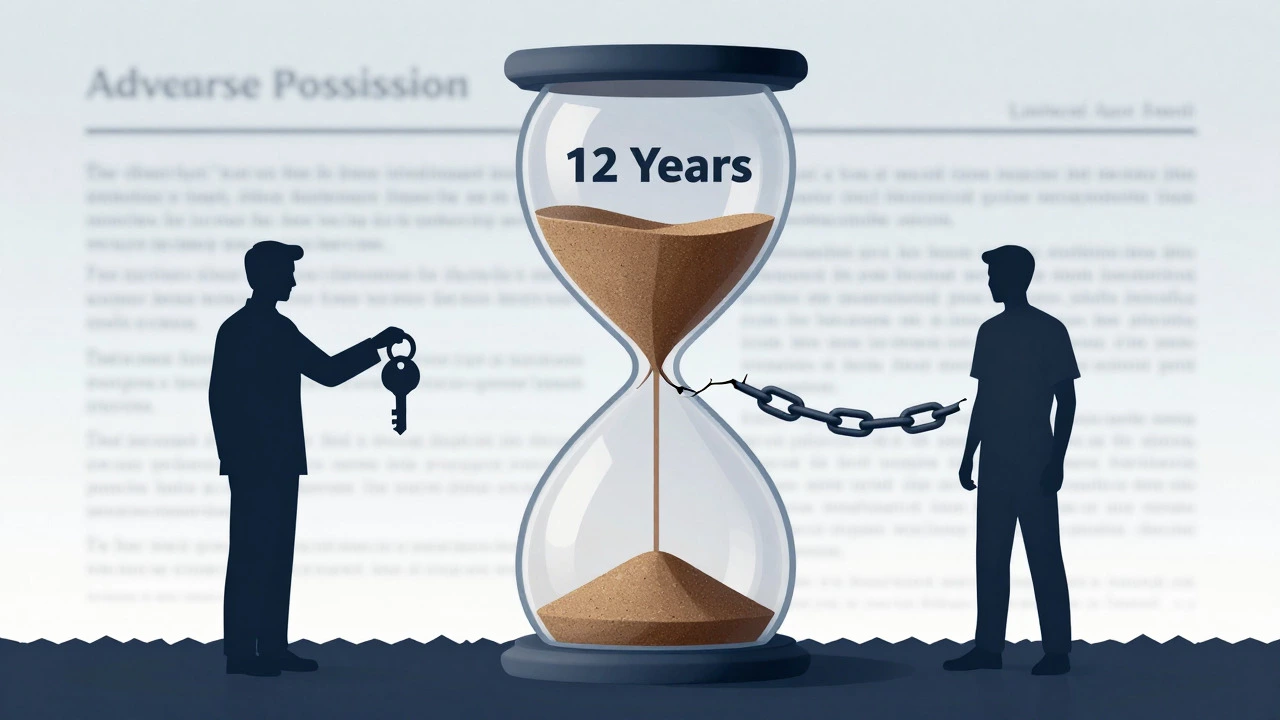
Imagine paying rent for over a decade, only to realize you might actually own the house. It sounds like a plot from a Bollywood movie, but it is a legal reality that confuses landlords and tenants across India every single day. The short answer to whether a tenant can claim ownership after 12 years is: usually no, unless specific, harsh conditions are met. In most cases, paying rent is an admission that you do not own the property. However, if that relationship breaks down in a very specific way, the clock starts ticking toward something called Adverse Possession.
This concept is tricky. It relies on the Limitation Act, 1963, which sets a statute of limitations for filing lawsuits. For immovable property, this period is typically twelve years. But simply living somewhere for twelve years does not make you the owner. You have to prove that your possession was hostile, open, and continuous without the landlord’s permission. Let’s break down exactly how this works, why it rarely applies to standard rental agreements, and what you need to know to protect your interests.
Understanding Adverse Possession in Indian Law
To understand why a tenant usually cannot claim ownership, we first need to define what Adverse Possession actually means in the context of Indian property law. It is a doctrine that allows a person who possesses someone else’s land for a certain period to acquire legal title to it. The logic behind this law is to prevent land from lying idle and to resolve disputes where the true owner has slept on their rights for too long.
However, there is a massive catch. The possession must be "adverse" to the true owner. This means it must be hostile. If you are holding a valid lease agreement, your possession is permissive. You are there because the owner allowed you to be there. As long as that permission exists, the clock for adverse possession does not start. The moment the permission ends-such as when a lease expires and the tenant refuses to leave or pay rent-the clock may begin to tick, provided other conditions are met.
The governing legislation here is the Limitation Act, 1963. Section 27 of this Act states that no suit for possession of immovable property shall be instituted after the expiration of twelve years from the date the possession became adverse. This twelve-year mark is critical. It is not a magic number that grants automatic ownership; rather, it bars the original owner from going to court to evict you. Once the right to sue is barred, the possessor can file a declaratory suit to establish their title.
Why Tenants Rarely Qualify for Ownership Claims
Most people assume that if they pay rent for ten or fifteen years, they build equity or ownership. Legally, this is incorrect. Rent payments are essentially receipts that say, "I acknowledge this is not my property." Every time a tenant hands over a check or transfers money via UPI with the note "Rent for July," they are reinforcing the landlord-tenant relationship. This creates a paper trail that destroys any claim of adverse possession.
For a tenant to successfully claim ownership, they must prove five specific elements, often referred to as the "five A's" in legal circles:
- Actual Possession: The tenant must physically occupy the property. They cannot just hold a key; they must live there or use the land.
- Open and Notorious: The possession must be visible. The landlord should be able to see that the tenant is treating the property as their own. Secretive occupation does not count.
- Hostile (Adverse): This is the hardest part for tenants. The possession must be against the will of the owner. If the landlord accepts rent, even once, during the twelve-year period, the hostility is broken. The possession becomes permissive again.
- Exclusive: The tenant must exclude others, including the true owner, from using the property. Shared use kills the claim.
- Continuous: There can be no significant gaps. If the tenant leaves for six months and the landlord re-enters, the clock resets.
In a typical rental scenario, the "Hostile" element is missing. Courts in India have consistently ruled that mere passage of time does not convert a licensee or tenant into an owner. The burden of proof lies heavily on the person claiming adverse possession. They must provide clear, cogent, and unambiguous evidence.
The Critical Role of Rent Payments and Acknowledgment
One of the biggest pitfalls for tenants trying to claim ownership is the acceptance of rent. Under the Limitation Act, if a landlord acknowledges the title of the adverse possessor, the limitation period restarts. But more importantly, if a tenant pays rent, they are acknowledging the landlord's title.
Consider this scenario: A tenant moves into a flat in Mumbai in 2010. They pay rent regularly until 2018. In 2019, they stop paying rent and refuse to leave. The landlord sends legal notices but does not file for eviction immediately. Does the tenant get ownership in 2031? Likely not. Why? Because for the first nine years, the possession was permissive. The twelve-year count only starts from 2019. So, by 2031, only twelve years of *adverse* possession have passed. If the landlord filed for eviction in 2025, the suit would still be within the limitation period relative to the start of the hostility.
Furthermore, courts look at the intent. If the tenant claims they were building equity, why did they pay rent? The Supreme Court of India has emphasized that the plea of adverse possession is a formidable weapon that requires strict proof. Ambiguities are resolved in favor of the true owner. This is why lawyers often call adverse possession a "defense" rather than a proactive strategy for acquiring property.
Differences Across States: Rent Control Laws vs. Property Rights
India does not have a uniform tenancy law. Each state has its own Rent Control Acts, which vary significantly. These laws primarily deal with eviction protection and rent caps, not ownership transfer. However, they interact with adverse possession claims.
| State | Primary Rent Control Act | Eviction Difficulty | Adverse Possession Precedents |
|---|---|---|---|
| Maharashtra | Maharashtra Rent Control Act, 1999 | High (Strict eviction grounds) | Courts require strict proof of hostility; rent payment negates claim. |
| Delhi | Delhi Rent Control Act, 1958 | Very High (Statutory tenant status) | Long-standing tenants often gain statutory rights, but not ownership via adverse possession easily. |
| Karnataka | Karnataka Rent Control Act, 1999 | Moderate | Recent judgments emphasize that licensees cannot claim adverse possession. |
| Tamil Nadu | Tamil Nadu Buildings (Lease and Rent Control) Act, 1960 | Moderate | Focus on bona fide requirement for eviction; adverse possession requires clear break in tenancy. |
In states like Delhi and Maharashtra, tenants enjoy strong protection against eviction. This sometimes leads to the misconception that they can eventually claim ownership. While they may stay in the property for decades due to difficult eviction processes, this is different from acquiring title. They become "statutory tenants," meaning they have a right to remain, but the ownership remains with the landlord unless a specific settlement occurs.
How Landlords Can Protect Their Property Title
If you are a landlord, the fear of losing your property to a long-term tenant is real, but manageable. The key is documentation and action. First, always maintain a written lease agreement. Verbal agreements are nightmares in court because they lack clarity on terms and permissions.
Second, keep records of all rent payments. Issue receipts. This proves that the possession is permissive. If a tenant stops paying rent, do not ignore it. Send a formal legal notice demanding possession or arrears. This notice serves two purposes: it interrupts any potential adverse possession clock by asserting your rights, and it establishes that the tenancy is disputed, not abandoned.
Third, conduct periodic inspections. If possible, enter the property (with notice) to verify occupancy. This demonstrates that you have not abandoned the property and that you are actively monitoring it. Abandonment by the owner can sometimes aid a tenant's claim, so showing active interest is crucial.
Finally, if a tenant holds over after the lease expires, file for eviction promptly. Do not wait twelve years. The longer you wait, the stronger the argument becomes that you have acquiesced to their possession. The Limitation Act is designed to punish delay, so timely legal action is your best shield.
Steps for Tenants Seeking Legal Clarity
For tenants, the situation is less about claiming ownership and more about securing tenure. If you have lived in a property for many years and want stability, consider negotiating a long-term lease or a buyout option. Some landlords prefer to sell to existing tenants rather than go through the hassle of finding new ones.
If you believe you qualify for adverse possession-which is rare-you need to consult a property lawyer immediately. Gather all evidence showing that you have acted as the owner. This includes paying property taxes, making structural improvements, and excluding the landlord. Note that paying municipal taxes alone is not enough; you must show comprehensive control over the asset.
Be aware that litigation is expensive and time-consuming. Courts in India are backlogged, and a case can drag on for years. Even if you win, the process can be draining. Therefore, amicable settlements are often preferred by both parties. Understanding your rights under the local Rent Control Act is more practical than chasing an unlikely ownership claim.
Common Misconceptions About Property Ownership
There are several myths circulating in Indian neighborhoods regarding property rights. One common belief is that if a tenant lives in a house for 12 years, it automatically becomes theirs. This is false. Ownership does not transfer automatically; it must be claimed in court, and the bar for winning such a case is extremely high.
Another myth is that paying electricity bills or water charges counts as owning the property. While these utilities show occupancy, they do not prove hostile possession. Anyone can pay utility bills on behalf of a landlord. To claim adverse possession, you must show that you paid the property tax (house tax) directly to the government in your name, effectively stepping into the shoes of the owner.
Lastly, some believe that a family arrangement or informal understanding grants ownership. Without a registered sale deed or a court decree, informal arrangements hold little weight against titled owners. Always ensure that any transfer of ownership is documented through proper legal channels, such as registration under the Registration Act, 1908.
Does paying rent for 12 years give me ownership of the property?
No. Paying rent is an acknowledgment that the landlord owns the property. It keeps the possession "permissive," which prevents the clock for adverse possession from starting. To claim ownership, you must stop paying rent and possess the property openly and hostilely for 12 years, which is difficult to prove if you previously had a lease.
What is the difference between a statutory tenant and an adverse possessor?
A statutory tenant has the right to remain in the property due to state rent control laws, protecting them from easy eviction, but they do not own the property. An adverse possessor claims ownership because they have possessed the land hostilely for the statutory period (12 years), effectively barring the true owner from suing for recovery.
Can a landlord evict a tenant who has stayed for more than 12 years?
Yes, unless the tenant has successfully established adverse possession in court. The landlord can file for eviction based on grounds specified in the local Rent Control Act, such as non-payment of rent or personal need. The 12-year rule only applies if the landlord fails to take legal action for 12 years after the possession became adverse.
What documents do I need to prove adverse possession?
You need evidence of continuous, exclusive, and hostile possession. This includes property tax receipts in your name, affidavits from neighbors confirming your long-term ownership-like behavior, records of major repairs or renovations paid for by you, and proof that you excluded the landlord from the property for the entire 12-year period.
Is adverse possession applicable to agricultural land in India?
It varies by state. Many states have amendments to their land ceiling acts or tenancy laws that restrict or prohibit adverse possession claims on agricultural land to protect farmers and landowners. You must check the specific state laws governing agricultural tenancy and land revenue codes.