New Zealand Divorce Asset Calculator
Calculate Your Asset Division
This tool estimates how your assets would be divided under New Zealand's Property (Relationships) Act 1976.
Your Asset Division Estimate
Total assets acquired during relationship:
Assets owned before relationship:
Relationship duration:
Spousal support consideration:
Your Share
Total: $
Relationship assets: $
Pre-relationship assets: $
Your Ex-Spouse's Share
Total: $
Relationship assets: $
Spousal support: $
Under New Zealand's Property (Relationships) Act 1976, assets acquired during the relationship are generally split 50/50, regardless of who paid for them. Pre-relationship assets remain yours unless they were commingled with relationship assets.
Spousal support is determined by the court based on financial need and ability to pay. This estimate includes a potential spousal support component based on your selection above.
When you think about divorce, you probably imagine the emotional toll-the late-night crying, the silence where conversations used to be, the way your kids look at you differently. But the real losses often show up months later, in bank statements, in empty rooms, in legal notices you didn’t see coming. If you’re asking, what will I lose if I get divorced?, you’re not just wondering about feelings. You’re trying to figure out what’s actually on the line.
You Could Lose Half Your Assets
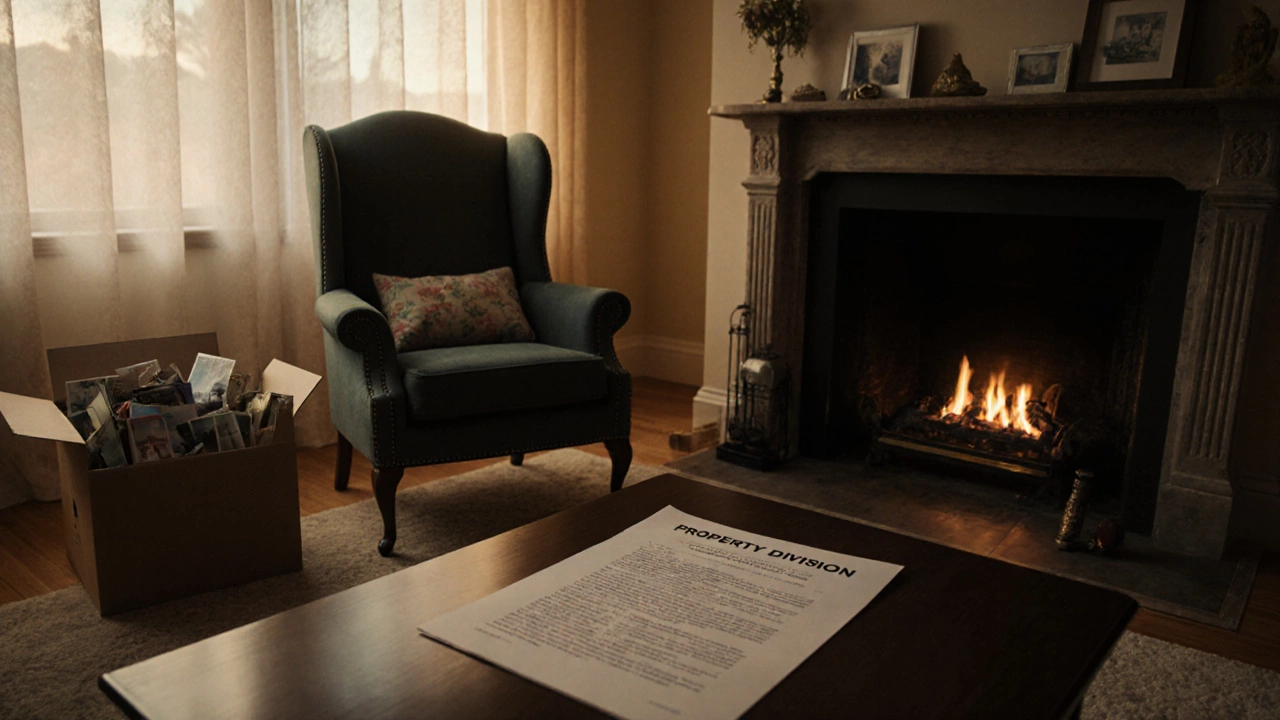
In New Zealand, under the Property (Relationships) Act 1976, everything you and your partner acquired together during the relationship is usually split 50/50. That includes your house, cars, savings, investments, even the TV you bought together. It doesn’t matter whose name is on the title. If you bought it after you moved in together, it’s likely shared property.That means if you saved $200,000 for a down payment on a house before marriage, but you moved in together two years later and started paying the mortgage together, only that $200,000 is yours. The rest-the equity built up during the relationship-is split. Even if you earned more, paid the bills, or stayed home with the kids, the law doesn’t reward effort. It rewards time.
Some things are protected: inheritances, gifts from family, and assets owned before the relationship. But if you used your pre-relationship savings to pay off the mortgage, or put your inheritance into a joint account, you’ve turned it into relationship property. That’s where people get caught off guard.
Your Home Might Not Be Yours Anymore
The family home is the biggest emotional and financial anchor. But if you both lived there during the relationship, it’s treated as relationship property-even if only one of you paid the mortgage. You might think, “I paid for it,” but the law says, “You both lived in it.”That means you could end up with three options:
- Sell the house and split the profit
- One of you buys the other out
- Keep sharing ownership (rare, but happens when you can’t afford to buy out)
Buying someone out means you need cash-or a new mortgage. If your income dropped after having kids, or if your credit score took a hit during the separation, you might not qualify. And if you can’t afford to keep the house, you lose it. Not just the roof over your head-the memories, the garden, the school zone, the sense of stability.
You Might Lose Time With Your Kids
No one talks about this enough. Divorce doesn’t automatically mean you lose your kids. But it often means you lose control over how much time you get. Courts in New Zealand prioritize the child’s best interests-but what that looks like varies wildly.If you’ve been the primary caregiver, you’re more likely to get more time. But if you’ve worked full-time while your partner handled school runs, doctor visits, and bedtime stories, you might start with 50/50 or even less. You can’t just say, “I’m their dad/mom.” You have to prove you’ve been involved.
And if you’re not the one who stayed home, you might end up with weekends, holidays, and school breaks. That’s not nothing-but it’s not the daily rhythm of life you’re used to. You lose spontaneous hugs after school, the quiet mornings before work, the way your child’s voice changes when they’re tired.
And don’t forget: parenting plans are legally binding. If you miss a visit, you’re in breach. If you change plans without notice, you could be ordered to pay costs. Time with your kids isn’t a privilege anymore-it’s a schedule.
You Could Pay Spousal Support
Spousal maintenance isn’t automatic. But if one partner earns significantly more, or if one gave up work to care for the family, the court can order payments. In New Zealand, it’s not meant to be lifelong-but it can last for years.Let’s say your partner stayed home for 12 years to raise three kids. Now they’re 48, with no recent work history, and no superannuation. The court might say you need to pay $1,200 a month for five years while they retrain. That’s $72,000 over five years. On top of child support, your mortgage, and your living costs.
And here’s the twist: you can’t just stop paying if you remarry or get a new partner. The court doesn’t care if your life changed. If the order is in place, you pay. Even if you’re struggling.
Your Superannuation Is Split Too
Superannuation is treated like any other asset. Even if you’ve been contributing for 20 years, your partner can claim half of what you built up during the relationship. That’s not just your retirement-it’s your future security.Let’s say you have $300,000 in super. If you were together for 10 years, your partner could get $150,000. That’s not a small number. That’s half your retirement fund. And if you’re 55 and need to retire soon, that gap could mean working another five years-or downsizing your lifestyle drastically.
There’s no way around it: super is relationship property unless you had a contracting out agreement signed before you moved in together. Most people don’t. So you lose part of your future.
You Lose Privacy, Control, and Peace
You might not think of these as losses-but you will feel them. After divorce, your finances are no longer private. Your bank statements, pay slips, even your tax returns might be shared with your ex and their lawyer. Your phone calls, texts, emails-they can be subpoenaed if there’s a dispute over custody or money.You lose control over decisions. Who gets the dog? Who picks the school? Who pays for braces? If you can’t agree, a judge decides. And judges don’t know your child’s favorite snack. They don’t know how you comfort them when they’re scared. They read documents. They follow rules.
You also lose the quiet. The silence where you didn’t have to explain yourself. The ability to make a decision without checking in. The freedom to start fresh without someone else’s expectations hanging over you.

You Might Lose Your Social Circle
Divorce doesn’t just split two people-it splits families. Friends take sides. Family gatherings become awkward. You might find yourself invited to fewer birthday parties, fewer barbecues, fewer holidays. Your partner’s side of the family might cut you off. Your own family might pressure you to “get over it” or “not make a fuss.”And if you’re the one who initiated the divorce, people might blame you. If you’re the one who didn’t want it, you might feel like you’re the failure. Either way, you lose the network you built together.
You Lose the Future You Planned
Think about the trips you talked about. The retirement home you imagined. The college fund you started. The way you pictured your 25th anniversary. Those aren’t just dreams-they’re plans you built with someone else. When the marriage ends, those plans vanish. Not because you didn’t care. But because they were shared.You might start over. You might find new dreams. But the ones you had together? They’re gone. And you can’t get them back.
What You Can Do About It
You can’t undo the past. But you can protect what’s left.- Get legal advice early-even if you’re not sure you want to divorce. A lawyer can help you understand what’s at stake.
- Document everything: receipts, bank statements, emails, parenting logs. Proof matters.
- Don’t move out without a plan. Leaving the home can hurt your claim to it.
- Don’t hide assets. Courts punish dishonesty with heavier penalties.
- Consider mediation. It’s cheaper, faster, and gives you more control than court.
You won’t lose everything. But you will lose things you didn’t expect. The key isn’t to avoid loss-it’s to know what’s coming so you can plan for it.
Will I lose my house in a divorce in New Zealand?
If you lived in the house during your relationship, it’s usually considered relationship property-even if only one person paid the mortgage. You could keep it by buying out your partner’s share, but that requires cash or a new mortgage. Otherwise, you’ll likely need to sell and split the proceeds. The law doesn’t care who bought it; it cares who lived in it.
Can I keep my superannuation after divorce?
No-not fully. Superannuation earned or contributed to during the relationship is split 50/50 under New Zealand law. If you have $400,000 in super and were together for 10 years, your partner could get $200,000. Only what you had before the relationship is protected, unless you used it to pay joint bills or moved it into a shared account.
Do I have to pay spousal support if my ex earns less?
Not always, but possibly. If your ex gave up work to care for children or the home, and now can’t support themselves, the court may order you to pay spousal maintenance. It’s not lifelong, but it can last for years. The amount depends on your income, their needs, and how long you were together.
What happens to our debts in a divorce?
Debts incurred during the relationship are shared just like assets. That includes credit cards, personal loans, and even student loans if they were used for joint purposes. You can’t avoid them by saying, “That was their debt.” The court will split them 50/50 unless there’s a clear reason not to.
Can I get more than 50% if I contributed more financially?
Rarely. New Zealand law treats financial and non-financial contributions as equal. Staying home to raise kids counts as much as earning the income. Courts don’t reward who earned more-they reward who was in the relationship. You’d need a prenuptial agreement to change this.
If you’re thinking about divorce, don’t wait until emotions are high to ask hard questions. The legal system doesn’t care how you feel. It only cares about what’s documented, what’s proven, and what’s legally yours. Know your rights. Know your risks. And don’t let fear make you silent.