
Consumer Compensation Calculator
How much compensation could you receive?
Based on the Consumer Protection Act 2019, calculate potential compensation for your complaint. Note: This is an estimate. Actual compensation depends on case specifics and court decisions.
Estimated Compensation
Note: The Consumer Protection Act 2019 allows for refund of amount paid plus compensation for damages. Compensation may include punitive damages up to ₹10 lakh for severe violations. Actual compensation depends on the facts of your case and court's discretion.
When you buy a defective phone, get cheated by a false warranty claim, or are overcharged for a service in India, you’re not just being ripped off-you’re having your legal rights ignored. Under the Consumer Protection Act 2019, every buyer in India has clear, enforceable rights. But when businesses deny those rights, what actually happens next? The system doesn’t just shrug. There are real consequences-for both the consumer and the company.
What Rights Do You Actually Have?
The Consumer Protection Act 2019 gives you six basic rights. These aren’t suggestions. They’re legal guarantees:- Right to Safety: Products can’t harm you. A faulty electric kettle that catches fire? That’s a violation.
- Right to Be Informed: You must get clear details-price, quality, ingredients, expiry date. If a skincare product says "organic" but has 12 synthetic chemicals, that’s deception.
- Right to Choose: You can’t be forced into a bundle deal. If a telecom company makes you buy a ₹2,000 accessory to get a ₹500 plan, that’s coercion.
- Right to Be Heard: Your complaint must be taken seriously. No more being put on hold for 45 minutes while your issue gets buried.
- Right to Seek Redressal: If you’re cheated, you’re entitled to compensation, replacement, or refund.
- Right to Consumer Education: Companies must help you understand your rights. Silence isn’t an option.
These aren’t theoretical. Courts in India handle over 3 million consumer complaints every year. The system is built for ordinary people-not just lawyers or corporations.
What Happens When a Company Ignores Your Complaint?
Most companies will try to avoid responsibility. They’ll say, "It’s not our fault," "The warranty expired," or "You didn’t follow instructions." But under Indian law, they have to prove that. You don’t need to prove they lied-you just need to show you were harmed.Here’s what typically happens when a business denies your rights:
- You file a complaint with the district consumer forum. No lawyer needed. You can do it online at ecourts.gov.in in under 15 minutes.
- The company gets a notice. They have 30 days to respond. If they ignore it, the case moves forward anyway.
- The forum reviews evidence-receipts, photos, WhatsApp messages, service records. Even screenshots of false ads count.
- If the company is found guilty, they must pay compensation. This can include: refund of money, replacement of the product, punitive damages (up to ₹10 lakh), and even costs for your time and travel.
- Repeat offenders get listed in public databases. Some are banned from selling online.
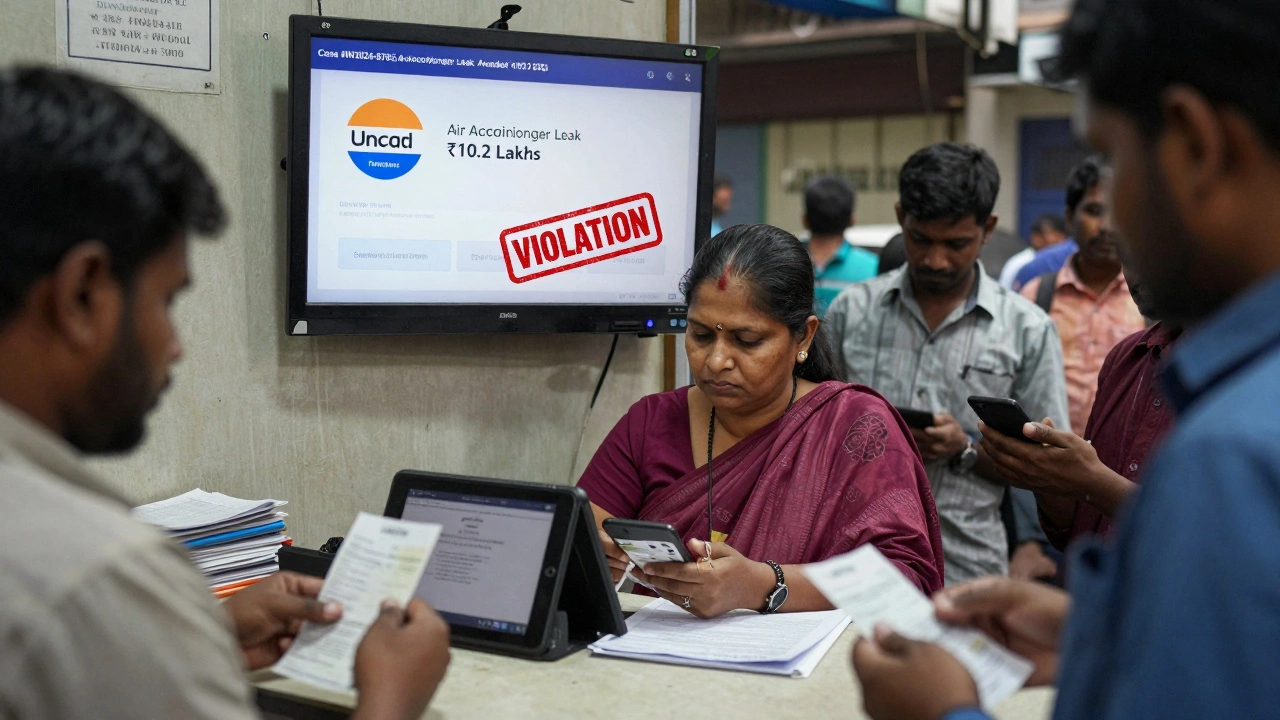
In 2024, the National Consumer Disputes Redressal Commission awarded ₹8.7 lakh to a woman whose air conditioner leaked water and ruined her furniture. The company claimed it was "installation error." The court ruled: "The product should not fail under normal use." The company paid, plus ₹1.5 lakh in damages for mental harassment.
What Are the Real Consequences for Businesses?
Denying consumer rights isn’t just bad ethics-it’s bad business. The penalties aren’t small.- Fines: Up to ₹10 lakh for misleading advertising or defective goods. For repeated violations, fines can go higher.
- Product recalls: The government can order companies to pull dangerous products off shelves. In 2023, over 200 batches of baby formula were recalled after reports of contamination.
- Online bans: Amazon, Flipkart, and Meesho now suspend sellers who get three or more consumer complaints within 90 days.
- Public shaming: The National Consumer Helpline publishes monthly reports listing top violators. Companies like Paytm, Xiaomi, and Tata Cliq have been named for delayed refunds or hidden charges.
- Criminal charges: In extreme cases-like selling fake medicines or adulterated food-the business owner can face jail time under the Food Safety and Standards Act or the Drugs and Cosmetics Act.
One electronics retailer in Delhi was shut down after 17 complaints about fake refurbished phones. The owner was fined ₹5 lakh and banned from selling electronics for two years. He now runs a small grocery store.
How Do You Prove Your Case?
You don’t need a law degree. But you do need evidence. Here’s what works:- Receipts: Always keep them. Digital receipts from UPI or email count.
- Photos or videos: Show the defect. A cracked screen, a leaking pipe, a missing part.
- Communication logs: Save emails, chat screenshots, call recordings (legal in India if you’re part of the conversation).
- Advertisements: If they promised "lifetime warranty" or "100% satisfaction," print or screenshot it.
- Witnesses: A friend who saw the product fail? Their statement helps.
One man in Hyderabad bought a washing machine that stopped working after 12 days. He saved the WhatsApp chat where the seller said, "We’ll replace it within 48 hours." Four months later, they still hadn’t. He filed a complaint. The forum ordered a full refund plus ₹20,000 for mental stress. The company didn’t appeal.
What If the Company Still Refuses?
If the company ignores the consumer forum’s order, things get serious. The forum can:- Issue a court warrant to seize company assets.
- Freeze bank accounts linked to the business.
- Report the case to the police for contempt of court.
In 2025, a travel agency in Bangalore refused to refund ₹75,000 after canceling a honeymoon package. The consumer forum ordered repayment. The agency ignored it. The forum then froze their bank account. Within 72 hours, the money was paid. The owner had to personally appear in court to explain why he broke the law.

Who Can Help You?
You’re not alone. There are free resources:- National Consumer Helpline: Call 1915 or use the app. They mediate complaints for free.
- Consumer Commissions: District, State, and National levels. No fee to file.
- NGOs: Organizations like Consumer Guidance Society of India offer free legal advice.
- Online portals: e-Daakhil (ecourts.gov.in) lets you file complaints from your phone.
Over 60% of cases filed in 2024 were resolved within 90 days. The system is slow only if you wait. If you act, it moves fast.
What You Should Do Right Now
If you’ve been denied your rights:- Don’t accept "no" as final. The law is on your side.
- Gather all proof-receipts, messages, photos.
- File a complaint on e-Daakhil. It takes 10 minutes.
- Follow up every 15 days. Don’t let it sit.
- Share your story. Public pressure works.
Consumer rights in India aren’t a privilege. They’re a promise. And when that promise is broken, the system doesn’t just notice-it responds.
What if a company refuses to refund my money after a complaint?
If a company ignores your refund request after a consumer forum order, the forum can freeze their bank account, seize assets, or even refer the case to police for contempt of court. Most companies pay once they see their funds are at risk.
Can I file a complaint against a foreign company selling in India?
Yes. If a foreign company sells to Indian customers through Amazon, Flipkart, or their own website, they fall under Indian consumer law. The National Consumer Commission has ordered companies like Apple, Samsung, and ASOS to pay refunds and compensation to Indian buyers.
How long does a consumer complaint take to resolve?
Most cases are resolved within 90 days if you submit complete documents. Delays happen only if the company appeals or if you don’t follow up. The system is designed to be fast for ordinary people.
Do I need a lawyer to file a consumer complaint?
No. You can file online at e-Daakhil yourself. The process is designed for non-lawyers. Lawyers are optional-you only need one if the case goes to appeal or involves complex legal arguments.
Can I complain about a service like a bank or telecom provider?
Absolutely. Banks, telecom companies, airlines, and insurance firms are all covered. Over 40% of 2024 complaints were against telecom providers for hidden charges or poor service. The law treats services the same as physical products.