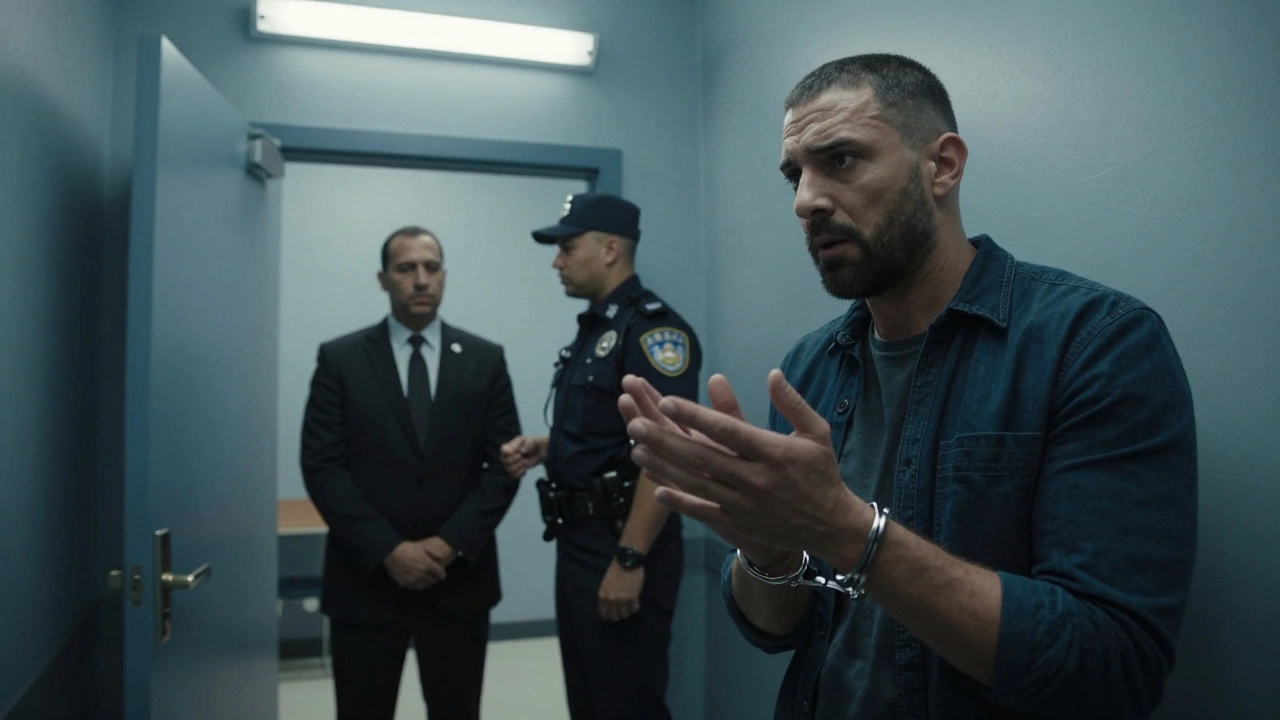
You might have heard the question Sixth Amendment 'What amendment denies a lawyer?' but that's not how it works. In fact, there's no amendment that denies lawyers. Instead, the Sixth Amendment is the part of the U.S. Constitution that guarantees the right to legal counsel in criminal prosecutions. This amendment is a critical safeguard ensuring fair trials and protecting defendants from unfair prosecution.
What the Sixth Amendment Actually Says
The exact text of the Sixth Amendment states: "In all criminal prosecutions, the accused shall enjoy the right to a speedy and public trial, by an impartial jury of the State and district wherein the crime shall have been committed, which district shall have been previously ascertained by law, and to be informed of the nature and cause of the accusation; to be confronted with the witnesses against him; to have compulsory process for obtaining witnesses in his favor; and to have the Assistance of Counsel for his defence."
This means if you're charged with a crime, you have the right to a lawyer. It's not optional. Police, prosecutors, and courts must respect this right. If you can't afford a lawyer, the government must provide one. This isn't just theory-it's been tested in courts for decades.
When Your Right to a Lawyer Applies
Your right to counsel kicks in at critical stages of a criminal case. It starts when you're formally charged or during police interrogation after arrest. For example, if police bring you in for questioning about a crime, you can say "I want a lawyer" and they must stop asking questions until you have one. This is part of the Miranda warning you see on TV. But Miranda rights actually combine protections from both the Fifth and Sixth Amendments. The Fifth Amendment covers your right to remain silent, while the Sixth Amendment guarantees your right to a lawyer during criminal proceedings.
This right continues through every step of the process: arraignment, pretrial hearings, trial, sentencing, and even appeals. If you're convicted and appeal, you still have the right to a lawyer for that process. The Supreme Court has made it clear: once criminal charges are filed, the Sixth Amendment protections are active.
Public Defenders and Indigent Defense
What if you can't afford a lawyer? That's where public defenders come in. The landmark 1963 Supreme Court case Gideon v. Wainwright is a Supreme Court ruling that required states to provide lawyers for defendants who can't afford them in felony cases. Before this case, poor defendants often faced trial without a lawyer. Clarence Gideon was charged with breaking into a pool hall in Florida. He couldn't afford a lawyer and asked the court to appoint one. The court refused, he represented himself, and was convicted. He appealed all the way to the Supreme Court, which ruled 9-0 that states must provide lawyers for indigent defendants in felony cases.
Today, public defenders are government-employed lawyers who handle cases for people who can't pay. They're not perfect-many have huge caseloads-but they're a constitutional requirement. In 2025, over 1.5 million people in the U.S. rely on public defenders each year. Without this system, the justice system would be deeply unfair.

Criminal vs Civil Cases: A Key Difference
| Case Type | Right to Lawyer | How it Works | Example |
|---|---|---|---|
| Criminal | Guaranteed by Sixth Amendment | Free lawyer if indigent; must be provided by state | Drug possession charges |
| Civil | No constitutional right | Must hire lawyer or represent yourself | Dog bite lawsuit |
This table shows the big difference between criminal and civil cases. In criminal cases-where you're charged with a crime and could go to jail-the government must provide a lawyer if you can't afford one. In civil cases-like divorce, property disputes, or small claims-the Constitution doesn't guarantee a lawyer. You might need to hire one yourself or represent yourself. This is why people often struggle in civil court without legal help. For example, in a tenant eviction case, landlords usually have lawyers while tenants don't. That imbalance is why some states are creating programs to provide free civil legal aid.
Common Misconceptions About the Right to Counsel
Many people mix up the Fifth and Sixth Amendments. The Fifth Amendment protects you from self-incrimination ("I plead the Fifth"). The Sixth Amendment is specifically about having a lawyer. Another myth is that you only get a lawyer at trial. Actually, the right applies during police questioning too. If you're arrested and police start asking questions without a lawyer present, you can stop them by saying "I want a lawyer." They can't continue questioning until you have one.
Some think the right to counsel only applies to serious crimes. Not true. It covers all criminal cases, from minor misdemeanors to murder. Even if you're charged with a low-level offense like disorderly conduct, you still have the right to a lawyer. The Supreme Court confirmed this in Argersinger v. Hamlin is a 1972 case that extended the right to counsel to misdemeanor cases where jail time is possible.

What Happens If Your Right is Denied?
If police or prosecutors deny your right to a lawyer, it's a serious violation. Any evidence obtained during questioning without a lawyer present could be thrown out of court. For example, if you confessed to a crime during police questioning without a lawyer after being denied one, that confession might be inadmissible. Courts take this very seriously. In 2024, a Texas court overturned a conviction because police continued questioning after the defendant requested a lawyer.
But proving denial can be tricky. Police might claim you didn't clearly ask for a lawyer. That's why it's crucial to say "I want a lawyer" clearly and stop talking. If you're arrested, your best move is to say nothing except "I want a lawyer" and wait for legal help. Don't try to explain yourself-lawyers handle explanations.
Real-World Scenarios
Here's a real case from 2025: A man in Chicago was arrested for armed robbery. During questioning, he repeatedly asked for a lawyer, but police ignored him and kept asking questions. He eventually made a statement. His lawyer later filed a motion to suppress the statement, arguing Sixth Amendment violation. The court agreed, and the prosecution had to drop the case. This shows how strictly courts enforce the right to counsel.
Another example: A woman in Florida was charged with shoplifting. She couldn't afford a lawyer and didn't know about public defenders. She represented herself, was convicted, and got probation. After learning about her rights, she appealed. The appellate court found her trial was unfair because she wasn't properly informed about free legal help. She got a new trial with a public defender and the charges were reduced. This highlights why knowing your rights matters.
Does the Sixth Amendment apply to all criminal cases?
Yes. The Sixth Amendment applies to all criminal prosecutions, regardless of severity. This includes misdemeanors, felonies, juvenile cases, and even military courts. The Supreme Court has ruled that even minor offenses where jail time is possible require legal representation. For example, in Argersinger v. Hamlin, the Court said states must provide lawyers for misdemeanor cases where imprisonment is a possible punishment.
Can I choose my own lawyer if I can't afford one?
Generally, no. If you qualify for a public defender, the court will assign one. You can request a specific public defender office, but you can't choose an individual attorney. However, if you qualify for a court-appointed lawyer but can afford a private attorney, you can hire one. But if you're truly indigent (unable to pay), the government assigns a lawyer from their panel. Some states allow you to request a different public defender if there's a conflict of interest, but you can't pick your lawyer like in private practice.
What happens if I'm denied a lawyer during police questioning?
If police continue questioning after you ask for a lawyer, any statements you make could be thrown out in court. This is called a "Fifth and Sixth Amendment violation." For example, in Miranda v. Arizona, the Supreme Court ruled that police must stop questioning once a suspect requests a lawyer. If they don't, prosecutors can't use those statements as evidence. In practice, this means your lawyer can file a motion to suppress the evidence. Courts usually grant these motions, which can weaken or even collapse the case against you.
Are there exceptions to the right to counsel?
Yes, but they're rare. The right to counsel doesn't apply during initial police questioning before arrest. For example, if police approach you on the street and ask questions, you don't have the right to a lawyer until you're formally arrested or charged. Also, in civil cases, there's no constitutional right to a lawyer. Some states have laws providing civil legal aid, but it's not guaranteed like in criminal cases. Finally, if you voluntarily waive your right to counsel (by saying "I don't want a lawyer"), you can proceed without one-but courts require this waiver to be knowing and intelligent.
How does the right to counsel differ between state and federal cases?
It doesn't. The Sixth Amendment applies to both state and federal criminal cases. After Gideon v. Wainwright, states must provide lawyers for indigent defendants in felony cases. Later rulings extended this to misdemeanors and federal cases. Today, whether you're in state or federal court, if you can't afford a lawyer, the government must provide one. The main difference is in how public defender systems are organized. Federal public defenders are handled by the Administrative Office of the U.S. Courts, while state systems vary by jurisdiction.