Consumer Refund Rights Calculator
Refund Claim Assessment Tool
Calculate your consumer rights under the Consumer Protection Act, 2019 in India
Your Refund Assessment
Commission Level
Compensation Range
Your next steps
Important reminder
If you paid for something in India and the company refused to give your money back, you’re not alone. Thousands of people face this every month-online purchases that never arrive, subscriptions that won’t cancel, faulty electronics with no return policy. And too often, companies brush off complaints with silence or vague replies like "policy doesn’t allow refunds." But here’s the truth: you have legal rights to demand your money back, and yes, you can sue if needed.
What the law says about refunds in India
The Consumer Protection Act, 2019, is your main weapon. It replaced the old 1986 version and gave consumers way more power. Under this law, any business selling goods or services in India must provide a fair, transparent, and timely refund if the product is defective, not as described, or if service wasn’t delivered. This applies to Amazon, Flipkart, local shops, fitness centers, tuition classes, travel bookings-you name it.The law doesn’t say "maybe" or "if we feel like it." It says refunds are mandatory in specific cases:
- Product is damaged, defective, or doesn’t match the description
- Service wasn’t provided at all (like a flight cancellation without refund)
- Company failed to deliver within the promised time
- You canceled within the cooling-off period (14 days for online purchases)
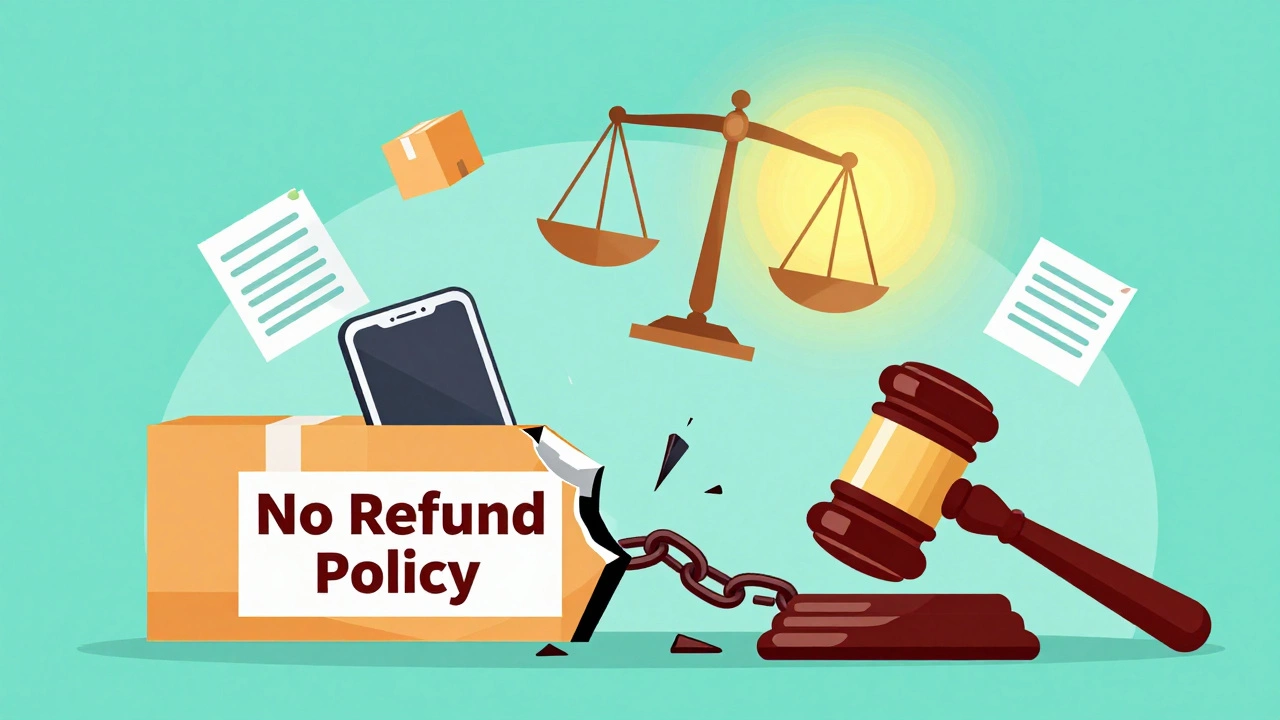
Companies can’t hide behind fine print. Courts in India have ruled again and again that terms like "no refund" or "final sale" are void if they violate consumer rights. A 2023 ruling by the National Consumer Disputes Redressal Commission (NCDRC) made it clear: businesses can’t override statutory rights with their own policies.
Steps to take before you sue
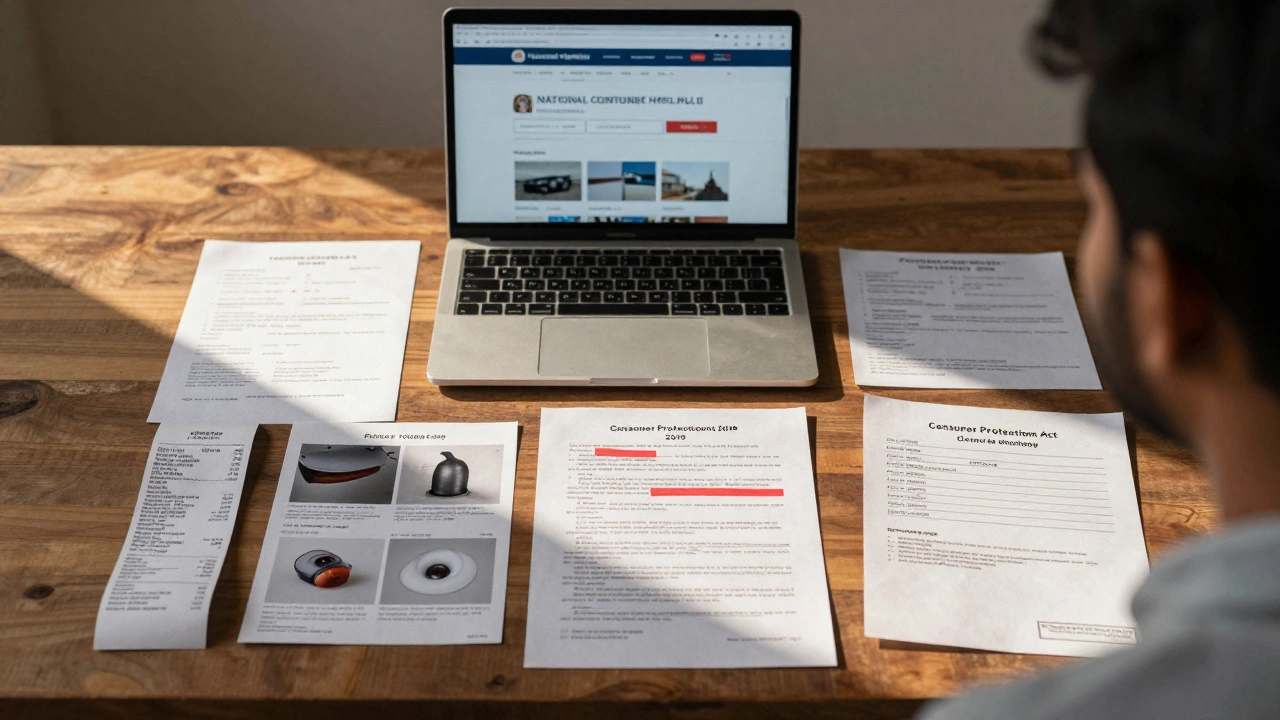
Suing is the last step. Most cases get resolved long before that. Here’s what most people skip-and why it costs them time and money.- Document everything. Save your order confirmation, payment receipt, chat logs with customer service, emails, and screenshots of product descriptions. If you called, note the date, time, and name of the person you spoke to.
- Write a formal complaint. Send it via email and registered post. Don’t say "I want my money back." Say: "I am invoking my rights under Section 2(9) and Section 2(11) of the Consumer Protection Act, 2019, and demand a full refund within 7 days. Failure to comply will result in legal action."
- Use the National Consumer Helpline. Call 14404 or visit consumerhelpline.gov.in. They’ll forward your complaint to the company and track it. Over 80% of complaints resolved here get settled within 30 days.
- Escalate to the seller’s grievance officer. All e-commerce platforms and large retailers must have one. Their name and contact must be on the website. If they don’t respond in 15 days, you’ve got proof of negligence.
Many people give up after the first email. But companies respond to paper trails. If you’ve done the above and still get ignored, you’re ready for the next level.
How to file a consumer complaint in India
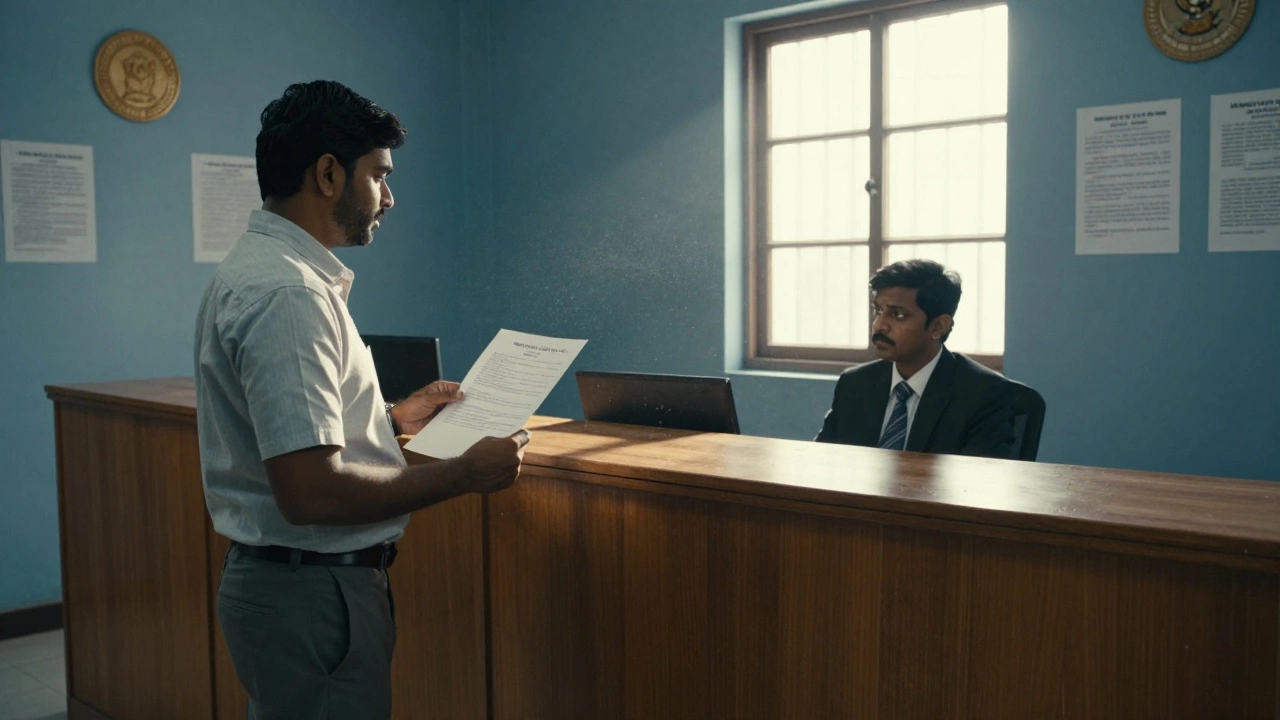
You don’t need a lawyer to file a consumer complaint. The process is designed for regular people. There are three levels, based on the claim amount:- District Commission: Up to ₹10 lakh (about $12,000 USD)
- State Commission: ₹10 lakh to ₹1 crore (about $120,000 USD)
- National Commission: Above ₹1 crore
For most people, District Commission is where you start. Here’s how:
- Download Form I from the official website of your State Consumer Commission.
- Fill it out: Name, address, details of the company, nature of complaint, amount claimed, and relief sought (refund + compensation for harassment or loss).
- Attach all documents: receipts, communication logs, product photos.
- Pay the filing fee: ₹100 to ₹500, depending on the claim amount.
- Submit it in person, by post, or online.
Once filed, the company gets 30 days to respond. If they don’t, the commission can rule in your favor by default. Hearings are usually held locally, and you can represent yourself. No fancy legal jargon needed.
What compensation can you get?
It’s not just about the refund. Courts in India often award extra money if the company acted unfairly:- Full refund of the purchase amount
- Compensation for mental harassment (usually ₹5,000 to ₹50,000)
- Costs of filing the complaint (court fees, courier charges, etc.)
- Penalty on the company for delay or dishonesty
In 2024, a Delhi consumer won ₹75,000 in compensation after a travel agency refused to refund ₹28,000 for a canceled tour. The court called it "unconscionable conduct." Another case in Mumbai awarded ₹1.2 lakh to a woman whose online furniture delivery took 9 months and arrived broken.
When you should hire a lawyer
You don’t need one to file, but you might want one if:- Your claim is over ₹50 lakh
- The company is a large corporation with legal teams
- You’re being threatened or harassed
- You want to include a public apology or policy change as part of the relief
Many consumer lawyers work on a contingency basis-meaning they only get paid if you win. Fees range from 10% to 25% of the recovered amount. Some NGOs and legal aid centers also offer free help. Check with your local State Legal Services Authority.
Common mistakes people make
Most cases fail not because the law is against them-but because they make avoidable errors:- Waiting too long. You have two years from the date of the cause of action to file. Miss that, and you lose the right.
- Not keeping records. No receipt? No chat logs? You’re basically asking the court to believe you without proof.
- Using social media instead of legal channels. Posting angry tweets might feel good, but it doesn’t hold up in court. Courts only care about documented evidence.
- Accepting store credit. If they offer "credit" instead of cash, say no. You’re entitled to your money back, not a gift card.
What if the company is outside India?
If you bought from a foreign website (like Amazon US or a Shopify store based in the UK), the Consumer Protection Act still applies-if the product or service was delivered to you in India, or if the company actively markets to Indian customers. The NCDRC has ruled in favor of Indian consumers in cases against Amazon, Apple, and even Netflix when they refused refunds for services used in India.But enforcement gets harder. You can still file a complaint, but collecting the money may require international legal help. In these cases, start with your payment provider. Credit card companies in India can reverse charges under "chargeback" rules if the service wasn’t delivered.
Final advice: Don’t back down
Companies know most people won’t fight. That’s why they delay, ignore, or offer weak excuses. But India’s consumer courts are surprisingly fast and fair. Over 70% of cases filed in 2024 were decided within six months. And the number of consumer complaints filed online jumped by 40% last year alone.You paid for a product or service. You didn’t sign up to be treated like a nuisance. The law is on your side. Use it. Document everything. File your complaint. And if they still refuse? Let the court decide. You’re not suing for revenge-you’re standing up for a system that should work for everyone.
Can I sue a company for not refunding my money in India even if I bought it online?
Yes. The Consumer Protection Act, 2019, applies to all purchases made in India, whether online or offline. If the product was delivered to you in India or the company targets Indian customers, you have the same rights as if you bought it from a local store.
How long do I have to file a complaint after a refund is denied?
You have two years from the date the cause of action arose-that is, from the day you were denied the refund or the service was not delivered. After that, the consumer court won’t hear your case.
Do I need a lawyer to file a consumer complaint in India?
No. You can file a complaint yourself using Form I from your State Consumer Commission’s website. The process is designed for ordinary consumers. Lawyers are optional, especially for claims under ₹10 lakh.
What if the company says "no refund policy" on their website?
That policy is invalid under Indian law. The Consumer Protection Act overrides any private terms that take away your statutory rights. Courts have repeatedly ruled that "no refund" clauses are void if the product is defective or service wasn’t rendered.
Can I get compensation for time and stress caused by the refund delay?
Yes. Courts often award compensation for mental harassment and inconvenience. Amounts range from ₹5,000 to ₹50,000 depending on the severity and how long the company ignored your complaint.
What happens if the company ignores the consumer court’s order?
If a company ignores a court order, you can file for enforcement. The court can freeze their bank accounts, attach their assets, or even issue a warrant against the owner. Companies that ignore consumer courts face serious legal and reputational consequences.